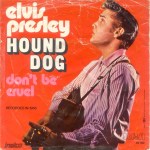
ELVIS PRESLEY, “HOUND DOG”: Written by songwriting team and future Brill Building alumni Jerry Leiber and Mike Stoller, “Hound Dog” first garnered fame through a performance by Big Mama Thornton, whose version was a bawdy and rowdy R&B track rife with sexual innuendo. After hearing it performed by Freddie Bell and the Bellboys, however, Elvis Presley recorded his own version (using Bells’ altered lyrics), released as a B-side to “Don’t Be Cruel.” After it became a hit, however, the single was re-released with the A- and B-sides flipped.
RAY CHARLES, “GEORGIA ON MY MIND”: A Ray Charles signature song, “Georgia On My Mind” dates back much earlier to 1930, when it was originally released by Hoagy Carmichael and His Orchestra. Its lyrics ambiguous enough to raise the question of whether Georgia is a woman, or the actual state, when Charles recorded it, the connection to the state grew more concrete. A Georgia native, Charles performed it before the state legislature in 1979, and it was adopted as the state song a month later. Nearly two decades before that, however, it hit No. 1 on the Billboard charts, cementing it as a classic.
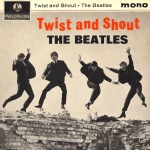
THE BEATLES, “TWIST AND SHOUT”:
By the time The Beatles got their hands on The Top Notes’ “Shake It Up, Baby,” it had already been covered and made a hit as “Twist And Shout” by The Isley Brothers. But The Beatles took it the extra mile, getting just a little bit wilder and rocking out a little bit harder. The last recording of the Please Please Me sessions, this is its only take — John Lennon had no voice left to sing it again. But the physical sacrifice paid off; it reached No. 2 on the charts and is the only Beatles cover song to reach a national Top 10 singles chart.
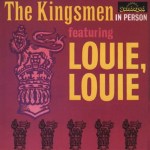
THE KINGSMEN, “LOUIE, LOUIE”:
An emblem of chaotic, rock and roll mayhem, “Louie, Louie” is more or less a party song, but in 1964, it earned its place in pop music notoriety. Originally written by Richard Berry in the fashion of a Jamaican ballad about a sailor returning to his paramour, The Kingsmen made it louder, messier and completely indecipherable. This led some concerned parents to complain about its supposed “obscene” content, which prompted an FBI investigation into the song. The Feds came up empty of course, but for a brief moment, “Louie, Louie” was the most dangerous song in America.
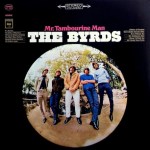
THE BYRDS, “MR. TAMBOURINE MAN”:
In the age of YouTube, it’s common for a song to be covered within weeks of its release, but in the 1960s, for The Byrds to release their cover of Bob Dylan’s “Mr. Tambourine Man” just one month after the original hit shelves seemed like record time. WHen Dylan released the song, he had already been playing it live for about a year. As The Byrds’ debut single, however, “Mr. Tambourine Man” took on new life as a fuller, janglier pop song now widely regarded to have given birth to “folk rock.” Though its arrangements and vocal harmonies are more complex than the original, The Byrd’s version is much shorter, levaing in only one of four verses and fading out after only two minutes and change. It’s technically a cover, but The Byrds’ “Mr. Tambourine Man” is an entirely different song than Dylan’s original.
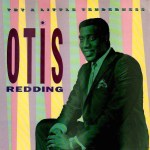
OTIS REDDING, “TRY A LITTLE TENDERNESS”:
It’s probably a foregone conclusion that more people have heard Otis Redding’s version of “Try A Little Tenderness” than that of The Ray Noble Orchestra, whose other best known track, “Midnight, The Stars And You,” was featured in The Shining. Redding turned this 1932 tune into a jaw-dropping Southern soul performance that sheds the old-timey charm for raw emotion. In fact, this just barely qualifies as a cover — Jon Crier borrowed it in Pretty In Pink, but Otis owns this one.
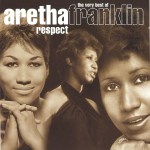
ARETHA FRANKLIN, “RESPECT”:
Otis Redding’s “Respect” already had a lot going for it when it was released in 1965, even if “respect” as a euphemism for sex seems quaint by today’s standards. But when Aretha Franklin recorded the song, she completely redefined it, her version — though mostly unchanged — depicts a strong woman who does, indeed, demand respect from her man. Additionally, Franklin added the famous “R-E-S-P-E-C-T” line, which more or less made it the definitive version. It spent eight weeks on the Billboard pop chart, but more importantly, became an anthem for gender equality.
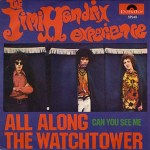
THE JIMI HENDRIX EXPERIENCE, “ALL ALONG THE WATCHTOWER”:
Bob Dylan’s “All Along The Watchtower” – a Bible-referencing highlight from 1967’s John Wesley Harding – is a great song. Hendrix’s cover version is better. Taking the basic blueprint and amplifying the song into a more intense, powerful anthem, Hendrix spent months on it, re-recording tracks until the finished product was flawless. And the version released on 1968’s Electric Ladyland is exactly that. From the moment its four acoustic chords ring out, there’s a clear signal the listener is in for something epic. Dylan, himself, was so impressed with it that, in concert, he has since only played it Jimi’s way.
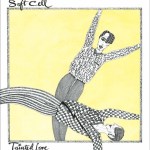
SOFT CELL, “TAINTED LOVE”: Gloria Jones’ 1965 recording of Northern soul single “Tainted Love” didn’t make much of a splash at the time, mostly going ignored until it gained some traction in UK clubs in the 1970s. But UK synth-pop duo Soft Cell reworked it into a stark, eerie, synthesizer-heavy version that made it to number one on the UK charts. Stripped of its Motown-influenced soul sound, Soft Cell’s take is considerably darker in tone, if still fun and campy.
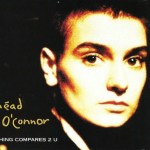
SINEAD O’CONNOR, “NOTHING COMPARES TO YOU”:
Prince’s name was on a lot of great records in the 1980s, including the 1985 self-titled album by The Family, which featured members of fellow Minneapolitans The Time. And in spite of what the album sleeve says, Prince wrote every song, including ballad “Nothing Compares 2 U,” which at the time went mostly unnoticed. That all changed when Sinead O’Connor recorded her own version and made it a hit, thanks in large part to her emotional vocal performance and stark, teary video. It went number 1 on the Billboard charts in the U.S. and those of 12 other countries — not bad for an obscure album track.
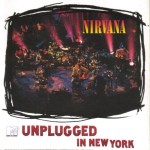
NIRVANA, “WHERE DID YOU SLEEP LAST NIGHT?”:
First published in 1917, though most likely dating back to the 1870s, folk standard “In The Pines” has a history longer than any other on this list. It’s sometimes listed as “Black Girl” or “Where Did You Sleep Last Night?”, which is the name Leadbelly used when he recorded his famous version, as well as the name Nirvana used when performing it as the final song on their Unplugged set on MTV. Kurt Cobain’s performance of the song — an already chilling tune to begin with — is particularly intense, ending with its final verse screamed. MTV reportedly wanted an encore afterward, which Cobain refused. It’s hard to argue with that; I can’t think of a stronger way to close the show.
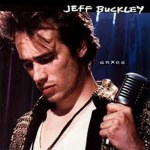
JEFF BUCKLEY, “HALLELUJAH”:
When Leonard Cohen wrote “Hallelujah,” he apparently drew up 80 verses, and edited down from there. But for a song so labored over, it wasn’t exactly an instant classic. Buried on 1984’s Various Positions, it was neither much of a critical or commercial success, but over time it grew to be a cult favorite, having been covered by more than 300 artists. The most notable is Jeff Buckley’s, a version that’s both more emotionally gripping and more stripped down. Buckley’s voice is vastly different than Cohen’s, hitting higher registers and showing off a more dynamic range, and his version led to countless other covers, including those of American Idol contestants. Ten years after Buckley’s death, the song was released as a single and ended up a number-one selling song on iTunes after its re-release.
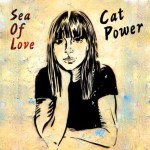
CAT POWER, “SEA OF LOVE”:
Chan Marshall has reinvented herself a few times, adding a blues backing band on 2006’s The Greatest, and before that collaborating with Eddie Vedder and Dave Grohl on 2003’s You Are Free. Before that, even, she proved herself just as masterful with other people’s material as she is with her own on 2000’s The Covers Record, which closes with her stunning recording of Phil Phillips’ 1959 single “Sea Of Love,” recorded just with her own voice and stark strums of zither. It’s simple, soulful and beautiful, and was part of the first of what would become a series of several great covers sets during Marshall’s career.
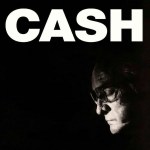
JOHNNY CASH, “HURT”: When Johnny Cash teamed up with Rick Rubin in the 1990s, he tried his hand at a number of covers of songs by Tom Petty, Beck, Nick Cave and U2, to name a few. But the unlikely recording of Nine Inch Nails’ “Hurt” proved the most surprisingly poignant. Released just a year before Cash’s death, this version of “Hurt” provided new meaning to the original. Cash strips the song of its self-destructive angst and turns it into a song of reflection from an aging and frail artist. The video – juxtaposing images of a young Johnny Cash against images of a run-down Johnny Cash museum – provided an added layer, making it into a powerful statement about aging and death. Nine Inch Nails’ Trent Reznor, for one, was moved by the song, stating, “That song isn’t mine anymore.”
WALK OFF THE EARTH, “SOMEBODY THAT I USED TO KNOW”:
Since the launch of YouTube, viral videos have been an astonishingly fast way for artists to gain attention – “Chocolate Rain,” “Gangnam Style” and “The Fox” are all among the viral canon. The same can be said of Gotye’s hit “Somebody That I Used To Know,” which inspired numerous covers and parodies. Canadian group Walk Off The Earth, however, made their own uniquely stripped-down version, whose stark video – featuring five people on one guitar – is almost as entrancing as the song itself.
Host Reba McEntire performs onstage at the 46th Annual Academy of Country Music Awards held at the MGM Grand Garden Arena on April 3, 2011 in Las Vegas, Nevada. (Photo by Kevin Winter/ACMA2011/Getty Images for ACM)