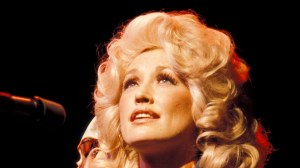
On this day (August 3) in 2006, Arthur Lee died in Memphis, Tennessee, after a battle with leukemia at the age of 61. He is best known as the frontman and founder of Love. The band pioneered psychedelic rock in the mid-1960s. Their music influenced and opened the door for legendary figures like Jim Morrison and Jimi Hendrix.
Lee was a singer, songwriter, and musical innovator. He called himself the world’s first black hippie and may have led rock music’s first interracial band. They dominated the Sunset Strip and influenced generations of bands and artists. At his peak, he was the embodiment of sex, drugs, and rock ‘n’ roll. This was worlds away from where he began.
Videos by American Songwriter
Lee was born in Memphis, where he fell in love with music. “I dug music from as far back as ‘The Hucklebuck.’ Man, doing the Hucklebuck, the Sh-Boom. It just rang bells in my head,” Lee said in an interview. After his parents divorced, he moved with his mother to California. There, he met his longtime friend and future Love bandmate, Johnny Echols.
Arthur Lee’s Early Career
Before Arthur Lee formed Love, he was in an instrumental band called The LAGs, styled after Booker T & the M.G.’s. They recorded for Capitol Records, but saw no success. At the same time, Lee was already writing songs.
One of Lee’s songs, “My Diary,” was recorded by R&B singer Rosa Lee Brooks for Revis Records. When looking for musicians to play on the session, Lee knew he wanted someone who could sound like Curtis Mayfield. So, he enlisted a young guitarist from Seattle who had been playing with the Isley Brothers. That’s how he met Jimi Hendrix.
Lee left his mark on Hendrix’s career. “Jimi’s brother told me Hendrix took a look at my first album and said, ‘I think I’ll try it this way.’ He stole my dress attire,” he recalled. “I don’t appreciate that sh*t. But then, I can’t play the guitar like him at all.”
Lee would enlist the legendary guitar-slinger again a few years later. He plays lead on “Stephanie Knows Who,” the opening track from Love’s sophomore album, Da Capo.
Love Starts with the Byrds
Arthur Lee knew he wanted to be a star. He just wasn’t sure how he was going to make it to the top. Then, one evening, he went to Ciro’s on the Sunset Strip and saw the Byrds.
“I heard ‘Mr. Tambourine Man,’ and I didn’t have to hear any more,” Lee recalled. “I’d been writing things like that for a long time, but they didn’t fit the shows I was doing. Now, here was something not quite dance music but definitely folk rock.”
More than that, Lee saw the success the Byrds had and the crowd they drew. “So, man, you know, I jumped on the wagon, because when they left, they left a huge following of people there,” he said. “So I didn’t get my trip from the Byrds, but they was a big influence on the first Love album.”
He started the band with a plan in mind. “I’ll go around, and I’m gonna do this thing until I’m capable of doing my thing.”
Arthur Lee Leaves His Mark with Forever Changes
Love released their third album, Forever Changes, in November 1967. While it has never been a best-selling record, it is regarded as one of the greatest rock LPs ever recorded.
Charles Cross, author of A Room Full of Mirrors: A Biography of Jimi Hendrix, spoke to NPR about Arthur Lee and the impact of Love with NPR. About Forever Changes, he said, “I think that record was one of those records that launched 1,000 other bands. People heard that, and cited it. Everyone from Led Zeppelin to more modern bands, like Prince, I think, were greatly influenced by that record.”
It was also the final album before things broke down. Guitarist/songwriter Bryan MacLean left the band after the album was finished. Then, Lee dissolved the group.
Lee went on to record a few more albums as Love, with session players. He also cut a solo album titled Vindicator in 1972. He toured regularly for the next two decades before recording another solo record in 1994. A year later, he ran afoul of the law. He was released in late 2001. Then, in 2002, he put together a new version of Love and hit the road. Lee continued to tour for the next four years, until he received his leukemia diagnosis in early 2006.
Featured Image by Michael Putland/Getty Images
-
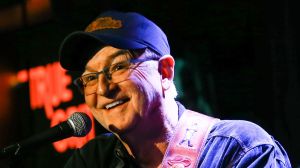
NASHVILLE, TENNESSEE – APRIL 22: Musician Carl Jackson performs during a special tribute concert in honor of Glen Campbell’s birthday at Glen Campbell Museum and Rhinestone Stage on April 22, 2021 in Nashville, Tennessee. (Photo by Terry Wyatt/Getty Images) -
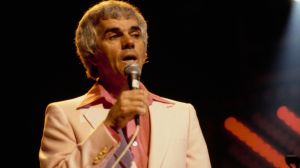
American country music singer-songwriter Roy Drusky, wearing a white suit and red shirt, performs on stage during the International Festival of Country Music held at Wembley Arena, London, April 1982. (Photo by David Redfern/Redferns/Getty Images) -
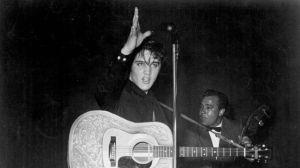
1956: Rock and roll singer Elvis Presley performs on stage with his Martin acoustic guitar with Bill Black on upright bass in 1956. (Photo by Michael Ochs Archives/Getty Images)