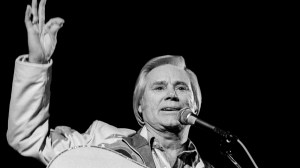
On this day (September 12) in 2004, renowned studio drummer Kenny Buttrey died of cancer in Nashville at age 59. And while his name may not ring a bell, you’ll almost certainly recognize his unmistakable licks on classics including Bob Dylan’s “Lay, Lady, Lay”; Neil Young’s “Old Man”; and Jimmy Buffett’s “Margaritaville”.
Dubbed “one of the most influential session musicians in Nashville history” by CMT following his death, Buttrey’s work spanned multiple genres, including R&B, rock, and country. His portfolio also includes Elvis Presley, Simon & Garfunkel, the Pointer Sisters and Kris Kristofferson.
Videos by American Songwriter
Today, we’re highlighting the incredible career of Kenny Buttrey on the 22nd anniversary of his passing.
Kenny Buttrey Was a Teenage Drumming Prodigy
Born in Nashville on April 1, 1945, Aaron Kenneth Buttrey was playing drums professionally by the time he turned 11 years old. Three years later, he embarked on his first world tour with none other than Chet Atkins.
While still a teenager, Kenny Buttrey joined iconic harmonicist Charlie McCoy’s band, the Escorts. A multi-instrumentalist, you’ve heard McCoy’s harmonica solos on Roy Orbison’s “Candy Man”; George Jones’ “He Stopped Loving Her Today”; and Barbara Mandrell’s “I Was Country When Country Wasn’t Cool”.
Indeed, it was McCoy who convinced Bob Dylan to record his watershed 1966 album Blonde on Blonde in Nashville. Three years later, Buttrey contributed drums, bongo, and cowbell on the critically acclaimed Nashville Skyline.
This Bob Dylan Track Was His Favorite
An established studio drummer by that point, Kenny Buttrey took great pride in his drumming work on the album, particularly “Lay, Lady, Lay”.
He’d had a difficult time coming up with a drum part for the song, so he asked Dylan and producer Bob Johnston for suggestions.
Dylan proposed bongos, while Johnston suggested cowbells. In order to prove the absurdity of their ideas, Buttrey decided to use both together. He enlisted Kris Kristofferson — who was working as a janitor for Columbia Studios at the time — to hold one instrument in each hand while he moved the mic over to them.
“I just told Kris, ‘This is one of those spite deals. I’m gonna show ’em how bad their ideas’re gonna sound.’… We started playing the tune and I was just doodling around on these bongos and the cowbells and it was kinda working out pretty cool… Come chorus time I’d go to the set of drums,” Buttrey said. “Next time you hear that [cut], listen how far off-mike the drums sound. There were no mikes on the drums, it was just leakage… But it worked out pretty good… To this day it’s one of the best drum patterns I ever came up with.”
“Lay Lady Lay” gave Bob Dylan his final top 10 pop hit, peaking at number seven on the Billboard Hot 100.
[RELATED: Ash Tray Drums, Fake Cafés, and 4 Other Oddities of Bob Dylan’s ‘Nashville Skyline’]
“Born to Play Drums”
The same year he recorded Nashville Skyline, Kenny Buttrey formed instrumental supergroup Area Code 615.
It featured some of Nashville’s most sought-after studio musicians, including Charlie McCoy, steel guitarist Weldon Myrick, and fiddle player Buddy Spicher.
Area Code 615 recorded two albums before disbanding. Their self-titled debut included the track “Stone Fox Chase”, the longtime theme song for the BBC music program The Old Grey Whistle Test.
Buttrey also played on multiple Neil Young albums, including Harvest, Tonight’s the Night, Harvest Moon, Unplugged, Silver & Gold, and Tuscaloosa. Additionally, he spent a short time as a member of Young’s touring band, the Stray Gators.
“He could play any kind of music and he could take things to a level that is transcendental,” guitarist Mac Gayden said of Buttrey after his death. “He was born to play drums.
Featured image courtesy of Facebook
-
NEW YORK, NEW YORK – JULY 28: Kelsea Ballerini seen in West Village on July 28, 2026 in New York City. (Photo by Aeon/GC Images) -
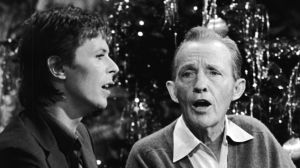
British rock singer and actor David Bowie performs with American pop singer Bing Crosby for the TV special, 'Bing Crosby's Merrie Olde Christmas,' London, England. (Photo by CBS Photo Archive/Courtesy of Getty Images) -
NASHVILLE, TENNESSEE – DECEMBER 21: Charles Kelley of Lady A performs at the Ryman Auditorium on December 21, 2025 in Nashville, Tennessee. (Photo by Jason Kempin/Getty Images) -
LAS VEGAS, NV – NOVEMBER 04: Recording artists Eddie Montgomery (L) and Troy Gentry of music duo Montgomery Gentry perform at Stoney's Rockin Country on November 4, 2016 in Las Vegas, Nevada. (Photo by Mindy Small/FilmMagic)