They say life is cyclical. Well, when it comes to British Invasion music, that’s certainly true. What began in the 1960s has since experienced several resurgences over the years, which is just what we wanted to highlight below.
We wanted to showcase three bands from back in the day that brought great music from the UK over to the US. Indeed, these are three British Invasion bands from the 1990s whose melodies still echo decades later.
Videos by American Songwriter
Oasis
In many ways, Oasis helped to define the 1990s. The British-born band released their debut LP, Definitely Maybe, in 1994. They followed it up a year later in 1995 with the iconic album (What’s the Story) Morning Glory? From there, Oasis was embedded in the mainstream. Part of a wave of music known as Britpop, the rock group rose to fame and fortune thanks to songs like “Wonderwall” and “Don’t Look Back In Anger”. But despite some major infighting between brothers Noel and Liam Gallagher, the band is back together these days and touring the world again.
Blur
Speaking of Britpop, Blur was another group lumped into that category in the 1990s. The London-born band, which released its debut LP, Leisure, in 1991, was quickly known for songs like “Parklife” and “Girls And Boys”. Indeed, Blur made headlines. The band even engaged in a rivalry with fellow Britpop band Oasis, which thankfully never boiled over into anything too violent. Today, many music fans know Blur frontman Damon Albarn for his work in Gorillaz. But before that cartoonish band got going, he was making waves in Blur.
The Verve
Compared to Blur and Oasis, The Verve may be the least well-known of the groups on this list. But the band may just have the most popular song amongst the trio. The Verve’s hit “Bitter Sweet Symphony” was all over the radio and television airwaves in the 1990s. Shows like Total Request Live on MTV played the video constantly. But while The Verve never quite got to be a household name like Oasis, the British-born outfit most definitely made a big impression on American audiences during the 1990s.
Photo by Gie Knaeps/Getty Images
More The List
-
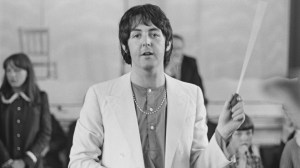
English musician, singer, songwriter, and composer Paul McCartney records the Lennon-McCartney composition 'Thingumybob' with the Black Dyke Mills Band in Saltaire, City of Bradford, West Yorkshire, 30th June 1968. (Photo by Tony Evans/Timelapse Library Ltd./Getty Images) -
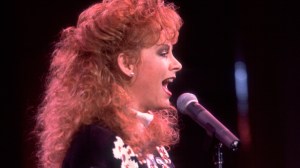
Reba McEntire performign on the Oprah Winfrey Show in Chicago, Illinois, October 8, 1991. (Photo by Paul Natkin/Getty Images) -
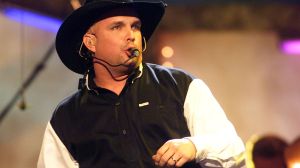
LAS VEGAS, NEVADA – Garth Brooks performing at the 1998 Billboard Music Awards in Las Vegas, NV. (Photo by Frank Micelotta/Getty Images) -
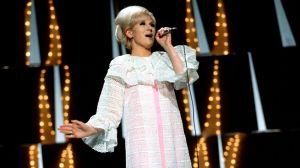
English singer Dusty Springfield (1939-1999), performs on the set of her TV show 'Dusty' at BBC Television Centre in London, circa 1967. The show ran for two series between August 1966 and September 1967. (Photo by David Redfern/Redferns) -
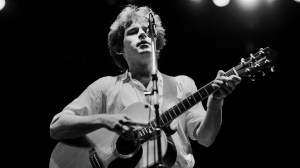
Photo by Paul Natkin/Getty Images