As pop music and traditional folk became more entwined in the late 1950s, country music developed a glossy sheen by way of orchestral arrangements, crooning vocals, and percussion. Even the simplest of these three country songs from 1957 can move a listener to tears, goosebumps, or maybe even both, if you’re anything like me.
“Three Cigarettes In An Ashtray” by Patsy Cline
Patsy Cline’s voice can move me to goosebumps regardless of the song. Her ability to imbue such pain and vulnerability into a sound so confident and tender is virtually unmatched. She was the queen of breakup songs for good reason—reasons like “Three Cigarettes In An Ashtray”. This lovesick deep cut showcases Cline’s ability to express a wide range of emotions through vocal colors alone.
Videos by American Songwriter
The song is sad at face value, to be sure. But there’s also something deeper: anger, resignation, guilt, maybe even a little shame. Cline mastered these nuances without detracting from the song itself. It never felt campy or trite, just genuine and lonesome.
“Sweet Leilani” by Marty Robbins
Bing Crosby first performed “Sweet Leilani” in the 1937 film Waikiki Wedding. The song was a massive hit, cementing its place as a musical standard. As a standard, it was covered and stylized by many artists in many ways, including by country singers like Marty Robbins. “Sweet Leilani” demands that the singer have tremendous control over their falsetto and lower voice registers, with musical phrases that pass from one placement to the next and back again multiple times in a row.
In this way, the song almost seems tailor-made for a crooner like Robbins. The country singer released his version on his 1957 album Song Of The Islands, which also featured songs like “Beyond The Reef”, “Now Is The Hour”, and “Aloha ‘Oe”.
“I Walk The Line” by Johnny Cash
One of Johnny Cash’s most famous songs, “I Walk The Line” almost feels cliché to include here. But it’s one of the best country songs of all time, let alone the year 1957, so why not? The song’s straightforward “boom-chick” guitar style and plaintive voice feel powerful because it seems so stoically vulnerable. Cash’s deep voice changing key with each new section seems like someone who isn’t often in tune with their softer emotions, slowly figuring it out and trying on different feelings.
The end result has never failed to give me goosebumps when I listen. The historical implications of this song and what it meant for country music as a whole also contribute to the chill factor.
Photo by Michael Ochs Archives/Getty Images
More The List
-
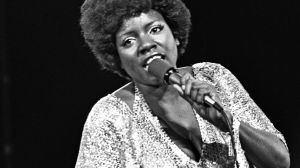
HOLLYWOOD – DECEMBER 13, 1975: Disco singer Gloria Gaynor performs a song on December 13, 1975, in Hollywood, California. (Photo by Michael Ochs Archives/Getty Images) -

Circa 1965, American country singer and songwriter Loretta Lynn performs on stage at the Grand Ole Opry, Nashville, Tennessee, 1960s. (Photo by Getty Images/Getty Images) -
Photo by Michael Ochs Archives/Getty Images -

American country music singer Earl Thomas Conley (1941 – 2019) performs at the Poplar Creek Music Theater in Hoffman Estates, Illinois, May 26, 1985 in Hoffman Estates, Illinois (Photo by Paul Natkin/Getty Images) -
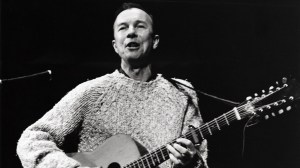
UNITED KINGDOM – JANUARY 01: Photo of Pete SEEGER; Pete Seeger performing on stage at a Paul Robeson benefit concert (Photo by Brian Shuel/Redferns) -
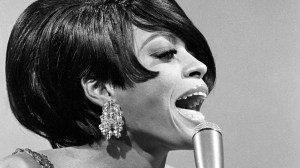
UNSPECIFIED – CIRCA 1970: Photo of Diana Ross Photo by Michael Ochs Archives/Getty Images -

The British singer Kate Bush poses for a photo shoot. Great Britain, 1980 (Photo by Angelo DeligioMondadori via Getty Images)