
These 1970s folk songwriters were deeply talented storytellers. They could tell a movie-worthy tale in verses and rhymes. Sometimes, a single verse was all they needed to create a narrative arc.
John Prine
Several genres claim John Prine, but his narrative-style songwriting places him in the folk camp. Throughout the 1970s, Prine delivered plenty of enduring narrative tracks, including “Angel From Montgomery”, “Sam Stone”, and “Hello In There”.
Videos by American Songwriter
Indeed, Prine had a singular knack for storytelling. He could break your heart, make you laugh, and speak to life’s most specific circumstances, all in one fell swoop. Take “Hello In There”, for example. This heartbreaking track about aging loneliness says a great deal in its short runtime. “Me and Loretta, we don’t talk much more / She sits and stares through the back door screen / And all the news just repeats itself / Like some forgotten dream that we’ve both seen,” a selection of the lyrics reads. Sledom has there ever been a songwriter as succinctly world-altering as Prine.
Jim Croce
One of Jim Croce’s biggest 1970s hits, “Bad, Bad Leroy Brown”, proves his singular storytelling skill. Certainly one of the most enduring folk tracks of the 1970s, it became a cultural staple; a universal story of standing up to opposing forces.
“Now Leroy he a gambler / And he like his fancy clothes / And he like to wave his diamond rings / In front of everybody’s nose / He got a custom Continental / He got a Eldorado too / He got a thirty two gun in his pocket for fun / He got a razor in his shoe,” the lyrics read. Croce created a visceral character piece with this track, proving himself one of the most adept storytelling folk songwriters of his generation.
Gordon Lightfoot
When we think of folk storytelling songs, “The Wreck Of The Edmund Fitzgerald” is one of the first that comes to mind, in any generation. With this offering, Gordon Lightfoot set himself apart from his peers, creating a rich, twisting story that shouldn’t fit within the songwriting medium, but does.
“The legend lives on from the Chippewa on down / Of the big lake they call Gitche Gumee / The lake, it is said, never gives up her dead / When the skies of November turn gloomy / With a load of iron ore twenty-six thousand tons more / Than the Edmund Fitzgerald weighed empty / That good ship and true was a bone to be chewed,” the famous lyrics read. This song lifts the listener and drops them onto the stormy waters aboard a doomed ship. It’s deeply transportive.
Photo by Tom Hill/Getty Images
More The List
-

Photo by Koh Hasebe/Shinko Music/Getty Images -

Photo by Robert Altman/Michael Ochs Archives/Getty Images -
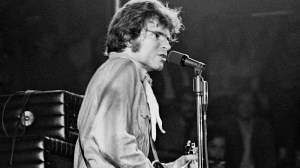
ohn Fogerty of Creedence Clearwater Revival performs live in Rotterdam, Netherlands in April 1970. (Photo by Gijsbert Hanekroot/Redferns) -
English musician, singer and songwriter George Harrison (1943 – 2001) leaving a recording studio in Twickenham, London, 16th January 1969. (Photo by William Lovelace/Daily Express/Hulton Archive/Getty Images) -
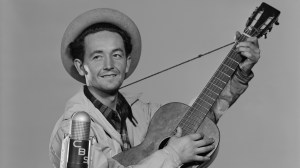
Woody Guthrie on "Back Where I Come From". Image dated October 1940. Copyright ©1940 CBS Broadcasting Inc. All Rights Reserved. Credit: CBS Photo Archive. File #8457_9. -
Photo by Frank Micelotta/Getty Images -

Photo by Evening Standard/Hulton Archive/Getty Images -
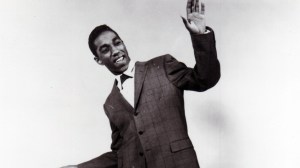
UNSPECIFIED – JANUARY 01: Photo of Barrett STRONG; Posed studio portrait of Barrett Strong (Photo by Gilles Petard/Redferns)