
Passionate, self-assured expression is at the heart of hip-hop and rap. These overarching genres and the smaller subsects within them embody fearlessness even in the face of vulnerability. Artists in these genres speak their truth without worrying if they’re taking up too much space while doing it. They’re bold, sometimes provocative, and confident.
For someone with an aversion to the limelight, this can be a difficult task. Indeed, even some of hip-hop and rap’s brightest stars have struggled to handle the beam of their own glow. While many of these artists were able to recalibrate into new areas of their field, the process didn’t come without a painful metamorphosis first.
Videos by American Songwriter
Kid Cudi
Kid Cudi skyrocketed to fame in the early aughts with his debut album ‘Man on the Moon: The End of Day,’ which included hits like “Day ‘N’ Nite” and “Pursuit of Happiness.” Ironically, the album that would propel Kid Cudi, born Scott Mescudi, into international stardom centered around the artist’s struggles with anxiety and depression. As his celebrity grew, he dove deeper into his work — and drugs, too.
After a two-week coke binge in 2016, Kid Cudi announced he was checking himself into rehab for “depression and suicidal urges.” He remained in rehab for two weeks, during which time he suffered a stroke that affected his speech and movement. The 2021 film A Man Named Scott takes a closer look at Kid Cudi’s adverse reaction to fame. The musician explained, “People look up to me, but I’m not a happy person. I felt like a fraud. That’s what drove me to escape from reality.”
The multi-hyphenate artist’s mental health has improved in the years following his time in rehabilitation and physical rehab after the stroke. Kid Cudi has continued to expand his portfolio into acting, fashion, tech, comics, modeling, and philanthropy. He’s released multiple records since the mid-aughts, including his most recent album ‘Insano (Nitro Mega),’ which he released on February 23, 2024.
Lauryn Hill
Rapper, singer-songwriter, actor, and producer Lauryn Hill has been a performer since childhood. She formed the musical trio Fugees at 15 and began acting on-screen one year later. By the late 1990s, Hill was ready to prove she was more than just an ensemble member: she was a star. Her record-breaking, award-winning debut solo album ‘The Miseducation of Lauryn Hill’ certainly proved her point.
Yet, despite already being relatively famous, Hill seemed to buckle under the pressure of the fame her solo album garnered her. She became wary of those around her trying to exploit her star power. Hill’s next album, an MTV Unplugged session, didn’t receive nearly as much praise as her freshman record. By 2003, Hill had effectively vanished from the industry she was once on the fast track to dominate.
“I think Lauryn grew to despise who Lauryn Hill was,” a friend told Rolling Stone. “Not that she despised herself as a human being, but she despised the manufactured international-superstar magazine cover girl who wasn’t able to go out of the house looking a little tattered on a given day. Lauryn put a lot of pressure on herself after all that success. And then one day, she said f*** it.’” Hill has since returned to performing but on a much smaller scale, ensuring she can share her art strictly on her terms.
T-Pain
T-Pain, born Faheem Rashad Najm, dominated radio airwaves in the mid to late 2000s. One would be hard-pressed to find a Top 40 station that wasn’t playing a song that, at the very least, featured the rapper, singer, and producer. From “Buy U A Drank” to “Bartender,” his auto-tuned jams about partying in the club with beautiful women became a ubiquitous, defining musical moment of the time.
But what goes up must inevitably come down, and such was the case for T-Pain’s career by the end of the 2000s. The auto-tune that defined T-Pain’s sound soured, turning from a novelty to a tiresome joke. Despite countless other artists using the same technology, T-Pain was its poster child. As the backlash against auto-tune grew, T-Pain became everyone’s punching bag. Eventually, he withdrew from the public eye altogether.
“I was getting s***ted on,” T-Pain said in a 2014 New Yorker interview. “So I was just like, well, I’m not gonna keep doing this if that’s all I’m gonna get. People can act like, you know, ‘I don’t care about when people hate on me,’ but the second that they do, you feel that!’” T-Pain has since gotten to a better place with his music and mental health, releasing the appropriately titled album ‘Stoicville: The Phoenix’ in 2013. T-Pain announced a Las Vegas residency in 2024. He’s also ventured into television, film, and gaming.
(Photo by Theo Wargo/Getty Images)
More The List
-
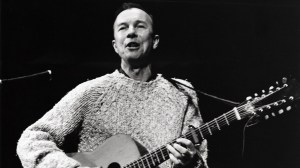
UNITED KINGDOM – JANUARY 01: Photo of Pete SEEGER; Pete Seeger performing on stage at a Paul Robeson benefit concert (Photo by Brian Shuel/Redferns) -
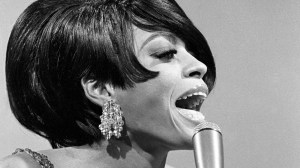
UNSPECIFIED – CIRCA 1970: Photo of Diana Ross Photo by Michael Ochs Archives/Getty Images -

The British singer Kate Bush poses for a photo shoot. Great Britain, 1980 (Photo by Angelo DeligioMondadori via Getty Images) -
Photo via NBC/Getty Images -
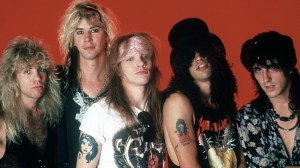
DETROIT, MI – MAY 7: (L-R) Drummer Steven Adler, Duff McKagan, vocals Axl Rose, guitarist Slash and guitarist Izzy Stradlin of the music group Guns N' Roses pose for a portrait on May 7, 1988, at the Detroit State Theater in Detroit, Michigan. (Photo by Ross Marino/Getty Images) -
TENNESSEE – CIRCA 1955: Country singer Dolly Parton poses for a portrait in circa 1955 in Tennessee. (Photo by Michael Ochs Archives/Getty Images) -
Phil Collins seen here following rehearsals in a London studio for his forthcoming Seriously tour, which begins in Japan. 14th February 1990 (Photo by Steve Woods/Mirrorpix via Getty Images) -

(L-R) Joe Walsh, Timothy B. Schmit, Glenn Frey, Don Henley and Don Felder of the rock band "Eagles" performing onstage in 1980. (Photo by Michael Ochs Archives/Getty Images)