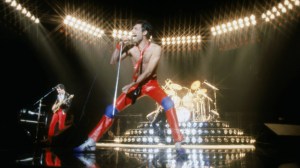
Happy accidents aren’t just for Bob Ross’ paintings, as proven by these three iconic guitar tones that happened by complete accident. Sometimes, engineers needed to convince the lead artist that the accident was worth keeping. Other times, the choice was obvious to everyone in the studio.
No matter the case, these guitar tones show that sometimes, the best art comes from letting the universe (or pencils or faulty machinery or toppling microphones) do all the heavy lifting.
Videos by American Songwriter
“Money for Nothing” by Dire Straits
Dire Straits frontman Mark Knopfler’s fingerstyle playing technique already gives him a unique tone separate from the more percussive, plucky sounds that come from playing with a guitar pick. Even his relatively simple riffs are difficult to recreate exactly because of his sensitive feel on the guitar. But in the case of the band’s iconic hit, “Money for Nothing,” a different contributing factor gave the song its signature guitar tone: a wobbly mic.
“The guitar tone you hear on the record happened on accident,” Dire Straits bassist John Illsley told The Guardian. “A microphone got knocked to the floor in front of the speaker, and it changed the sound completely.” Illsley called Knopfler’s riff “extraordinary. It’s funny: when other guitarists try that riff, they play all the right notes but don’t get the feel.”
“Don’t Worry” by Marty Robbins
Fuzzy distortion is hardly the first guitar tone we associate with the iconic country crooner, Marty Robbins, but his 1961 single, “Don’t Worry,” would change that forever. Robbins’ long-time lead guitarist, Grady Martin, was in the studio with a small monitor while recording the lovesick country shuffle. Although he could hear himself through the small speaker, he couldn’t hear the actual feed that was going into the mixing board, which is how he had no idea that a transformer in his signal chain was malfunctioning.
The resulting sound is a grimy, dirty guitar tone that most sludge metal bands would kill for. Contrasted with the slightly saccharine country tune, the guitar tone is even more jarring. When the band listened to the audio playback, producer Don Law joked that Robbins should call his record “Marty Robbins and his Bumblebees.” Robbins replied, “No, no. I’ll make a deal with you. We’ll leave it in there, but don’t put Marty Robbins and the Bumblebees on it.”
“Rumble” by Link Wray
Closing out our list of iconic guitar tones that happened by accident is a song so gritty and grimy that radio stations banned the track out of fear of instigating riots and violence. That track, of course, is Link Wray’s highly influential “Rumble,” which would go on to inform an entire subgenre of heavy rock. Wray wrote “Rumble” while improvising an audience request for the Diamonds’ hit song, “The Stroll,” at a live performance.
When the band began to play, Wray realized someone had set a vocal mic too close to his guitar amp, creating an intense distortion. “The kids just went ape,” Wray later recalled. The band played what the crowd called “that weird song” upwards of four times. When Wray went to record the track in the studio, he purposefully poked holes into his amplifier to recreate the same fuzzy guitar tone that made the crowd go wild.
Photo by Andre Csillag/Shutterstock
More The List
-
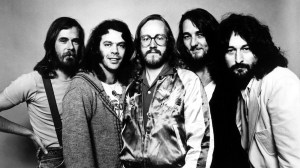
CIRCA 1975: (L-R) Dougie Thomson, Bob C. Benberg John A. Helliwell, Roger Hodgson and Rick Davies of the rock band "Supertramp" pose for a portrait in circa 1975. (Photo by Michael Ochs Archives/Getty Images) -
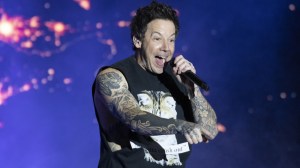
HEREDIA, COSTA RICA – MARCH 21: Pierre Bouvier of Simple Plan performs live on stage as part of the Picnic Festival 2026 on March 21, 2026 in Heredia, Costa Rica. (Photo by Manuel Arnoldo Robert Batalla/Getty Images) -
Photo by Gijsbert Hanekroot/Redferns -
NEW YORK, NY – CIRCA 1985: Roland Orzabal and Curt Smith of Tears For Fears circa 1985 in New York City. (Photo by Robin Platzer/IMAGES/Getty Images) -
UNITED KINGDOM – APRIL 19: ROYAL FESTIVAL HALL Photo of Vashti BUNYAN (Photo by James Emmett/Redferns) -
CLARKSTON – JULY 14: Guitarist Porl Thompson, bass player Simon Gallup, musician, songwriter and lead singer Robert Smith, drummer Boris Williams and keyboard player Laurence 'Lol' Tolhurst, all members of the English rock band The Cure, pose for a portrait backstage at the Pine Knob Music Theatre on July 14, 1986, in Clarkston, Michigan. (Photo by Ross Marino/Getty Images)