
Alternative rock as we know it wouldn’t really emerge until the late 1970s and early 1980s. By the 1990s, alt-rock would evolve into grunge and then subsequently take over the airwaves for years. But way back in the 1960s, some musicians dished out what I would consider proto-alternative rock tracks, each of which influenced the genre before it was even a genre. Let’s look at a few examples.
“H*roin” by The Velvet Underground from ‘The Velvet Underground & Nico’ (1967)
There really isn’t a song out there better suited for a list of proto-alternative rock songs from the 1960s than “H*roin” by The Velvet Underground. In many ways, this song was really the blueprint for what the genre would become. All that noise, the particularly vulgar subject matter, that two-chord structure. Listen to bands like Sonic Youth decades later, and you’ll hear the influence of this very song.
Videos by American Songwriter
This controversial experimental rock track from The Velvet Underground & Nico was not released as a single and thus didn’t chart. Billy Idol would bring a cover of the song to No. 16 on the Hot Dance Club Play chart in 1993.
“1969” by The Stooges from ‘The Stooges’ (1969)
When I think of an older song that has the same kind of guitar work one would hear on an alternative rock tune from the later 20th century, I think of “1969” by The Stooges. The band’s self-titled debut album is basically proto-punk from start to finish. But this particular song, in my opinion, leans toward grunge in terms of its repetitive riff. Those smearing, volatile vocals are also very alt-rock. It’s no surprise that bands like Nirvana and Mudhoney were so influenced by Iggy Pop’s iconic band.
“Shangri-La” by The Kinks from ‘Arthur (Or The Decline And Fall Of The British Empire)’ (1969)
This song, and the whole of its album, is your standard top-notch folky-sounding rock record from the late 1960s. But when you really listen to “Shangri-La”, specifically, it’s obvious that this very song influenced quite a few alt-rock songwriters in the 1990s. This alternative rock-inspiring song from the 1960s boasts Ray Davies’ unique and observational storytelling, complete with somewhat depressing irony, that many alt-rock bands decades later would adopt. Think R.E.M. and The Smiths. There’s a little bit of this song’s influence in much of their earlier works.
(Photo by Michael Ochs Archives/Getty Images)
More The List
-
American country music singer Earl Thomas Conley (1941 – 2019) performs at the Poplar Creek Music Theater in Hoffman Estates, Illinois, May 26, 1985 in Hoffman Estates, Illinois (Photo by Paul Natkin/Getty Images) -
UNITED KINGDOM – JANUARY 01: Photo of Pete SEEGER; Pete Seeger performing on stage at a Paul Robeson benefit concert (Photo by Brian Shuel/Redferns) -
UNSPECIFIED – CIRCA 1970: Photo of Diana Ross Photo by Michael Ochs Archives/Getty Images -

The British singer Kate Bush poses for a photo shoot. Great Britain, 1980 (Photo by Angelo DeligioMondadori via Getty Images) -
Photo via NBC/Getty Images -
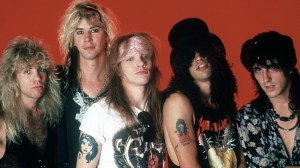
DETROIT, MI – MAY 7: (L-R) Drummer Steven Adler, Duff McKagan, vocals Axl Rose, guitarist Slash and guitarist Izzy Stradlin of the music group Guns N' Roses pose for a portrait on May 7, 1988, at the Detroit State Theater in Detroit, Michigan. (Photo by Ross Marino/Getty Images) -
TENNESSEE – CIRCA 1955: Country singer Dolly Parton poses for a portrait in circa 1955 in Tennessee. (Photo by Michael Ochs Archives/Getty Images) -
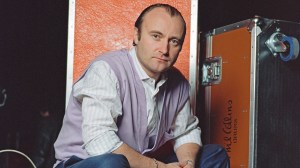
Phil Collins seen here following rehearsals in a London studio for his forthcoming Seriously tour, which begins in Japan. 14th February 1990 (Photo by Steve Woods/Mirrorpix via Getty Images)