
These three vocalists made 1965 a year worth remembering in rock. The genre was evolving rapidly in this era, moving beyond its early, simplistic iterations. That development needed vocalists who could keep up.
Whether a folk artist transitioning to rock or genre stalwarts with remarkable grit, these frontmen were exactly what the genre needed. Revisit these once-in-a-generation vocalists below to remember this golden era of rock music.
Videos by American Songwriter
Bob Dylan
Bob Dylan isn’t really thought of as a vocalist first. In fact, people often rib him for his unique vocal style. But that is part of the reason he became so popular in the first place. Listeners instantly recognize when a Dylan song is playing, even if they aren’t massive fans. His unmatched voice was just distinctive enough to make people sit up and listen, which was his main function back in 1965. This was also the year he made his daunting leap from folkie to rock star.
From “Subterranean Homesick Blues” to “It’s Alright, Ma (I’m Only Bleeding)”, Dylan was an artist with something important to say back in the 1960s. His voice may not have been the most pristine of his generation, but his near-talking style let people hear his superb lyricism.
Mick Jagger
Mick Jagger is another distinctive vocalist. From swaggering rock tunes to countryisms, Jagger has proved time and time again that he can do it all. In 1965, Jagger fronted hits like “(I Can’t Get No) Satisfaction” and “The Last Time”. In these songs, and in other early Stones hits, Jagger set himself above his peers with vocals that stuck in listeners’ minds long after the track ended.
Even today, Jagger is known for his distinctive singing voice. He helped make rock a major force in the 1965 music scene, adding a bluesy edge to mod rock’s identity in this era.
Roger Daltrey
The Who was starting to build major buzz in 1965, in part because of frontman Roger Daltrey’s impeccable vocals. The pure vitriol he brought to “My Generation” in this era made him a mainstay in rock. Daltrey brought raw power to his vocal performances back then, exciting listeners endlessly.
He captured the angst of the British Invasion generation, delivering high-octane rock before the genre had evolved that far. He was a fork in the road, paving the way for future rockers.
(Photo by David Fenton/Getty Images)
More The List
-
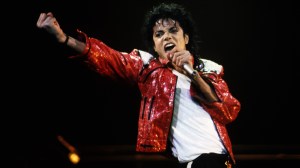
Michael Jackson performs during the 'Bad' tour at Madison Square Garden in New York City on March 3, 1988. (Photo by Kevin Mazur/WireImage) -
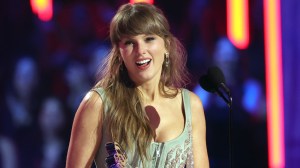
LOS ANGELES, CALIFORNIA – MARCH 26: (FOR EDITORIAL USE ONLY) Taylor Swift accepts the Pop Album of the Year award onstage at the 2026 iHeartRadio Music Awards at Dolby Theatre on March 26, 2026 in Los Angeles, California. (Photo by Matt Winkelmeyer/Getty Images for iHeartRadio) -
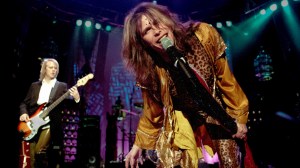
American rock band Aerosmith (Singer Steven Tyler,) perform at the release party in support of their album "Nine Lives" on March 18, 1997 at The Hammerstein Ballroom in New York City, New York. (Photo By Larry Busacca/Getty Images) -
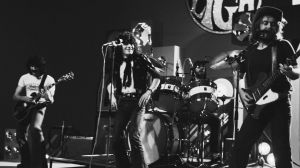
NAZARETH / Die schottische Rockband NAZARETH, 70er Jahre. Musik, Band, Rock, 70er. (Photo by kpa/United Archives via Getty Images) -
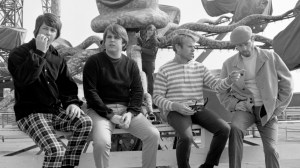
LOS ANGELES – MARCH 10: Rock and roll group "The Beach Boys" pose during a portrait session at Pacific Ocean Park in on March 10, 1966 in Los Angeles, California. (L-R) Brian Wilson, Carl Wilson, Al Jardine, Mike Love. (Photo by Earl Leaf/Michael Ochs Archives/Getty Images) -
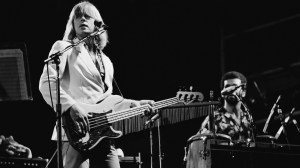
inger and bassist Peter Cetera (left) performing with American rock group, Chicago, USA, September 1978. On the right is percussionist Laudir de Oliveira. (Photo by Michael Putland/Getty Images) -
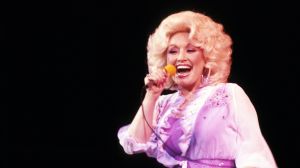
UNITED STATES – JANUARY 01: Photo of Dolly PARTON (Photo by Richard E. Aaron/Redferns) -
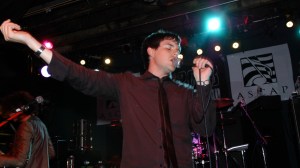
The Killers. (Photo by Frank Mullen/WireImage)