
Influential singer-songwriter Fred Neil was born 90 years ago, on March 16, 1936, in Cleveland. Neil, who died of cancer in 2001 at age 65, came to prominence as part of the Greenwich Village folk scene in the early-to-mid 1960s.
His deep voice, deft 12-string guitar playing, and insightful songs made an impact on many of his contemporaries and the artists who followed in his wake.
Videos by American Songwriter
Early in his career, Neil worked as a songwriter at the famed Brill Building in New York City. In 1962, he formed a short-lived folk duo with Vince Martin before starting to release his own solo albums.
Neil never sought out fame and enjoyed little commercial success himself, although his songs were covered by many popular artists starting in the 1960s. After releasing a handful of albums, Fred withdrew from the music business.
Relocating to Southern Florida, Neil rarely performed live after 1971. His main focus became the Dolphin Research Project, a dolphin conservation organization he co-founded in 1970.
While Fred’s own under-the-radar recordings are wonderful, many of the best-known versions of his songs are by other artists. Here is a look at four fabulous covers of tunes written or co-written by Neil:
“Candy Man” by Roy Orbison (1961)
In 1961, Neil teamed up with a fellow Brill Building songwriter to write the tune “Candy Man.” Ross previously had co-written “Lollipop,” which became a No. 2 hit in the U.S. for The Chordettes in 1958.
Fred wanted to write a song with Ross that also featured a sweet, confectionary theme and suggested “Candy Man,” noting it was a term that prostitutes in New Orleans used for their pimp. Ross wasn’t enamored at all with that concept but liked the title and came up with lyrics about a guy offering a woman he’s pursuing sweet affection.
Roy Orbison recorded “Candy Man” and released it as the B-side of his chart-topping 1961 ballad “Crying.” “Candy Man” became a lesser hit for Orbison, reaching No. 25 on the Billboard Hot 100. Neil’s own version of “Candy Man” appeared on his debut 1965 solo album, Bleecker & MacDougal.
“Everybody’s Talkin’” by Harry Nilsson (1968)
“Everybody’s Talkin’” is undoubtedly the most famous song written by Neil. His original version appeared on his self-titled second solo album, which was released in 1966.
Harry Nilsson recorded a cover of “Everybody’s Talkin’” that was featured on his 1968 album Aerial Ballet. In 1969, Nilsson’s version of the tune was selected for use in the Oscar-winning film Midnight Cowboy. Re-released as a single that year, it became Harry’s breakthrough hit, peaking at No. 6 on the Hot 100.
In 1970, Nilsson won a Grammy in the Best Contemporary Vocal Performance, Male category for “Everybody’s Talkin’.”
Hundreds of other artists have recorded versions of the song over the years.
“The Other Side Of This Life” by Jefferson Airplane (1969)
Neil wrote a song called “Other Side To This Life” that was featured on his Bleecker & MacDougal album.
Legendary Bay Area psychedelic band Jefferson Airplane, which began as a folk-rock group, were fans of Neil. The band regularly covered “Other Side To This Life” in concert, starting in 1965.
Fred eventually befriended the group and spent some time visiting the members at their house in San Francisco’s Haight-Ashbury neighborhood. Airplane singer Grace Slick nicknamed Fred “Poohneil” because he reminded her of Winnie the Pooh. Neil partially inspired the 1967 Jefferson Airplane song “The Ballad Of You & Me & Pooneil,” which was written by singer/rhythm guitarist Paul Kantner.
Jefferson Airplane included a searing, acid-rock cover “Other Side To This Life,” retitled “The Other Side Of This Life,” on their 1969 live album Bless Its Pointed Little Head.
The cover was recorded in October 1968 at the famous San Francisco venue the Fillmore West.
Bless Its Pointed Little Head reached No. 17 on the Billboard 200 chart. The Airplane also opened their set at the historic 1969 Woodstock Festival with “The Other Side Of This Life.”
“The Dolphins” by Linda Ronstadt (1969)
“The Dolphins” was an atmospheric tune Neil wrote that first appeared on his 1966 self-titled album. Besides “Everybody’s Talkin’,” it’s gone on to be his most-covered composition.
While the song seems to reflect Fred’s deep fascination with and regard for the aquatic mammals, the lyrics are enigmatic. The tune seems be about the desire to escape the violent contemporary world for a more peaceful existence, like the undersea life of the dolphin.
Linda Ronstadt was among many artists who covered “The Dolphins.” Her version appeared on her 1969 album Hand Sewn … Home Grown, which was her first release solely under her name following the breakup of her folk-rock group The Stone Poneys.
Ronstadt’s cover of “The Dolphins” featured some twangy country influences and was highlighted by Linda’s powerful, plaintive vocals.
(Photo by Don Paulsen/Michael Ochs Archives/Getty Images)
More The List
-

The British singer Kate Bush poses for a photo shoot. Great Britain, 1980 (Photo by Angelo DeligioMondadori via Getty Images) -
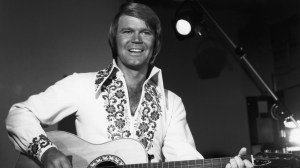
Photo via NBC/Getty Images -
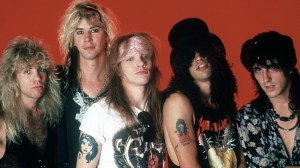
DETROIT, MI – MAY 7: (L-R) Drummer Steven Adler, Duff McKagan, vocals Axl Rose, guitarist Slash and guitarist Izzy Stradlin of the music group Guns N' Roses pose for a portrait on May 7, 1988, at the Detroit State Theater in Detroit, Michigan. (Photo by Ross Marino/Getty Images) -
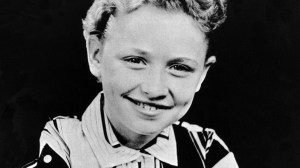
TENNESSEE – CIRCA 1955: Country singer Dolly Parton poses for a portrait in circa 1955 in Tennessee. (Photo by Michael Ochs Archives/Getty Images) -
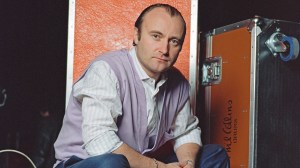
Phil Collins seen here following rehearsals in a London studio for his forthcoming Seriously tour, which begins in Japan. 14th February 1990 (Photo by Steve Woods/Mirrorpix via Getty Images) -

(L-R) Joe Walsh, Timothy B. Schmit, Glenn Frey, Don Henley and Don Felder of the rock band "Eagles" performing onstage in 1980. (Photo by Michael Ochs Archives/Getty Images) -
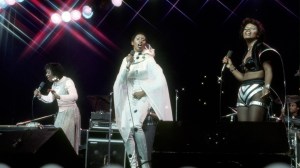
LOS ANGELES – CIRCA 1974: Singer Patti Labelle performs onstage with her group LaBelle in circa 1974 in Los Angeles, California. Also in the group were former Bluebelles, Sarah Dash and Nona Hendryx. (Photo by Michael Ochs Archives/Getty Images) -

Photo by Rick Diamond/WireImage for BMI Nashville