
Considering that the boom in pop music coincided roughly with the ascent of television’s popularity, it’s no surprise that the two media inevitably intertwined. Television stars have always made forays onto the pop charts now and then. The 70s were a popular time for TV actors and actresses to cross over to the pop charts with hits. Here are four examples that still get plenty of airtime on 70s playlists today.
“Don’t Give Up On Us” by David Soul
No cop show captured the 70s’ fascinating combination of grit and flash quite like Starsky And Hutch. Debuting in 1975, the show made immediate stars out of actors David Soul and Paul Michael Glaser. Many actors become singers only after stardom pushes them in that direction. But Soul had a background in music well before he hit big on network TV. He decided to capitalize on the show’s success to revive that interest. Soul found a top-notch songwriter in Tony Macaulay to deliver him a ready-made hit single. To his credit, the actor did a nice job with his lead vocal, handling the twists and turns in the melody with gentle tenderness. “Don’t Give Up On Us” made it to No. 1 in 1977.
Videos by American Songwriter
“The Night The Lights Went Out In Georgia” by Vicki Lawrence
Bobby Russell already had a Song of the Year Grammy (for “Little Green Apples”) when he penned “The Night The Lights Went Out In Georgia” in 1972. At the time, plot-heavy story songs were appearing with regularity on the pop charts. But Russell didn’t particularly like his composition. Lucky for him, Vicki Lawrence, his wife at the time, thought the song had something special. First, Lawrence asked Russell to pitch the song to others. (Cher was among those who turned it down.) Finally, Lawrence, at the time a member of the ensemble of The Carol Burnett Show, recorded it herself in 1973. She walked away from it all with a No. 1 single, the only Top 40 hit she managed in her three-album music career.
“You’re The One That I Want” by John Travolta & Olivia Newton-John
Look behind the scenes of many of Olivia Newton-John’s biggest hits, and you’ll find the name John Farrar. The Australian musician wrote and/or produced many of them. He was looking out for Olivia when she appeared in Grease, writing two songs (“Hopelessly Devoted To You” and “You’re The One That I Want”) for her that didn’t appear in the original musical. The latter featured John Travolta as her duet partner, as their characters Sandy and Danny performed the track in the film. Travolta had already scored a Top 10 hit in 1976 with the sappy ballad “Let Her In”. “You’re The One That I Want”, released while he was still earning chuckles for his role in Welcome Back, Kotter, holds up much better today.
“Stumblin’ In” by Chris Norman and Suzi Quatro
A product of Detroit, Michigan, Suzi Quatro enjoyed most of her musical success in Great Britain. For whatever reason, her retro, rockabilly-pop style couldn’t quite gain her much attention in the US. But TV producer Garry Marshall’s daughter knew of her, which led to Marshall casting her on his massive hit show Happy Days in the role of Leather Tuscadero. Although she wasn’t a cast regular, it still raised her level of exposure a ton in America. That made the timing right for Quatro’s first US hit just right. “Stumblin’ In”, a duet with British musician Chris Norman, hit No. 4 in 1978. It would turn out to be the lone American hit of her long, successful career.
(Photo by Paramount Pictures/Fotos International/Getty Images)
More The List
-
NEW YORK, NEW YORK – JULY 28: Kelsea Ballerini seen in West Village on July 28, 2026 in New York City. (Photo by Aeon/GC Images) -
British rock band, Badfinger, filming a performance of 'Day After Day' to be used as an insert for the 'Top Of The Pops', music show, BBC Television Centre, London, 26th January 1972. It is unclear whether the segment was ever broadcast. Left to right: Mike Gibbins (1949 – 2005), Pete Ham (1947 – 1975), Tom Evans (1947 – 1983) and Joey Molland. (Photo by Michael Putland/Getty Images) -
Kyu Sakamoto. (1941-1985) Japanese singer, best known outside Japan for his international hit song "Ue o Muite Aruko" (known as "Sukiyaki" in English-speaking markets), which was sung in Japanese and sold over 13 million copies. It reached number one in the United States Billboard Hot 100 in June 1963, making Sakamoto the first Asian recording artist to have a number one song on the chart. (Photo by Sjöberg Bildbyrå/ullstein bild via Getty Images) -
Photo by Jeffrey Mayer/WireImages -
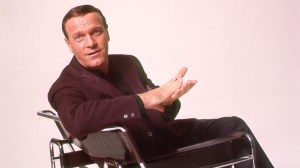
CIRCA 1965: Country singer Eddy Arnold poses for a portrait sitting in a chair in circa 1965. (Photo by Michael Ochs Archives/Getty Images) -
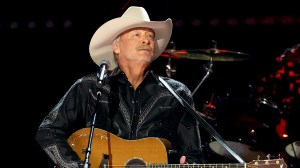
NASHVILLE, TENNESSEE – NOVEMBER 09: Alan Jackson performs onstage at The 56th Annual CMA Awards at Bridgestone Arena on November 09, 2022 in Nashville, Tennessee. (Photo by Terry Wyatt/WireImage) -
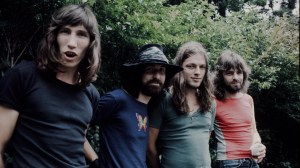
(MANDATORY CREDIT Koh Hasebe/Shinko Music/Getty Images) Pink Floyd live at Hakone Aphrodite, Kanagawa, August 6, 1971. (Photo by Koh Hasebe/Shinko Music/Getty Images) -
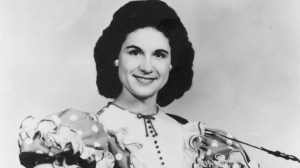
CIRCA 1959: Country singer Kitty Wells poses for a portrait holding an acoustic guitar in circa 1959. (Photo by Michael Ochs Archives/Getty Images)