
John Lennon was one of the first writers whose lyrics were studied by fans for their insight and depth. But Lennon became a little bit wary of those who’d try to find meanings that he didn’t think were there.
As a result, he adjusted late in The Beatles years and early in his solo career. He started keeping the lyrics simple. And he still found ways to captivate with his words and music.
Videos by American Songwriter
“Don’t Let Me Down”
Lennon’s first response to those who went diving deep into his lyrics was to make them deliberately obtuse and nonsensical. The Beatles’ tracks “I Am The Walrus” and “Glass Onion” offer excellent examples of this approach. He eventually decided that he’d try to keep things as simple and direct as possible. “Don’t Let Me Down”, released as a B-side in 1969, offered the first evidence of this approach. Still relatively new to his relationship with Yoko Ono, Lennon used the song to plead for reliability from her. He doesn’t do anything fancy with the lyrics. Instead, he relies on his impassioned vocals, recorded during The Beatles’ rooftop concert at the start of 1969, to communicate.
“I Want You (She’s So Heavy)”
Lennon missed the first chunk of sessions for the Abbey Road album in 1969 while recuperating from minor injuries suffered during a car accident. That’s part of the reason his songwriting output was somewhat diminished compared to what fans had come to expect from him on a Beatles album. “Come Together” was his major offering on the record. Meanwhile, “I Want You (She’s So Heavy)” doesn’t expand much, in lyrical terms, beyond the wording in the title. Over and over, Lennon professes his unquenchable desire for his significant other. The Beatles take the focus off the words by working up quite a maelstrom of sound behind him, especially in the extended coda.
“Love”
Simplicity was the buzzword that dominated the making of Lennon’s 1970 solo album John Lennon/Plastic Ono Band. That extended to the tracks, which generally featured spare instrumentation and little production folderol besides Phil Spector’s engulfing echo. And the lyrics, often inspired by the therapy that Lennon was undergoing at the time, try to say a lot with a little. Most of the songs expressed downcast feelings, as Lennon tried to expunge his past so he could move forward. But “Love”, featuring some pretty piano from Spector and one of Lennon’s most aching melodies, talks in the plainest terms about the power of the titular emotion.
“Oh Yoko!”
After Lennon delivered the daring but harsh John Lennon/Plastic Ono Band album, he decided to course-correct for something much more commercial. There are several songs on the Imagine album, released in 1971, that feel like they could have been hit singles. “Oh Yoko!”, the LP’s closing track, is one of them. But Lennon didn’t choose to release it in that manner, keeping it instead as a blast of goodwill at the end of the record. Nicky Hopkins’ tripping piano certainly makes for a memorable musical hook. And Lennon’s voice is at its most charming and open as he sings an ode to his wife. The lyrics are minimal, as he relates all the different times during a typical day when he calls out to Yoko. Even during a shave.
(Photo by Archive Photos/Getty Images)
More The List
-
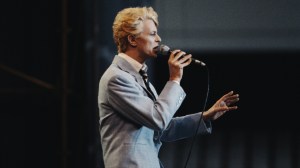
English singer and songwriter David Bowie (1947 – 2016) in concert during his Serious Moonlight tour, 1983. (Photo by Fox Photos/Hulton Archive/Getty Images) -
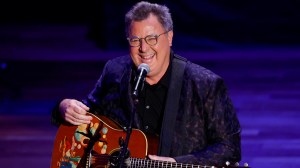
NASHVILLE, TENNESSEE – AUGUST 24: Vince Gill performs during the 15th Annual Academy Of Country Music Honors at Ryman Auditorium on August 24, 2022 in Nashville, Tennessee. (Photo by Brett Carlsen/Getty Images for ACM) -
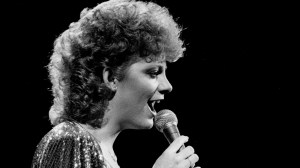
Reba McEntire performing in Birmingham, Alabama, May 7, 1985. (Photo by Paul Natkin/Getty Images) -

Photo by Michael Putland/Getty Images -

CIRCA 1972: Singer Mick Jagger of the rock and roll band "The Rolling Stones" performs onstage in circa 1972. (Photo by Michael Ochs Archives/Getty Images) -

NEW YORK, NEW YORK – DECEMBER 09: Bruce Springsteen performs onstage during The Rainforest Fund 30th Anniversary Benefit Concert Presents 'We'll Be Together Again' at Beacon Theatre on December 09, 2019 in New York City. (Photo by Kevin Mazur/Getty Images for The Rainforest Fund) -
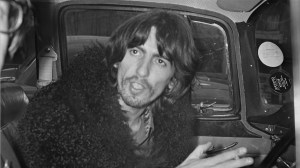
English musician, singer and songwriter George Harrison (1943 – 2001) leaving a recording studio in Twickenham, London, 16th January 1969. (Photo by William Lovelace/Daily Express/Hulton Archive/Getty Images) -
NEW YORK, NY – CIRCA 1984: Michael Jackson performing circa 1984 in New York City. (Photo by Robin Platzer/Images/Getty Images)