
As disco made its way from neon-lit dance halls to mainstream radio in the mid-1970s, rock bands who enjoyed chart domination in the earlier part of the decade found themselves at a crossroads. They could either follow the disco trend or risk falling out of fashion and popularity.
Some rock bands stuck to their roots and opted for the latter. But just as many rock bands decided to go with the former, releasing their version of “disco” before returning to their rock-centric origins. We’ll take a look at four of the most iconic examples below.
Videos by American Songwriter
“Miss You” by the Rolling Stones
While there is some disagreement among members of the Rolling Stones as to whether they explicitly intended their 1978 track “Miss You” to be a disco hit, there’s no denying the song’s dance origins. Featuring a kick drum on every beat (a common theme throughout the disco genre and this round-up in particular) and a driving bass part, “Miss You” is easily one of the most disco-oriented tracks in the band’s catalog.
Guitarist Keith Richards said as such in a later interview, saying “Miss You” was a “damn good disco record,” saying the band specifically calculated it to be one. Drummer Ronnie Woods added a less intentional perspective, saying, “We’d always just adapt with what music was in the air.”
“I Was Made For Lovin’ You” by KISS
American rock band KISS has tried their fair share of adapting their sound to meet the changing times to varying degrees of success (lest we forget the highly controversial album, Music from “The Elder”). And in 1979, they made a pivot from their usual rock ‘n’ roll bravado to try a Motown-inspired disco track, “I Was Made For Lovin’ You.”
According to KISS co-founder and rhythm guitarist Paul Stanley in KISS: Behind the Mask, Stanley wrote the song with Desmond Child specifically to have a “big hit.” The disco-forward song alienated some of the band’s heavier-leaning fans. Nevertheless, it became one of the group’s most iconic tracks.
“Another One Bites the Dust” by Queen
Queen’s “Another One Bites the Dust” might have come at the tail end of the disco movement with its 1980 release, but it certainly had its origins in the dance music of the previous decade. With its signature drum and bass groove, the song took inspiration from specifically disco groups like Chic, who were the masterminds behind “Le Freak” and “Good Times.”
Many believe the latter track directly inspired Queen bassist John Deacon. While Chic leader Bernard Edwards later said he didn’t mind Deacon taking inspiration from the group, he did mind “the press…saying that we had ripped them off! Can you believe that? “Good Times” came out more than a year before, but it was inconceivable to these people that Black musicians could possibly be innovative like that.”
“Another Brick in the Wall, pt. 2” by Pink Floyd
British psychedelic rock band Pink Floyd certainly isn’t the first band to come to mind when thinking about the disco movement of the 1970s. Nonetheless, the avant-garde rockers threw their hat in the dance ring with their 1979 track, “Another Brick in the Wall, pt. 2.”
Per guitarist David Gilmour, producer Bob Ezrin was the primary motivator for the band’s foray into dance music. “[Ezrin] says to me, ‘Go to a couple of clubs and listen to what’s happening with disco music,’” Gilmour later recalled. “So, I forced myself out and listened to loud, four-to-the-bar bass drums and stuff and thought, ‘Gawd awful!’ Then, we went back and tried to turn one of the parts [of “Another Brick in the Wall”] into one of those, so it would be catchy.”
Photo by Richard Creamer/Michael Ochs Archives/Getty Images
More The List
-
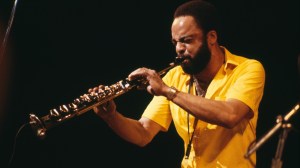
Grover Washington, Jr. (1943-1999), U.S. jazz saxophonist, during a live concert performance, circa 1980. (Photo by David Redfern/Redferns/Getty Images) -
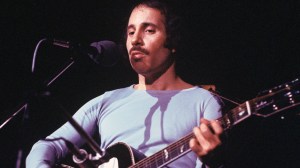
Paul Simon performs on stage in May 1973 in Amsterdam, Netherlands. (Photo by Gijsbert Hanekroot/Redferns) -

Bruce Springsteen -

Studio portrait of Patti Smith wearing a US air force shirt, Amsterdam, Netherlands, 9th October 1976. (Photo by Gijsbert Hanekroot/Redferns) -
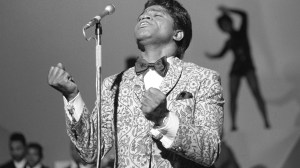
American soul singer James Brown sings on the Ed Sullivan Show, New York, October 30, 1966. (Photo by CBS Photo Archive/Getty Images) -
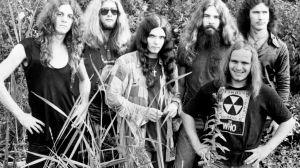
Photo by Michael Ochs Archives/Getty Images -

AMSTERDAM, NETHERLANDS – JULY 18: Eddie Vedder of Pearl Jam performs live on stage at Paradiso on July 18, 1993 in Amsterdam, Netherlands. -
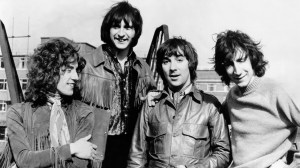
CIRCA 1975: Roger Daltrey, John Entwistle, Keith Moon and Pete Townshend of the rock and roll band "The Who" pose for a portrait in circa 1975. (Photo by Michael Ochs Archives/Getty Images)