Trading and covering songs are an age-old practice in the music industry, and in the 1970s, there were multiple acts that achieved one-hit-wonder status by releasing renditions of someone else’s song.
In some cases, the cover version of a song achieved greater commercial success than the original. Take, for example, these four tracks—all of which were so unique to themselves that if you didn’t know any better, you’d never know that the song was a cover.
Videos by American Songwriter
“Love Hurts” by Nazareth
The Everly Brothers first released “Love Hurts”, a song originally written by Boudleaux Bryant, in the fall of 1960. Fourteen years later, Scottish hard rockers Nazareth released a rendition of this lamenting ballad that fit like a glove. The song, which appeared on the band’s sixth studio album, Hair Of The Dog, has become a staple in the power ballad canon.
Dan McCafferty’s vocal performance carries the track, adding emotion that not even The Everly Brothers’ airtight harmony could produce. Even today, Nazareth’s version of “Love Hurts” remains the most ubiquitous, often appearing in television commercials, film, and other media over the original 1960 version.
“Black Betty” by Ram Jam
The original “Black Betty” dates back to chain-gang songs of the early 20th century, which is why not many people realized Ram Jam was covering it when they released their version in 1977. This one-hit wonder cover is a gritty, grooving number with fat guitar tones and an impeccable jam session that sounds completely original to the band.
Indeed, Ram Jam’s version of “Black Betty” is an example of a band expanding upon a cover to elevate it to new heights. Leadbelly’s original recorded version is an undeniable standard. But in terms of 1970s rock, so is Ram Jam’s.
“Hooked On A Feeling” by Blue Swede
In the mid-1970s, one-hit wonder Blue Swede showed the world that the quickest way to make a cover song your own is to formulate an intro from somewhere out in left field. Mark Thomas wrote “Hooked On A Feeling” in the late 60s, and B.J. Thomas was the first to record it. This version reached an impressive No. 5 on the Billboard Hot 100 in 1969.
Five years later, Swedish pop rockers Blue Swede put out their rendition of the song. In this version, the song begins with a distinct “ooga chaka” introduction that instantly sets it apart from the original. Blue Swede’s cover bested Thomas’ original, hitting No. 1 on the charts.
“Lotta Love” by Nicolette Larson
There’s an undeniably heartfelt groove in Neil Young’s version of “Lotta Love”, but Nicolette Larson’s cover certainly leaned further into the disco movement. Larson had already been working with Young as a backup vocalist when she first heard Young’s song. He offered it to her, and she accepted, releasing her own version around the same time that Young put out his album with the song, Comes A Time.
The 1970s cover garnered Larson a No. 8 hit on the Billboard Hot 100, which eventually transitioned her into one-hit wonder status after subsequent releases failed to recreate that same success. Still, Larson’s version of Young’s tune was an incredible example of an artist turning a cover song into something totally original to them.
Photo by kpa/United Archives via Getty Images
More The List
-
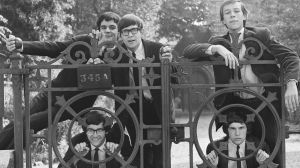
Photo by Stanley Bielecki/ASP/Getty Images -
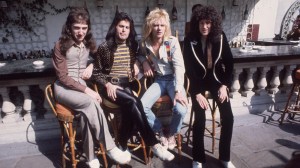
th September 1976: British rock group Queen at Les Ambassadeurs, where they were presented with silver, gold and platinum discs for sales in excess of one million of their hit single 'Bohemian Rhapsody'. The band are, from left to right, John Deacon, Freddie Mercury (Frederick Bulsara, 1946 – 1991), Roger Taylor and Brian May. (Photo by Keystone/Getty Images) -
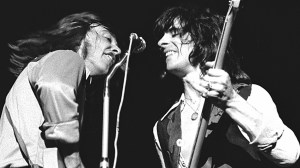
Badfinger performs at Pasadena Civic Auditorium Pasadena, CA 1972; Various Locations; Mark Sullivan 70's Rock Archive (Photo by Mark Sullivan/Contour by Getty Images) -
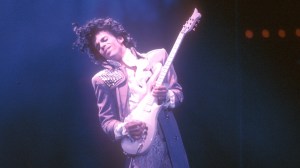
INGLEWOOD – FEBRUARY 19: Prince performs live at the Fabulous Forum on February 19, 1985 in Inglewood, California. (Photo by Michael Ochs Archives/Getty Images) -
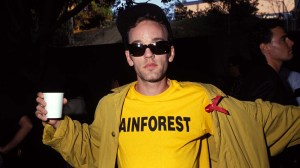
LOS ANGELES – SEPTEMBER 5: Michael Stipe at the 1991 MTV Video Music Awards at in Los Angeles, California. (Photo by Jeff Kravitz/FilmMagic) -
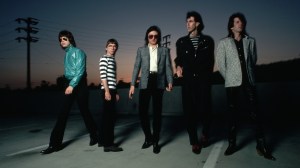
Members of the band The Cars (from left: David Robinson, Greg Hawkes, Benjamin Orr, Ric Ocasek and Elliot Easton) pose for a picture at dusk.. (Photo by Lynn Goldsmith/Corbis/VCG via Getty Images) -
Photo by Jack Robinson/Getty Images