
Over the years, quite a few well-known artists have re-recorded versions of their own songs for various reasons. In recent years, artists like Taylor Swift and John Fogerty have revisited their back catalogs as a way to generate royalties from sales of songs they composed, but to which they didn’t own the publishing rights.
Meanwhile, there are many other earlier instances of musicians recording remakes of their songs for other reasons. Some examples are for nostalgia purposes, to reimagine a tune with a more modern sound, or to reflect an updated personal perspective, and to change a song’s theme and lyrics to pay tribute to someone.
Videos by American Songwriter
[RELATED: 4 Artists Who Recorded Sequels to Their Own Songs, Including David Bowie and Harry Chapin]
Here then are four interesting examples of songs by famous artists that they remade years after the original was recorded.
“I Wonder If I Care As Much” by The Everly Brothers (1957 and 1968)
“I Wonder If I Care As Much” is a country-pop tune that The Everly Brothers originally released in 1957. The track was the B-side of their first hit, “Bye Bye Love”. The song, which was written by Don Everly, also appeared on the sibling duo’s self-titled 1958 debut album.
“I Wonder If I Care As Much” is sung from the perspective of a guy who is aching over troubles he’s having with a love interest. The original version features Don and Phil Everly’s trademark tight harmonies back by a swaying rhythm and gentle pedal steel.
The Everly Brothers recorded a new version of the song for their 1968 album Roots. The album featured the duo updating their sound while exploring country rock. The new take on “I Wonder If I Care As Much” featured a slower tempo and an atmospheric, ominous arrangement that included some eerie guitar feedback.
“One After 909” by The Beatles (1963 and 1970)
“One After 909” was an early Beatles song that was written around 1957. In separate interviews, John Lennon said he’d penned the rock ‘n’ roll tune by himself. Paul McCartney claimed it was a collaboration.
The Beatles first attempted to record “One After 909” in March 1963, during the same session that yielded their chart-topping U.K. hit “From Me To You”. The band played a few takes of “One After 909” but were unhappy with them, so the song was shelved.
In January 1969, The Beatles dusted off “One After 909” while they were recording songs that eventually appeared on their final studio effort, Let It Be (1970). The version released on Let It Be was recorded during the band’s famous rooftop performance at their Apple Corps headquarters building in London. Guest musician Billy Preston is featured on electric piano. At the end of the performance, Lennon humorously begins singing a bit of the traditional Irish folk song “Danny Boy”.
A recording of the 1963 version of “One After 909” was finally released in 1995 as part of The Beatles’ Anthology 1 rarities compilation.
“Candle In The Wind” by Elton John (1973 and 1997)
“Candle In The Wind” was a melodic ballad that first appeared on Elton John’s classic 1973 double album Goodbye Yellow Brick Road. The song’s original lyrics, written by Bernie Taupin, are a tribute to Hollywood legend Marilyn Monroe, who died at age 36 in 1962.
“Candle In The Wind” was released as a single in the U.K. in 1974, reaching No. 11 on the chart.
In 1997, after the tragic death of Diana, Princess of Wales, in a car crash, Elton recorded a new version of “Candle In The Wind”. That version features updated lyrics penned by Taupin about the beloved member of the royal family. The song, retitled “Candle In The Wind 1997”, immediately went to No. 1 on the U.K. singles chart. It spent a whopping five weeks there. In the U.S., “Candle In The Wind 1997” took over the top of the Billboard Hot 100 for 14 weeks.
“Candle In The Wind 1997” is the bestselling single of all time in the U.K., and the second best-selling single in the U.S. (after Bing Crosby’s “White Christmas”).
“Both Sides Now” by Joni Mitchell (1969 and 2000)
“Both Sides Now” is one of legendary Canadian singer/songwriter Joni Mitchell’s signature tunes. The song, written as a reflection on love and life from a young woman’s perspective, dates back to at least 1966. American folksinger Judy Collins had a Top 10 hit with her cover of the tune in 1968.
Mitchell didn’t release her own studio version of “Both Sides Now” until her second album, 1969’s Clouds. The track features Joni’s high, sweet voice and strummed acoustic guitar.
In 2000, Mitchell released an album titled Both Sides Now that mostly featured lush orchestral versions of jazz standards. The final track is a rearranged rendition of “Both Sides Now”, showcasing Joni’s more mature, deeper voice.
In 2001, the Both Sides Now album was awarded a Grammy for Best Traditional Pop Vocal Album. The updated song took home the Best Instrumental Arrangement Accompanying Vocalist(s) trophy.
(Photo by Reg Lewis/Daily Mirror/Mirrorpix via Getty Images; Photo by David Warner Ellis/Redferns)
More The List
-
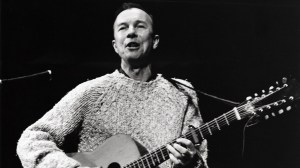
UNITED KINGDOM – JANUARY 01: Photo of Pete SEEGER; Pete Seeger performing on stage at a Paul Robeson benefit concert (Photo by Brian Shuel/Redferns) -
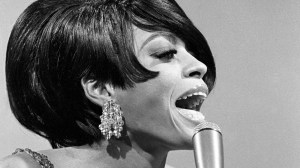
UNSPECIFIED – CIRCA 1970: Photo of Diana Ross Photo by Michael Ochs Archives/Getty Images -

The British singer Kate Bush poses for a photo shoot. Great Britain, 1980 (Photo by Angelo DeligioMondadori via Getty Images) -
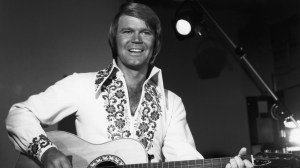
Photo via NBC/Getty Images -
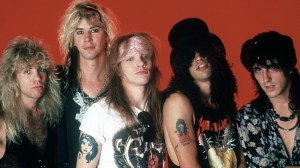
DETROIT, MI – MAY 7: (L-R) Drummer Steven Adler, Duff McKagan, vocals Axl Rose, guitarist Slash and guitarist Izzy Stradlin of the music group Guns N' Roses pose for a portrait on May 7, 1988, at the Detroit State Theater in Detroit, Michigan. (Photo by Ross Marino/Getty Images) -
TENNESSEE – CIRCA 1955: Country singer Dolly Parton poses for a portrait in circa 1955 in Tennessee. (Photo by Michael Ochs Archives/Getty Images) -
Phil Collins seen here following rehearsals in a London studio for his forthcoming Seriously tour, which begins in Japan. 14th February 1990 (Photo by Steve Woods/Mirrorpix via Getty Images) -
(L-R) Joe Walsh, Timothy B. Schmit, Glenn Frey, Don Henley and Don Felder of the rock band "Eagles" performing onstage in 1980. (Photo by Michael Ochs Archives/Getty Images)