Original Yes frontman Jon Anderson entered our cosmic plane 80 years ago today (October 25). Anderson co-founded Yes in 1968 and, with his soaring, reedy voice, established himself as one of the premier prog-rock singers.
Jon enjoyed three stints in Yes, from 1968 to 1980, 1983 to 1988, and 1990 to 2004. During that time, Anderson was responsible for co-writing many of the band’s most enduring and popular tunes. The singer was particularly known for his poetic lyrics that delved into mysticism, spirituality, fantasy, and science fiction. His songs also strove to promote peace, love, and unity.
Videos by American Songwriter
Outside of his work with Yes, Anderson has released more than a dozen solo albums and also collaborated with a variety of other artists. Among the other musicians he’s worked with are Vangelis, jazz-rock violinist Jean-Luc Ponty, King Crimson, Toto, and Mike Oldfield.
In 2017, Anderson was inducted into the Rock & Roll Hall of Fame as a member of Yes.
Anderson released his most recent album, True, in August of 2024. The record is a collaboration with Jon’s current touring outfit, The Band Geeks. The group is a collective of talented musicians is led by longtime Blue Öyster Cult bassist Richie Castellano.
In honor of Anderson’s milestone birthday, here’s a look at four of the most unforgettable Yes songs he sang and co-wrote:
“I’ve Seen All Good People” (1971)
“I’ve Seen All Good People” was featured on Yes’ third album, The Yes Album, which was released in March 1971. The song is made up of two parts. The first, “Your Move,” was written by Anderson, and the second, “All Good People,” was composed by bassist Chris Squire.
“I’ve Seen All Good People” is an anti-war song that questions why all people can’t coexist peacefully.
“The song is about initiation of yourself into the idea that there is more to life than war and fighting within religions and things like that,” Anderson explained in a 2021 interview with Songfacts. “So when we were singing ‘see all good people,’ it’s like, ‘we can see you all in the audience because you’re good people no matter what, and when you’re with music you’re enlightened, you’re good, you’re happy, you’re excited.’”
In “Your Move,” Anderson uses imagery from chess to represent the relationship between a man and a woman.
An edited version of “I’ve Seen All Good People,” titled “Your Move (I’ve Seen All Good People),” was released as a single in the U.S. It became Yes’ first charting hit, reaching No. 40 on the Billboard Hot 100.
“Roundabout” (1972)
Certainly one of Yes’ most famous tunes, if not its signature song, is “Roundabout.” The song was featured on Yes’ classic fourth album, Fragile, which was released in the U.S. in January 1972.
Anderson co-wrote “Roundabout” with Yes guitarist Steve Howe. Some the song’s surreal lyrics were inspired by Yes driving through the lake and highlands regions of Scotland while on tour. The title came from the fact that the band’s van went through many traffic circles, or roundabouts, during the journey. The tune also includes lyrics in which Jon expresses his anticipation of seeing his wife again when the group returns from the road.
The album version of “Roundabout,” which ran about 8-and-a-half-minutes, was edited down to 3-and-a-half minutes for the single release. “Roundabout” became Yes’ first Top-20 hit, peaking at No. 13 on the Hot 100.
“Wonderous Stories” (1977)
“Wonderous Stories” is a track from Yes’ eighth studio album, Going for the One, which was released in 1977. Anderson wrote the song by himself, inspired by a beautiful day he experienced while the band was recording in Montreux Switzerland.
The melodic ballad served as an excellent showcase for Anderson’s soaring vocals. Although the song failed to chart in the U.S., it became Yes’ most successful single in their homeland, ascending to No. 7 on the U.K. singles tally.
“Owner of a Lonely Heart” (1983)
Fifteen years into their storied career, Yes scored their biggest hit in 1983 with “Owner of a Lonely Heart.”
The song was primarily written several years earlier by South African guitarist Trevor Rabin. After Yes had temporarily split up in 1981, Rabin began working with Squire and longtime Yes drummer Alan White in a newly formed band called Cinema, and had brought a bunch of his own compositions to the project.
In early 1983, Anderson was invited to join the group. With original Yes keyboardist Tony Kaye also being part of the band, it was decided that rather release their album under the Cinema moniker, it just became a new Yes record. The album, 90125, was released in November 1983 with “Owner of a Lonely Heart” preceding it as its lead single.
The song was credited to Rabin, Anderson, Squire, and 90125’s producer Trevor Horn. Horn, former leader of the New Wave band The Buggles, also briefly fronted Yes in 1980 and ’81.
“Owner of a Lonely Heart” added contemporary modern-rock elements to Yes’ prog-rock sound. With some help from a music video that garnered heavy MTV airplay, the tune became Yes’ one and only song to top the Hot 100. It spent two weeks at No. 1 in January 1984, knocking the Paul McCartney-Michael Jackson duet “Say Say Say” from the top spot.
More The List
-
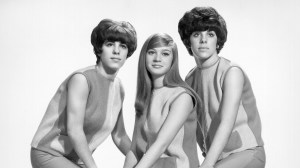
NEW YORK – CIRCA 1965: The Shangri-Las pose for a portrait circa 1965 in New York City, New York. Photo by Michael Ochs Archives/Getty Images -
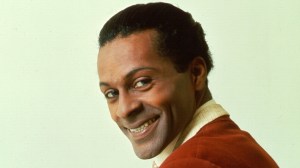
CHICAGO – CIRCA 1958: Rock and roll musician Chuck Berry poses for a portrait session in circa 1958 in Chicago, Illinois. (Photo by Michael Ochs Archives/Getty Images) -

Photo by Fox Photos/Hulton Archive/Getty Images -
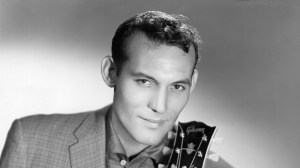
Carl Perkins poses for a portrait with his guitar in Memphis in the mid 1950's. (Photo by Michael Ochs Archives/Getty Images) -

Los Angeles – 1967: Country Musician Merle Haggard Performs on Stage With a Dog During a 1967 Television Show in Los Angeles, California. (Photo by Michael Ochs Archives/Getty Images) -
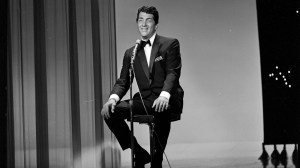
THE HOLLYWOOD PALACE – Airdate: March 7, 1964. (Photo by ABC Photo Archives/Disney General Entertainment Content via Getty Images) HOST DEAN MARTIN -

John Rzeznik of Goo Goo Dolls at event, New York, 1990s. (Photo by Steve Eichner/Getty Images)