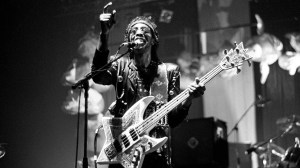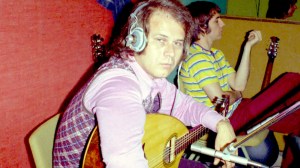
In rock music, the guitar is the instrument that usually stays front and center. Often, lead vocalists accompany themselves on guitar, with their bandmates providing vocal and instrumental support in the background.
Piano, on the other hand, doesn’t seem to be a “rock” instrument—at least, that’s not how the average person would classify it. However, piano music can be a massive part of a good rock song, whether providing underlying support for the melody or letting the keyboardist show off their skills. These six classic rock songs allow the piano parts to shine through.
Videos by American Songwriter
1. “Bohemian Rhapsody,” Queen (1975)
Queen’s 1975 song “Bohemian Rhapsody” broke the rules in many ways. It doesn’t seem to fit into a specific genre or time signature; the lyrics are often mystifying; and, at more than six minutes long, the song was considered too long for radio play. Despite these factors, the track has become a cult classic and undoubtedly the band’s most enduring legacy.
Despite the “weirdness” of the song, “Bohemian Rhapsody” showcases frontman Freddie Mercury’s talent like no other. The first section after the introduction is a smooth piano ballad; however, the accompaniment continues throughout the song, seamlessly switching genres and tempos. Mercury famously used a cross-handed technique to achieve the rapid octave-jumping of the music. “Bohemian Rhapsody” has been compared to famous piano works of the 19th and 20th centuries by composers such as Schumann, Chopin, and Liszt—a comparison that shows how truly talented Mercury was.
[RELATED: Revisiting the Meaning of “Bohemian Rhapsody” by Queen]
2. “Don’t Stop Believin’,” Journey (1981)
In many ways, Journey’s legendary hit can be called the quintessential piano rock song. The distinctive piano riff drives the track, played by Journey keyboardist Jonathan Cain. Interestingly, Cain helped write the song, coining the title based on his father’s encouragement when he was a struggling musician. Maybe this memory provided the power behind Cain’s manic piano on the track. Whatever the reason, the piano accompaniment is one of the things that makes “Don’t Stop Believin’” so great, and undoubtedly one of the most successful rock songs of all time.
3. “November Rain,” Guns N’ Roses (1991)
Guns N’ Roses wasn’t a band known for producing sweeping ballads at first. But that changed when they released “November Rain,” a symphonic track emphasizing piano, guitar, and strings. The song made history for being one of the longest songs to hit the Top Ten on the charts; it also became one of the band’s most famous songs.
Some of this was due to the sheer talent and intensity behind the instrumental portions of the song. Axl Rose was at his frenzied best on keyboards for the track, holding his own even alongside Slash’s now-legendary guitar solo. For not being a power ballad band, Guns N’ Roses sure does them impeccably.
4. “Fool In The Rain,” Led Zeppelin (1979)
“Fool In The Rain” isn’t as widely remembered in Led Zeppelin’s discography. Released as their final single before the band’s breakup, it had the aura of being the last song to slip through the door before it closed. Because of its release timing, “Fool In The Rain” never appeared on a live performance’s setlist. Nevertheless, it stands out for its unique and expert instrumentation.
One of the most fascinating things about the track is its melding of genres and time signatures. The track seamlessly blends samba with rock, pitting piano and percussion against one another in a polyrhythmic battle. It’s an intensely complex accompaniment for a rock song and one that speaks to the talents of keyboardist John Paul Jones.
5. “Every Little Thing She Does Is Magic,” The Police (1981)
For their 1981 song “Every Little Thing She Does Is Magic,” The Police enlisted session pianist Jean Alain Roussel to compose and perform the piano part. The song is dominated by a combination of keyboards and synthesizers, meaning the keyboardist had to be impeccable. Roussel certainly delivered, composing the piano part after The Police had written the rest of the song.
Roussel’s inclusion caused division among the band members, who said the multiple piano tracks were too busy and the song wasn’t in line with their sound. But the song proved a significant hit, validating Roussel as a talented composer and performer.
6. “Come Sail Away,” Styx (1977)
Styx’s strange, otherworldly song “Come Sail Away” seems part rock opera, part power ballad. It alternates gentle melodies accompanied by soft piano with banging, explosive instrumental sections and wild percussion. The song was known for its strange lyrics that seem to reference UFOs. But musicians have long praised the track for its instrumental skill, particularly when it comes to the piano and guitar.
Styx vocalist and keyboardist Dennis DeYoung showcased his skills on both piano and synthesizer for the track. The piano leads the song’s abrupt shifts in tempo, mood, and even genre, from sweetly meandering to explosively manic.
Photo credit: Steve Jennings/WireImage
More Features
-
Photo by Michael Ochs Archives/Getty Images -

American country music singer Earl Thomas Conley (1941 – 2019) performs at the Poplar Creek Music Theater in Hoffman Estates, Illinois, May 26, 1985 in Hoffman Estates, Illinois (Photo by Paul Natkin/Getty Images) -
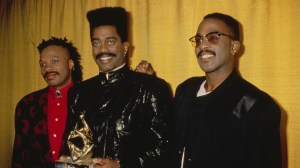
American funk band Cameo (American singer Charlie Singleton, American singer and musician Larry Blackmon, and American singer and musician Tomi Jenkins) in the press room of the 1987 Soul Train Music Awards, held at the Santa Monica Civic Auditorium in Santa Monica, California, 23rd March 1987. Cameo won the awards for 'Album of the Year (Group, Duo, or Band)' for 'Word Up!' and 'Best Single (Group, Duo, or Band)' for 'Word Up'. (Photo by Vinnie Zuffante/Getty Images) -
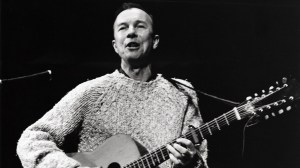
UNITED KINGDOM – JANUARY 01: Photo of Pete SEEGER; Pete Seeger performing on stage at a Paul Robeson benefit concert (Photo by Brian Shuel/Redferns) -
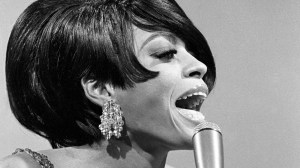
UNSPECIFIED – CIRCA 1970: Photo of Diana Ross Photo by Michael Ochs Archives/Getty Images -

The British singer Kate Bush poses for a photo shoot. Great Britain, 1980 (Photo by Angelo DeligioMondadori via Getty Images)