With The Beatles continuing to be one of the world’s best-known and most-loved bands six decades after the onset of Beatlemania, some folks find it hard to imagine many people are unfamiliar with the band’s work. According to one study, though, more than two out of three Gen Z’ers may know who the Beatles are, results are shaky as to how well-known they are by that generation.
So there are opportunities to spread one’s love for the Fab Four. If you have the time to introduce a Beatles newbie to six of their songs, we think these would offer a great starting-off point, as they exemplify what’s great about the Beatles, and also represent the band’s various eras.
Videos by American Songwriter
1. “Love Me Do”
Firstly: If the primary impediment to your friend’s recognizing The Beatles as the greatest band in pop or rock history is that their early songs were sappy…don’t start with this one. Bump it to No. 6.
OK, that said…This was the Beatles’ first single and the first song they recorded, so it’s a logical place to start. It’s also a great way to embark on their catalog because the song typifies what made The Beatles such a sensation. It’s immediately catchy and provides a classic example of Paul McCartney and John Lennon’s harmonies. There’s nothing showy about it, and if it doesn’t sound like Ringo Starr’s typical drumming, that’s because–if you’re listening to the album version–it’s not Ringo. Andy White is behind the kit with Ringo playing only tambourine.
2. “In My Life”
Three years elapsed between the recording of “Love Me Do” and The Beatles’ sixth album, Rubber Soul. But when listening to the latter album, it sounds like it was made in a different era altogether. On “In My Life,” the use of panning techniques is immediately apparent, as George Harrison’s guitar appears in one channel, and then Lennon’s layered lead vocals and McCartney’s and Harrison’s backing vocals arrive in the other channel.
The song also represents a shift lyrically, as Lennon cites it as the first song he wrote about events from his own life. Producer George Martin would occasionally contribute keyboard work to The Beatles’ albums; on this track, he provides a piano solo.
3. “Paperback Writer”
The Beatles got more experimental with the follow-up to Rubber Soul, Revolver. However, while “Paperback Writer” was recorded during the sessions for the 1966 album, it was not included as a part of that record.
McCartney’s fuzzy guitar riff gives the song a harder edge, but it still features the melodicism and vocal harmonies of the band’s earlier material. It’s a great showcase for McCartney overall, with its killer bass line and the wry delivery of the lyrics spotlighting the song’s shady aspiring paperback novelist.
[RELATED: Watch Documentary About New Beatles Song, “Now and Then,” Featuring a Clip of the Tune]
4. A Day in the Life
Sgt. Pepper’s Lonely Hearts Club Band represented another major change in direction for the Beatles, as it was a loose concept album that was far more psychedelic than their previous albums. While several tracks from the album could aptly introduce a new listener to the Beatles’ more psychedelic side, “A Day in the Life” does so while also showing the band’s increasing musical sophistication.
The song seamlessly blends its three sections—movements, really—into Lennon’s dreamy beginning and ending segments sandwiching an upbeat middle part in which McCartney describes a rush to leave the house and catch a bus. Orchestral arrangements do the heavy lifting of transitioning the listener from section to section, and they take us through to the final crescendo that lands listeners on the cacophonous song-ending chord.
While “A Day in the Life” is not the Beatles’ most experimental track, it is among their most ambitious,. It’s sufficiently listener-friendly, though, and has served as a staple of radio playlists since its release.
5. Revolution
The single version of the song—as opposed to “Revolution 1” or “Revolution 9,” which appeared on The Beatles’ self-titled album (a.k.a. The White Album)—shows the band’s continued evolution toward a more discordant sound and politically-oriented lyrics.
The guitars are even fuzzier here, and the inspired panning gives every instrument its own space in which to be heard as Lennon makes his impassioned plea for non-violent change. This energetic tune also gets a boost from a rollicking Nicky Hopkins keyboard solo.
6. Here Comes the Sun
An introduction to The Beatles wouldn’t be complete without including a song that highlights guitarist George Harrison’s contributions. Abbey Road features two of Harrison’s best-known compositions, “Something” and “Here Comes the Sun,” both masterpieces and two of The Beatles’ very best.
The brightness of Harrison’s acoustic guitar on “Here Comes the Sun” is a perfect match for his optimistic lyrics. The song was not only Harrison’s attempt to cheer himself up during a stressful period, but it also provided a counterpoint to some of the edgier material from The White Album, such as “Helter Skelter” and “Revolution 9.”
Photo by Larry Ellis/Express/Getty Images
More Features
-
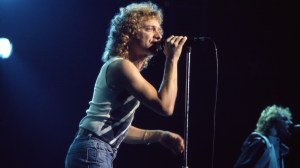
American Rock musician Lou Gramm (born Louis Grammatico), of the group Foreigner, performs onstage at Madison Square Garden, New York, New York, October 30, 1981. Visible at right is Rick Wills, on bass. The group was performing in support of their album, '4.' (Photo by Gary Gershoff/Getty Images) -

NASHVILLE, TENNESSEE – SEPTEMBER 04: Hailey Whitters performs at Nashville Palace on September 04, 2025 in Nashville, Tennessee. (Photo by Jason Kempin/Getty Images) -
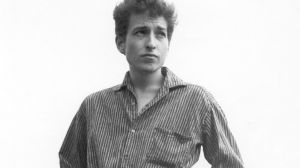
Bob Dylan poses for a portrait to promote the release of his album 'The Times They Are A-Changin'' in January 1964. (Photo by Michael Ochs Archives/Getty Images) -
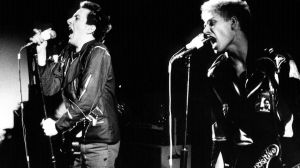
Joe Strummer (1952 – 2002, left) and Paul Simonon performing with British punk group The Clash at the Coliseum, Harlesden, London, 11th March 1977. (Photo by Julian Yewdall/Getty Images) -
Photo by Rick Diamond/Getty Images -
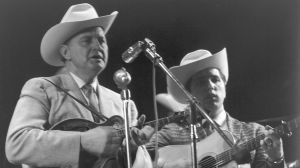
Bluegrass musician Bill Monroe performs circa 1970. (Photo by Michael Ochs Archives/Getty Images)