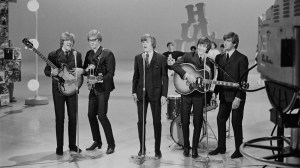
When George Jones and his backing band approached the 80th countoff to J.P. “The Big Bopper” Richardson’s “White Lightning”, they probably weren’t thinking they were dealing with a future chart-topping hit. If the sheer number of takes were any indication, the recording process was not going well. Even Jones would later say that he wasn’t in good shape, which is still audible in the final version he released on February 9, 1959.
Despite all the trouble they were having at Bradley Studios that day in Nashville, Tennessee, the song was a success. For the band, Jones’ rendition of “White Lightning” reaching No. 1 on the Billboard Hot Country and Western Sides chart was a much-deserved award for, quite literally, putting their blood and sweat into the track.
Videos by American Songwriter
“I was drinking heavily throughout the session,” Jones explained in his memoir, I Lived to Tell It All. “[Buddy] Killen [producer and bassist] later said we did eighty-three takes before we got one we could use. Killen said he wore the skin off his fingers playing that same opening and had to wear Band-Aids to cover raw blisters. Years later, he said he could still remember the pain from playing that kickoff over and over on the stiff, woven-wire strings of an upright bass.”
Indeed, Jones’ version of “White Lightning” was a hard-fought record. But tragically, the song’s original composer wouldn’t be around to see all the effort Jones and company put into recording his 1958 rockabilly tune.
Tragedy Struck Before the Big Bopper Could See “White Lightning” Go No. 1
Six days before George Jones released his rendition of “White Lightning” on White Lightning and Other Favorites, the song’s original writer, J.P. “The Big Bopper” Richardson died in a plane crash. It was the same infamous tragedy that took the lives of Buddy Holly and Ritchie Valens, prompting Don McLean to later dub it “the day the music died.” The musicians’ plane went down near Clear Lake, Iowa, after wintry conditions caused the pilot to lose control of the aircraft.
Although some sources vary on when, exactly, “White Lightning” came out (Jones’ account even differs from most records, with him citing March 9 as the release date), the general consensus is that Jones’ version came out after Richardson, Valens, and Holly died. Jones wrote in his memoir, “I have been sorry ever since that [Richardson] didn’t live to see his song go No. 1.”
Interestingly, Jones recorded “White Lightning” as somewhat of an afterthought. Mercury Records producer Pappy Daily previously wanted Sonny Burns to record “White Lightning”, and when he refused, Daily gave the song to Jones. Also of note is the fact that, even though the band recorded over 80 takes, Daily ultimately settled on the first. (Isn’t that the way it always goes in the studio?) That first take, the final album version, features Jones slurring the word “slug,” which seems more than appropriate for a rockabilly song about moonshine. The country singer would replicate this honest, drunken mistake in subsequent live performances, whether or not he was partaking.
Photo by Michael Ochs Archives/Getty Images
More Behind The Song
-
DON GIBSON, Country Sänger, 70er. (Photo by kpa/United Archives via Getty Images) -
Photo by Hulton Archive/Getty Images -
THE TONIGHT SHOW WITH JAY LENO — — Pictured: Musician Trace Adkins performing on April 8, 1998 — (Photo by: Margaret Norton/NBCU Photo Bank/NBCUniversal via Getty Images via Getty Images) -
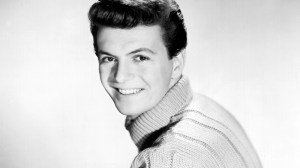
CIRCA 1960 Rock and Roll singer Dion DiMucci of "Dion And The Belmonts" poses for publicity photo after going solo circa 1960. (Photo by: Michael Ochs Archives/Getty Images) -

LONDON, UNITED KINGDOM – JANUARY 11: Debbie Harry of Blondie performs on stage at Hammersmith Odeon on January 11th, 1980 in London United Kingdom. (Photo by Pete Still/Redferns) -
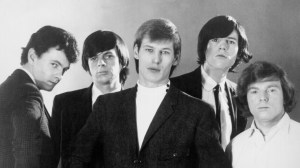
LONDON – 1965: Rock band "Them" featuring Van Morrison (right) and an ever changing line up of session musicians pose for a portrait in 1965 in London, England. (Photo by Michael Ochs Archives/Getty Images) -
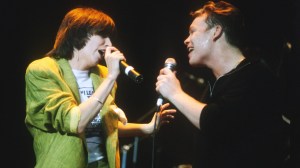
Pretenders, Chrissie Hynde and UB40, T/W, Torhout/Werchter, Belgium, 5th July 1986. (Photo by Goedefroit Music/Getty Images)