Sometimes, a song can only reach its full potential by an artist Frankenstein-ing several musical ideas into one cohesive track, as was the case for these midcentury medley tracks that give you multiple songs for the price of one. Incorporating different themes, keys, and styles not only gives the musicians room to stretch their legs and experiment.
But these arrangements can also make the song more exciting and engaging for the listener, inviting them to navigate each distinct part over and over until the song is inextricably stuck in their head—kind of like these ones.
Videos by American Songwriter
“Bohemian Rhapsody” by Queen
When it comes to a multi-faceted, hyper-creative musical tour de force, it doesn’t get much more powerful and iconic than Queen’s “Bohemian Rhapsody.” Despite having no discernible chorus and operatic passages that would hardly pass on nearly any other track vying for chart-topping commerciality, almost everyone can sing at least one section of the 1975 mock opera. The most important question is: which is your favorite?
(Hint: ours is the operatic chorus singing about Beezlebub just before the hard rock section that Wayne’s World brought back to life in 1993. But honestly, we’d have to cop out and say they’re all fantastic.)
“Good Vibrations” by the Beach Boys
To be clear, this list of top medley songs is in no particular order because if it were, it would stand to reason that the Beach Boys’ “Good Vibrations” should be at the top of the list as the most groundbreaking. Songwriter Brian Wilson completely changed the pop production game with his monumental track that weaves sentimental love balladeering with an eccentric, theremin-filled hook complete with the pop group’s signature airtight harmonies.
English journalist Derek Taylor would later describe the track as Wilson’s “pocket symphony,” which is an incredibly appropriate term for this magnum opus song from 1966 that Wilson co-wrote with Mike Love.
“A Day in the Life” by the Beatles
The Beatles often employed distinct musical sections, solidifying the most successful pop and rock formulas of the early to mid-1960s. However, the Fab Four took a hard left with their sprawling medley song “A Day in the Life,” which ranges from a melancholy croon via John Lennon to symphonic chaos that feels like it could burst at the seams at any second to a jaunty little ditty from Paul McCartney (in chronological order).
Lennon famously used a nearby open newspaper to come up with the song’s lyrics, and the song really does almost feel like you’re flipping through the stories of the daily paper.
“I Call Your Name” by the Mamas & the Papas
Although “I Call Your Name” is technically an early Beatles cut, we’d argue that the Mamas and the Papas were able to transform the song into a true melody. In the original, Ringo Starr’s steady beat connects each section of the song—verse, chorus, bridge—together. The Mamas & the Papas broke up the song arrangement, sectioning each musical idea into its own segment with a unique tempo, groove, and prominent vocalist.
The group gave several nods to the Beatles, including Cass Elliot whispering John Lennon’s name (he was her favorite Beatle) and the group’s final I call your name, yeah harkening to the early Fab Four track, “She Loves You.”
“Band On the Run” by Paul McCartney & Wings
After years of writing hit after hit with the Beatles, Paul McCartney really showed how much he could stretch his, er, wings with “Band on the Run,” the 1973 title track from McCartney and Wings’ third studio album. The five-minute, three-song medley track is one of Macca’s longest singles. And in true Macca fashion, each section gets better than the last.
From the dreamy, synth-laden opening to a rocking minor section that showcases McCartney’s guttural, pseudo-scream voice to an almost Eagles-like easy-listening closer, McCartney proved he could do more than write a hit single. He could write three for the price of one.
“The Chain” by Fleetwood Mac
Fleetwood Mac’s musical legacy is intertwined with their fractured interpersonal dynamics. But in 1977, the rock band re-forged that connection link by link with their song “The Chain.” Interestingly, the Rumours track is the only song in the British-American rock band’s discography that credits all five members: Stevie Nicks, Lindsey Buckingham, Christine McVie, John McVie, and Mick Fleetwood.
A fresh set of ears might think the song is over after the harmony-rich, droning first half of the song fades away. Then, ever so gently, John McVie’s bass cuts through the mix, signaling the song is about to catapult itself into a high-spirited, quintessentially Fleetwood Mac jam sesh.
“Suite: Judy Blue Eyes” by Crosby, Stills & Nash
Crosby, Stills & Nash’s 1969 track, “Suite: Judy Blue Eyes,” contains three distinct sections with different musical ideas in each one. However, part of the appeal of this song is how well the group’s vocal harmonies and distinctly layered guitar tones carry each section into the next, even when they switch to an entirely different groove in one beat. Stephen Stills later recalled having three separate ideas in his head before realizing they could interlock.
That’s not entirely unlike CSN itself, which came together after all three men had begun successful musical careers of their own. Three separate musicians, and suddenly, they realized they could fit together.
Photo by Bettman/Getty Images
More The List
-
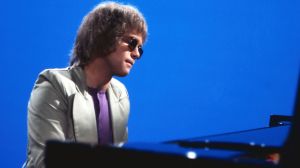
4-3-2-1 Hot and Sweet, Musiksendung, Deutschland 1970, Gaststar: Elton John. (Photo by Arthur Grimm/United Archives via Getty Images) -
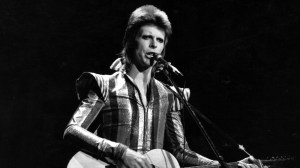
David Bowie as Ziggy Stardust -
Photo by kpa/United Archives via Getty Images -
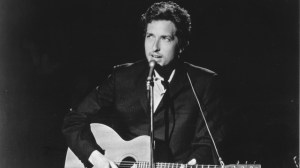
NASHVILLE, TN – JUNE 07: Bob Dylan appearing on 'The Johnny Cash Show' for ABC/TV taped at Ryman Auditorium on June 7, 1969 in Tennessee, Nashville. (Photo by Michael Ochs Archives/Getty Images) -
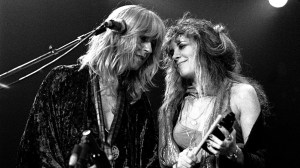
Stevie Nicks and Christine McVie of Fleetwood Mac -
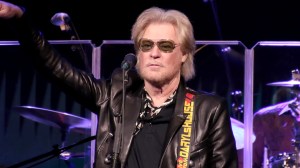
ATLANTIC CITY, NJ – AUGUST 30: Daryl Hall of Hall & Oates performs in concert at Etess Arena on August 30, 2019 in Atlantic City, New Jersey. (Photo by Donald Kravitz/Getty Images) -

UNITED KINGDOM – NOVEMBER 16: WEMBLEY ARENA Photo of RADIOHEAD and Thom YORKE, Thom Yorke performing live onstage (Photo by Patrick Ford/Redferns)