In the ’60s, there were several important protest movements. Top of mind was the Vietnam War, but consciousness was raised as a whole for Black civil rights and women’s liberation. It was also, after all, the hippie era, a time for peace and love. Many musicians addressed the social and political issues of the day and called for change in their songwriting. It’s so hard to pick the most effective protest songs in popular music—we could make them all Bob Dylan—but here are eight songs that defined the protest movement (or rather movements) of the 1960s.
1. “We Shall Overcome,” 1959
As the decade turned over, the Pete Seeger version of a hymn dating back to the 18th century—which morphed at the turn of the 19th century into “I’ll Overcome Some Day,” and then “I Will Overcome”—made a profound impact after his change of “I” to “we” and the addition of some new verses. He sang it for Martin Luther King Jr. in 1957, and it was one of the key songs adopted for the civil rights movement beginning to gather momentum. We’ll walk hand in hand someday, he sings.
Videos by American Songwriter
2. “Give Peace A Chance,” 1969
Arguably the most world-renowned protest song, John Lennon’s “Give Peace a Chance” couldn’t be simpler in sentiment: All we are sayin’ is give peace a chance. Lennon wrote the world peace song during his famous “bed-in” for peace with wife Yoko Ono in Montreal, and recorded it right there in the hotel room. It was released as a single by their Plastic Ono Band. The song immediately became an anthem against the Vietnam War and subsequent wars, including the Russo-Ukraine War.
3. “Respect,” 1967
Here is one for women’s equality. With a male vocalist, the Otis Redding original meant the opposite, demanding respect for one’s man: What you want / Honey you got it / You can do me wrong honey / While I’m gone / All I’m asking is for a little respect when I come home. But when Aretha Franklin got hold of it, it took on an important new meaning and has become an anthem for women: “R-E-S-P-E-C-T / Find out what it means to me. It’s about recognizing her worth.
4. “Say It Loud (I’m Black and I’m Proud),” 1968
Another enduring message, this James Brown song, co-written with his bandmate and collaborator Alfred “Pee Wee” Ellis, was adopted as an anthem for the Black Power movement. We’ve been ‘buked and we’ve been scorned / We’ve been treated bad, talked about / As sure as you’re born / But just as sure as it take two eyes to make a pair, huh / Brother, we can’t quit until we get our share / Say it loud, I’m Black and I’m proud. When George Floyd was murdered, streaming numbers for the song leapt 15,740%.
5. “Blowin’ in the Wind,” 1963
The seemingly simple song most of us learned as kids reveals a fed-up Bob Dylan, who poses a series of hypothetical questions regarding man’s ignorance and apathy towards Black civil rights. How many years can some people exist before they’re allowed to be free? … How many times can a man turn his head and pretend that he just doesn’t see? … How many deaths will it take ’til he knows that too many people have died? Dylan doesn’t have the answer; he admits it’s blowin’ in the wind. But he hopes someone will be able to grab it.
6. “A Change Is Gonna Come,” 1964
Pop-soul singer Sam Cooke would cover Dylan’s “Blowin’ in the Wind” in 1963, and he wanted to write a song of his own about racism and the quest for equality with a hopeful message of change. The lyric was inspired by an incident at a whites-only Holiday Inn in Louisiana that turned him and his crew away. They were furious and drove away honking and yelling—which was enough to get them arrested. I go to the movie / And I go downtown / Somebody keep telling me, ‘Don’t hang around.’ / It’s been a long / A long time coming / But I know, a change gonna come / Oh, yes it will.
7. “Only a Pawn in Their Game” (1964)
Taking a narrative style, Bob Dylan’s lyric about the 1963 assassination of civil rights leader Medgar Evers in his Mississippi driveway opens with a description of what happened: A bullet from the back of a bush took Medgar Evers’ blood. But Dylan comments on the shooter’s culpability being determined largely by institutional racism and wealth inequity; this “poor white man used in the hands of them all like a tool.” The man in question was KKK member Byron De La Beckwith, who wasn’t convicted until 1994 after two hung juries back in 1964 (by all-white juries, no less).
[RELATED: Ranking 4 Bob Dylan Penned Songs That Went No. 1]
8. “People Get Ready,” 1965
The Curtis Mayfield-penned single, recorded for his group The Impressions, was added in 2015 to the National Recording Registry by the Library of Congress for its “cultural, historic, or artistic significance.” Martin Luther King Jr. used the song many times to inspire and motivate civil rights marches, and named it the unofficial anthem of the movement. People get ready / There’s a train a-coming / You don’t need no baggage / You just get on board.
Photo: Primary Wave
More Features
-
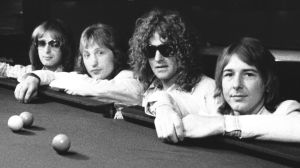
Mott the Hoople 1973 – Pete "Overend" Watts, Dale Griffin, Ian Hunter and Mick Ralphs (Photo by Chris Walter/WireImage) -
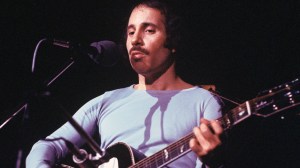
Paul Simon performs on stage in May 1973 in Amsterdam, Netherlands. (Photo by Gijsbert Hanekroot/Redferns) -
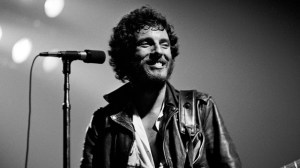
Bruce Springsteen -
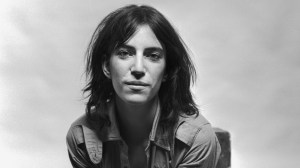
Studio portrait of Patti Smith wearing a US air force shirt, Amsterdam, Netherlands, 9th October 1976. (Photo by Gijsbert Hanekroot/Redferns) -
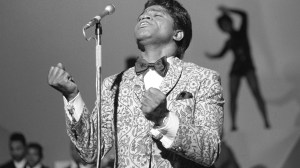
American soul singer James Brown sings on the Ed Sullivan Show, New York, October 30, 1966. (Photo by CBS Photo Archive/Getty Images) -
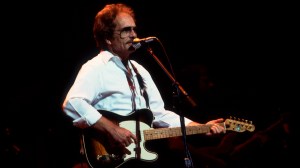
Singer and musician Merle Haggard performs at the Poplar Creek Music Theater, Hoffman Estates, Illinois, August 16, 1983. (Photo by Paul Natkin/Getty Images) -
Photo by Michael Ochs Archives/Getty Images