On this day (November 19) in 2017, Country Music Hall of Fame singer-songwriter Mel Tillis died of respiratory failure at the Munroe Regional Medical Center in Ocala, Florida. He was 85 years old. Known for recording a string of top 10 hits in the 1970s—including “Good Woman Blues” (1976) and “Coca-Cola Cowboy” (1979)—Tillis also penned hit songs for other artists, including Kenny Rogers’ international 1969 hit “Ruby, Don’t Take Your Love to Town”.
Today we’re highlighting the extraordinary life and career of Mel Tillis on the ninth anniversary of his passing.
Videos by American Songwriter
Mel Tillis Overcame a Lifelong Speech Impediment
Lonnie Melvin “Mel” Tillis was born on August 8, 1932, in Tampa, Florida. Although financial struggles often meant the Tillis family went without basic needs, music was one thing they never lacked.
His father Lonnie played both harmonica and guitar, and mother Burma could play just about any gospel song on the piano. Sisters Imogene and Linda sang too, and Tillis’ Uncle JT gifted the child his first instrument—a fiddle.
Growing up on the shores of Lake Okeechobee, a childhood bout of malaria left Tillis with a lifelong stutter. However, he quickly learned that “if I sang I didn’t stutter.”
Seeking refuge in music, Tillis mastered the drums and guitar, winning a local talent contest at age 16. His classmates often joked that he and older brother Richard were destined to become “hillbilly stars.”
After high school, Tillis briefly attended the University of Florida before dropping out to enlist in the U.S. Air Force.
Stationed in Okinawa, Japan, during the Korean War, he worked as a cook and baker and sang regularly on Armed Forces Radio. Tillis also formed a band called The Westerners, which played at local nightclubs.
The Journey to Nashville
After completing his military service, Mel Tillis returned to Florida and found a job with the Atlantic Coast Line Railroad in Tampa. He used his railroad pass to visit Nashville for the first time in 1956.
There, Tillis auditioned for a variety of publishing houses, including Acuff-Rose. Wesley Rose encouraged him to return to Florida and hone his songwriting skills. So he did just that, writing “I’m Tired”, which became a No. 3 country hit for Webb Pierce in 1957. Tillis moved to Nashville that year.
Pierce would go on to cut several more of his compositions, including Honky Tonk Song,” “Holiday for Love,” “Tupelo County Jail,” “A Thousand Miles Ago,” “I Ain’t Never,” and “No Love Have I.” Meanwhile, Tillis continued building a name for himself in Nashville, penning hits for Ray Price, Bobby Bare, Brenda Lee, Waylon Jennings, and Kenny Rogers.
From Songwriter to Singer-Songwriter
Mel Tillis launched his own recording career with Columbia, landing on the charts for the first time with 1958’s “The Violet and a Rose”. He worked with Porter Wagoner and made frequent appearances on CBS’s Glen Campbell Goodtime Hour.
1970 brought his first Top 5 hit “Heart Over Mind”. Two years later, Tillis had his first chart-topper in “I Ain’t Never”.
The No. 1 hits kept coming, including “Good Woman Blues” (1976), “Heart Healer” (1977), “I Believe in You” (1978), and “Coca-Cola Cowboy” (1979). In 1976, he won the coveted Entertainer of the Year prize from the Country Music Association.
Tillis’ fame also translated to the silver screen in the 1970s and 1980s with roles in “W.W. and the Dixie Dancekings,” “The Villain,” “Every Which Way But Loose,” and “Smokey and the Bandit II”.
“Had he never stepped on a stage, he would still have been one of the funniest and most genuine people on the planet,” Country Music Hall of Fame and Museum CEO Kyle Young said in a statement after Tillis’ death.
[RELATED: 3 Songs Written by Mel Tillis That Became Incredible Hits for Other Artists]
“But his whimsy and warmth were only a part of his appeal,” Young continued. “He wrote some of country music’s most compelling and consequential songs, he fronted a remarkable band, and he sang with power and emotion. He also shone as an inspiration, revealing what others called an impediment as a vehicle for humor and hope.”
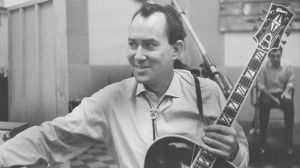
Featured image by Michael Ochs Archives/Getty Images
-
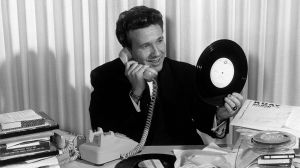
1959: Country singer of Marty Robbins poses for a Warner Bros publicity still for the movie 'The Hanging Tree' for which Robbins sang the title song. (Photo by Warner Bros/Michael Ochs Archives/Getty Images) -

TODAY — Pictured: Tim McGraw and Faith Hill on Friday, November 17, 2017 — (Photo by: Nathan Congleton/NBCU Photo Bank/NBCUniversal via Getty Images via Getty Images) -
UNSPECIFIED – CIRCA 1970: Photo of Don Gibson Photo by Michael Ochs Archives/Getty Images -

NASHVILLE, TENNESSEE – MAY 29: Larry Cordle visits SiriusXM Studios on May 29, 2024 in Nashville, Tennessee. (Photo by Tibrina Hobson/Getty Images)