
Jeffrey Steele has written the soundtrack to many people’s lives with his universal lyrics and catchy melodies. For the past 45 years, the Nashville Songwriters Hall of Famer has intertwined his life within the lyrics of his songs. The tragedy of losing his father and son (Rascal Flatts’ “What Hurts the Most,” Steven Wilson Jr.’s “Grief is Only Love”) and his teenage years spent in rock bands (Rascal Flatts’ “These Days,” Montgomery Gentry’s “Hell Yeah”) are several examples.
When asked if he remembers the first song he wrote, he recites the lyrics from “Hell Yeah,” a top five country song Steele penned with Craig Wiseman. Take me back to when the music hit me / Life was good and love was easy,he sings.
Videos by American Songwriter
Steele, born Jeffrey LeVasseur, penned his first song at age eight. The love song, titled “I’m Yours,” was a glimpse into his future career. Maybe, I’m right, maybe I’m wrong / To be giving my love to you for so long / But if the love is there and you really care, I’m yours, he sings. He also wrote his own jingle for Mr. Coffee as a kid, unimpressed with the product.
“I played it for my sister, and she’s like, ‘Oh, my God, it’s so good!’” he tells American Songwriter. “I remember she loved it and was freaking out about it.”
Music was at the forefront of the LeVasseur household. Steele’s older brother was in a band and invited him onstage as a child. He sang Hoyt Axton’s “Joy to the World,” a song that Three Dog Night made famous, eight times after many standing ovations. At family gatherings, his parents had him sing Elvis Presley songs on a milk crate.
The youngest of five children, Steele recalls peeking in to watch his oldest brother’s piano lessons. Since the family couldn’t afford for each child to take lessons, he’d watch where his brother put his hand for each note. Seeing his son’s early love of music, Steele’s father bought him a Magnus Chord Organ, and he quickly learned the notes and chords.
“I was learning theory,” he says. “I was learning how chords and notes circled each other. I was learning the math of music without even knowing what I was doing. By the time I was 15, I was playing in these progressive rock bands that were doing all these crazy time signatures, and I was playing Gazzarri’s on the strip in Hollywood and all these rock clubs.”
Steele, who grew up in Hollywood, California, in the 1970s, played the rock club circuit alongside Van Halen. While his father tried introducing him to the music of Merle Haggard, Waylon Jennings, Kris Kristofferson, and Willie Nelson, it wasn’t until Steele witnessed Dwight Yoakam and Los Lobos live that he caught the country bug.
[RELATED: Tin Pan South: Jeffrey Steele Plays the Hits, Shares Kris Kristofferson’s Advice]
Soon, Steele was playing country gigs in Bakersfield, covering Haggard. He gravitated to the country-roots scene his father urged him to listen to and performed in the band at the famous Palomino Club alongside Buddy Miller and future Boy Howdy bandmate Cary Park. He fondly recalls his time at the Palomino Club, where Yoakam, Mick Fleetwood, Buck Owens, Linda Ronstadt, Travis Tritt, and Eddie Van Halen frequented.
“It was like a musical college for me,” he says. “I was always writing songs.”
During this time, Steele’s circle included Yoakam, Dave Alvin, and Lucinda Williams. He says the music was “so real” and likened it to Haggard.
“I was coming from such a complicated musical background, and I was bathing in the simplicity of space,” he explains. “I was still this rock guy at heart. So, I was trying to figure out how to blend all this stuff I was hearing in my head, melodically and musically. I was trying to blend it into country with the lyrics that I was loving to write.”
Steele admits it was a slow transition from rock to country songwriting until he met his future Boy Howdy bandmates. A bar band performing throughout Los Angeles, Boy Howdy needed a bass player and a singer, so Steele joined the group. One of his first songs for Boy Howdy was “When Johnny Comes Marching Home Again,” a traditional song that Steele rewrote in “John Cougar style.” The song caught the attention of Curb Records. The day after then-CEO Dick Whitehouse saw the band live, he offered them a record deal.
Whitehouse sent Steele to Nashville to do some writes. During his first trip to Music City, he penned “She’d Give Anything,” Boy Howdy’s breakthrough hit that peaked at No. 4 on the country charts. David Foster later produced the song for Gerald Levert, who saw success on the R&B and pop charts with the cover. As the band enjoyed success, tragedy struck.
“I’ve had so much tragedy in my life,” Steele says. “The drummer got hit in a car accident right after we had this big, gigantic hit single. After eight years in the clubs, we finally made it. We finally got one on the radio, and he got into an accident, and it literally was the end of the band.”
After Boy Howdy disbanded, Steele had vocal trouble. He found a doctor who told him that if he took two years off, he could fix his voice.
“I had to learn how to write songs that were going to create a future for me,” Steele says. “That 14-month period of not singing was the life-changing moment where I started really writing my influences, my lyrics. I stumbled onto my cadences, my alliterations, my style.”
Songs written during this time include Tim McGraw’s chart topper “The Cowboy In Me” and Diamond Rio’s No. 2 hit “Unbelievable.” Steele then explains a pivotal moment when he was asked to write a song with English composer Steve Robson. Initially against the idea, Steele was convinced by his then-publisher, Steve Markland, who sent him Robson’s music. While Steele admits that he hated the music at first, the more he listened to it, a “subconscious door opened.”
“I started hearing these pops in his music, where I could fit things, and I got into the subconscious place, and I started writing this song about growing up in Hollywood in the ’70s,” he says. “I started writing this lyric about growing up and playing in the clubs, meeting a girl and falling in love, and the heartbreak of it, and the cool stuff that we did. It became ‘These Days’ for Rascal Flatts.
“It was the first time I’d written a lyric by myself with no guitar to somebody else’s music, where I had to sit there and invent where I wanted to go,” he continues. “It was this epiphany of all the things I was trying to get to that I knew how to do as a musician musically, but I didn’t know how to do lyrically yet.”
The song reached No. 1 on the country charts and began a fruitful collaboration with both Robson and Rascal Flatts. The pair would go on to write several more hits for the trio, including “My Wish,” “Here,” and the Grammy-nominated “What Hurts the Most.” Steele describes the latter song as “my marker.”
Steele says he wrote the song while thinking of his late father, who was his biggest fan. A World War II veteran who wanted to be a songwriter, his father owned a metal shop where Steele worked until he was fired. His father wanted Steele to chase his dream without accidentally cutting off his fingers in the process. The songwriter chose the stage name Steele to honor his father.
“It was written for my dad,” he says of “What Hurts the Most.” “It was what I hoped my dad might say to me all the years later, after firing me. ‘I saw something in you, son, and I wanted you to chase it, because I never got to.’”
You couldn’t see that loving you is what I was trying to do.
Steele wrote the song with Robson in London. He says he started the lyric from the end of the song. “I’m very dyslexic,” he explains. “I read backwards. I think backwards.”He had the title “What Meant the Most,” but when he went into the vocal booth to sing it, he unknowingly changed meant to hurts.
It took eight years for the song to be recorded and released by Rascal Flatts. “What Hurts the Most” was named BMI’s 2007 Country Song of the Year. That same year, Steele was named Country Songwriter of the Year at the BMI Country Awards, where he received his honor alongside BMI Icon of the Year, Dolly Parton.
“All those years later, I’m on stage with my dad’s favorite singer, celebrating a song I wrote for my dad,” he recalls. “My story to all my songwriter guys that I develop, life is full circle. Whatever you write about, it’s your life. It’s all going to come back to you. Chase those things as a writer. Don’t try to be the second-best anybody else you know. You have to be the best you.”
Nearly 20 years later, Steele continues to tell his story. On April 30, he released his solo project, American Storyteller. Seven years in the making, the album has Steele sharing his voice with the world. Fittingly, he kicked off the project with lead single “A Voice.”
[RELATED: Jeffrey Steele’s Sons Of The Palomino Didn’t Craft ‘Blue 30’ With a Hit Song in Mind]
Inspired by the many people he’s met over the years, “A Voice” urges listeners to be a voice for good and to stand up for those who can’t speak for themselves. Steele says 30 people came into his life after the sudden death of his son in 2007, and he was thinking of them while writing the song. One person in particular, Army Sergeant Mario Lopez, whom Steele met through Operation Song, a nonprofit that pairs service members with songwriters, informed the song’s first verse.
I’m the soldier, I fought and died for you / Gave up my life / To give you the right, / To live the life you choose.
“That song is a byproduct of my complete journey until now,” he says. “I couldn’t have written that song five years ago, let alone 20 years ago. There’s just no way it could have come out of me because I hadn’t lived it yet. That’s the cool thing about being a songwriter, you get to keep living and documenting.”
Other songs, like “Universe,” Steele describes as “a nursery rhyme song [that’s] an in-depth scope of life.” All the tracks on the independently released project share Steele’s journey with listeners from his perspective.
“The older I get, the more fun I’m having, and I’m still in the game,” he marvels. “If you keep writing your life, you’re never going to run out of material.”
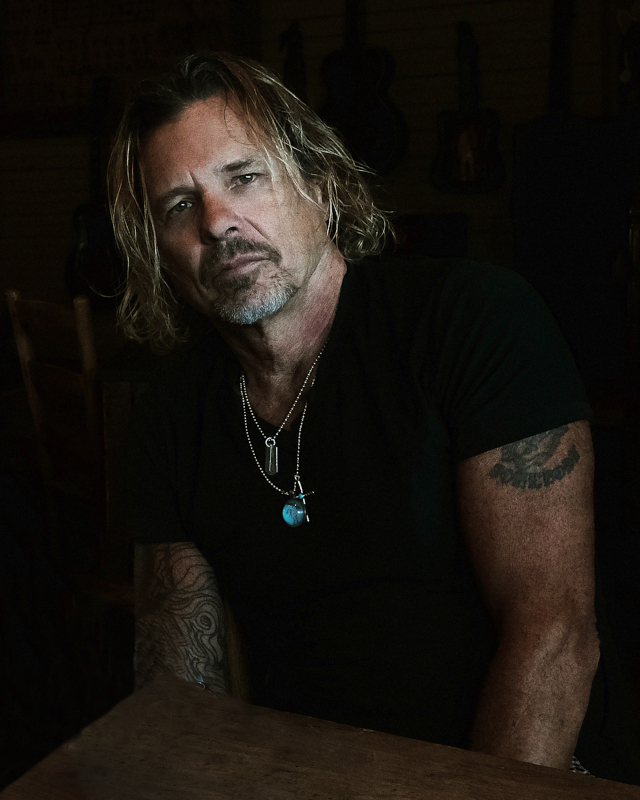
Main photo by Jarrett Wooten on behalf of M2 Media
More Features
-
Portrait of folk singer Judee Sill in London in 1972 on tour to promote her second album, 'Heart Food'. (Photo by Gijsbert Hanekroot/Redferns) -

UNITED KINGDOM – MARCH 01: WEMBLEY EMPIRE POOL Photo of Skeeter DAVIS (Photo by David Redfern/Redferns) -
Rod Stewart singing live on stage during a concert at Olympia in London, England, in December 1976. The concert was part of Stewart's 1976 European Tour. (Photo by John Minihan/Hulton Archive/Evening Standard/Getty Images) -

(MANDATORY CREDIT Ebet Roberts/Getty Images) Cyndi Lauper performing at a WNEW Christmas Concert at Madison Square Garden in New York City on December 19, 1986. (Photo by Ebet Roberts/Redferns) -
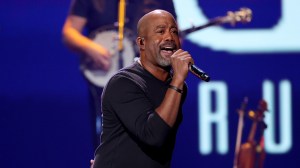
LAS VEGAS, NEVADA – SEPTEMBER 17: Darius Rucker performs onstage during the 2021 iHeartRadio Music Festival on September 17, 2021 at T-Mobile Arena in Las Vegas, Nevada. EDITORIAL USE ONLY (Photo by Kevin Winter/Getty Images for iHeartMedia) -
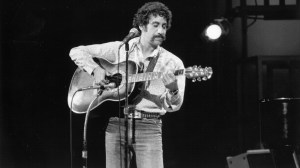
UNSPECIFIED – CIRCA 1970: Photo of Jim Croce Photo by Michael Ochs Archives/Getty Images -
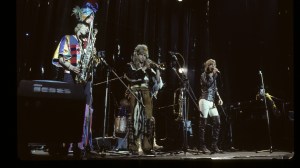
IN CONCERT – From London – Shoot Date: June 13, 1974. (Photo by ABC Photo Archives/ABC via Getty Images) BLUE SWEDE -

Left to right: Ernie Hudson, Bill Murray, Dan Aykroyd and Harold Ramis (1944 – 2014) as paranormal investigators in Ivan Reitman's 1984 comedy 'Ghostbusters'. (Photo by Columbia Pictures/Archive Photos/Getty Images)