The UB-2, a Danelectro six-string bass, proves that the right marketing strategy can not only change a company’s product sales. It can also completely change a musical landscape, like this unique instrument did in the 1960s. Songs from this decade tend to have a specific sound to them, and while some of that can be attributed to trends, current events, and technological limitations, this bass-heavy six-string also helped.
In an attempt to compete with the four-string upright bass and to incentivize more musicians to buy their products, Danelectro started contacting musicians’ unions to tell them about how a traditional acoustic bass was too low for the frequency width of AM radio stations. The UB-2 could solve this problem by providing a percussive attack in the mix that AM radio stations could broadcast. Then, when people wanted to listen to a hi-fi system, they would still get the full frequency range of the upright bass.
Videos by American Songwriter
This became known as “tic tac bass” for its plunky, percussive sound. Even if you weren’t aware that there were two bass parts in a vast majority of 1960s country and pop, you were listening to it just the same.
These 1960s Songs All Implemented This Clever Bass Technique
The Danelectro UB-2 became incredibly popular in Nashville and Los Angeles, where session musicians were providing the instrumental backing for most hit records. The guitar company eventually gave up on the six-string, stopping its production and choosing more standard four-string basses instead. (This is how the Fender Bass VI, a similar instrument, came to be several years later.) Still, the UB-2 remained in many studios, serving as an appealing option for engineers looking to broaden their mix’s sound.
Some notable examples of popular songs that use both an upright bass and the UB-2 include “Crazy” by Patsy Cline, “Only the Lonely” by Roy Orbison, and most of The Everly Brothers, Duane Eddy, and Marty Robbins’ catalogs. Wrecking Crew musicians helped incorporate the Danelectro six-string bass into the West Coast sound, including tracks like “These Boots are Made For Walkin’” by Nancy Sinatra, “Help Me Rhonda” by The Beach Boys, and more.
Six-string basses remain useful tools today for players who want the low range of a bass guitar with the fretboard capabilities of a standard guitar. Follow-ups to the Danelectro model, like the Fender Bass VI, allowed musicians to continue using this valuable resource even after Danelectro stopped making them. The next time you’re listening to your favorite 1960s songs, try listening to them through headphones. Close your eyes, and see if you can pick out the two different bass tones in the mix. The six-string electric bass will likely be in one headphone, while the upright will be in another. Happy listening.
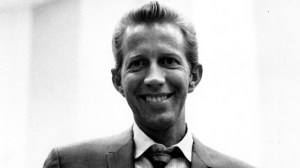
Photo by Jasper Dailey/Michael Ochs Archives/Getty Images
More Features
-
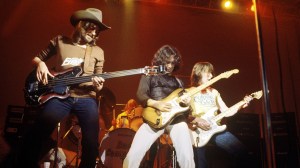
UNITED STATES – JANUARY 01: USA Photo of Paul RODGERS and BAD COMPANY and Boz BURRELL and Mick RALPHS, Boz Burrell, Simon Kirke (back), Paul Rodgers, Mick Ralphs (Photo by Fin Costello/Redferns) -
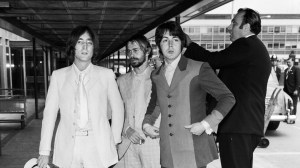
John Lennon, Beatles associate Alexis Mardas (aka Magic Alex), Paul McCartney, and John's driver Les Anthony at London Airport, 11 May 1968. John and Paul were bound for New York to launch the Beatles company Apple. (Photo by Mirrorpix via Getty Images) -
George Strait recorded one of the best dad country songs -

NEW YORK, NY – CIRCA 1989: Joan Jett backstage when Joan Jett & the Blackhearts perform on Broadway circa 1989 in New York City. (Photo by Robin Platzer/Images/Getty Images) -
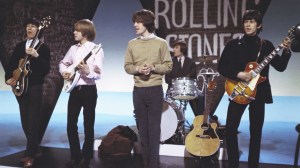
LONDON, ENGLAND – CIRCA 1965: British Rock Group "The Rolling Stones" perform on a TV Show in London, England circa 1965. Left to right: : Bill Wyman, Brian Jones, Mick Jagger, Charlie Watts, Keith Richards. (Photo by Cyrus Andrews/Michael Ochs Archives/Getty Images) -
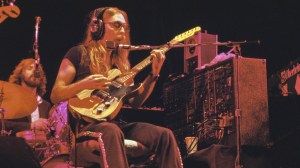
American guitarist Jeff 'Skunk' Baxter, playing a Fender electric guitar, performs live in concert with his band, American rock band The Doobie Brothers, circa 1975. The band's drummer, Keith Knudsen, is seen in the background. (Photo by Richard E. Aaron/Redferns/Getty Images)