Alex Warren is not interested in having a surface-level conversation—at least not the day we speak. Seated on his tour bus in Toronto in early July in a pink T-shirt emblazoned with text that reads A GOOD SOUL, the Grammy-nominated singer-songwriter is eager to connect.
First, it’s about life in the Nashville area, where he now resides with his wife; later in the conversation, he covers everything from the craft of songwriting to fiberglass installation, travel, and his belief that performing for people isn’t about his ego at all. He frequently turns questions back around on me, asking for the most interesting responses other people have given to similar prompts over the years. It’s a refreshingly atypical, extremely conversational, and pleasantly humble attitude for an interview subject—but perhaps it shouldn’t have been so surprising, considering the fact that Alex Warren’s come-up has been anything but ordinary.
Videos by American Songwriter
“I try not to overthink it,” he tells American Songwriter. “I truly don’t feel a lot of pressure because I never thought I’d have one hit, and the fact that ‘Ordinary’ was the big one means it’s virtually impossible for me to ever have another song like that. So it’s been really nice to ask, ‘OK, cool, what do I want to make now?’”
That question can be found at the heart of his 2026 album, WILDCHILD. The 13-track project follows his sprawling 2025 debut, You’ll Be Alright, Kid, a two-part, 21-song effort and capsule of an artist working to get his arms around his own sound (and perhaps, in part, his season of ultra-viral success). Back up even further and it’s clear that Warren is a savvy child of the Internet: he began posting on YouTube and Instagram in his adolescence, then became a founding member of the notorious Hype House, a creators collective that seemed to understand the transformative power of TikTok before just about anyone else.
Today, he has over 21 million followers on the platform, along with nearly 5 million more on YouTube. But these days, he’s concentrating his efforts on people like his staggering 44 million monthly listeners on Spotify, many of whom learned about his music-making when “Ordinary” became one of the defining tracks of 2025. With a boost from social platforms like TikTok, the song sat atop the Billboard Hot 100 for 10 weeks, and its current Spotify stream count is well over 2 billion.
But no one could credibly accuse Warren of overnight success or having an easy path to the top. He lost his father in 2009 and his estranged mother in 2021; he spent a season of life living out of his car. It’s a portrait of extremes—he’s experienced an outsized amount of loss for someone not yet 30 years old, and the music he’s written chronicling it all has ostensibly become a source of connection and community.
“I used to hate performing live,” he reveals. “I would dread it every single time. I’d have panic attacks or be throwing up.” He estimates that it took over 150 shows to work through the feeling of utter anxiety before he was able to start enjoying himself on stage.
“It wasn’t until last year that I would play and realize that it was fun,” he says, crediting the shift to finally being able to take a moment to see the reactions of people in the crowd. “You see people smile and cry and go through these emotional roller coasters at these live shows, and I thought that was the coolest thing. People would tell me, ‘This song helped me when I lost my mom, or ‘I played this song at my dad’s funeral.’”
It’s undeniably Warren’s own vulnerability that begets such vulnerability from an audience. His late father’s presence echoes clearly throughout the album, most literally on “ARE YOU HAVING FUN, ALEX?,” which incorporates real audio from home movies that Warren only recently parsed.
“People can be so focused on getting the perfect session and getting the perfect song and having that song that blows up on TikTok,” he says with a wry smile, acknowledging the irony. “But for this album, I just wanted therapy.”
Warren honors his father in a multitude of ways throughout WILDCHILD. He wrote songs about his dad, and songs from his dad’s perspective; he worked to channel the sound and energy of John Mayer, one of his father’s favorite artists. Perhaps unconsciously, it was another way of reaching toward a relationship that ended too soon—using music as a bridge between the father whose voice he hears in the home movies, and the ever-evolving artist he is today.
[RELATED: There Was Nothing “Ordinary” About This Surprise Luke Combs-Alex Warren Duet in Nashville]
Before his father passed, when Warren was just nine years old, he left his son a letter that Warren believed had been lost for years. He rediscovered it while making this sophomore record. As he relays the story, he holds up the weathered notebook that serves as the starting point for most of his lyrics. He says his brain works best when he’s writing by hand.
It’s telling that Warren keeps his creative circle remarkably small: he co-writes with his three “bestest friends,” Adam Yaron, Mags Duval, and Cal Shapiro. He says they know everything about him, inherently creating an environment where he can bring a wide range of emotions and energy into the studio or a writing session. As he began watching the home videos with the audio that would ultimately make its way into “ARE YOU HAVING FUN, ALEX?,” the group also started working on the song that would become the achingly tender “I MISS YOU MORE.”
Every dream come true, everything I do, I still look for you in the crowd / I miss you more, the more you miss, he sings over an anthemic beat. The cut of “I MISS YOU MORE” that landed on the album was mostly a one-take. He says if you listen carefully, you can hear that he starts crying in the second verse.
“When he was filming those videos, [my dad] knew he was dying,” Warren says. “He knew he had terminal cancer. So it’s heartbreaking when you watch those videos, and if you go and listen again with the idea that this is this person’s last time being able to experience these moments, you feel like there’s sadness in the happiness you hear in his voice. That inspired a lot of the writing.”
Even in the incredibly difficult emotional spaces his music often explores, Warren approaches the creative process with a sense of delight. At one point in our conversation, he casually remarks that he thinks all music is great. As someone who has spent much of his life online, he’s inevitably been exposed to criticism—but if it has affected him, it doesn’t show when he’s discussing WILDCHILD. Instead, he describes an album-making process rooted less in expectation and more in curiosity. Because of that openness, Warren was able to relinquish some of the pressure that typically accompanies a sophomore effort.
[RELATED: Alex Warren, DJ Mustard Among NMPA & Billboard Grammy Week Songwriter Awards]
“When we were making this album, we didn’t want to just be like, ‘OK, cool, we got the ballad. All right, cool, we have the fun song,’” he recalls. “There’s a song called ‘WON’T GO BACK AGAIN’ that sounds completely different than any of the others—I think I really had fun with the production of it all.”
“You see these videos of artists who are so excited when they finally get the lyric, and you’re like, ‘I’ve never had that. We kinda just write it down,’” he says. “But this time, we had a lot of that, and it was just so fun. Every day going into the studio, it didn’t feel like we had to make a good song or a new hit for radio. It was just, ‘Let’s just make a song that makes us feel something.’ I’ve been blasting all of the songs from this album in my car, and it’s so difficult to pick my favorite one.”
—————————————–
Alex Warren has a theory that a great ballad is a song you can’t tell is about love or death. He’s remarkably open to releasing the meaning behind his songs once they’re in the hands of the listener, something that takes many other artists decades. It’s an attitude some artists never adopt at all. The balancing act of personal details and universal experiences is a similarly difficult skill, but it’s one that seems to come naturally to him.
After all, there’s an irony to the fact that Warren built an audience online long before many people knew him as a songwriter, but his breakthrough moment wasn’t a carefully engineered track or a perfectly optimized piece of content—it was a song rooted in the personal. “Ordinary” became a global phenomenon because listeners were able to apply it as they saw fit, whether it was over footage of a wedding, a slideshow of a beloved pet, or a tribute to someone they’d lost. He’s seen people propose to his song, “Eternity,” which he wrote about loss; conversely, people have used “Ordinary” at funerals.
“ I don’t want someone to feel isolated when they listen to the record,” he says. “I want them to make up their own mind, but also I want them to know how I felt writing it, so at least they can have a place to start.”
Though his expectations are balanced, he does have one wish for the new album, and it’s a bit specific. Warren thinks he’s been a hopeless romantic all his life—he says he remembers being eight years old and his greatest wish was getting married and having a family. He’s always been obsessed with love songs. He once sent a crush a Lewis Capaldi track that he felt was about deep love and utter devotion. “I hope that with this album, someone sends a song and says, ‘This is how I feel about you.’”
With that balance of love and tragedy in WILDCHILD, he sees the strongest theme running through the album to be working through grief. “I hate to be like a one-trick pony, but truly, I think being able to help people with loss is something that means a lot to me,” he says.
“When I was 13, I started to realize that my dad was dead,” he recalls. “When I was nine, and I lost him, I didn’t really understand the scope of what it was. But then I started to realize how different my life was, especially in moments where I needed a dad and I didn’t have one. I also didn’t have an outlet. There was nothing that told me, ‘Hey, this is a feeling a lot of people have. You’re not alone.’ I felt like everyone around me had these happy families with no issues, so I always felt like I was alone. Even though I was surrounded by a bunch of people, I just felt really alone. With this album, I hope that any kid who has lost a parent, or anyone who has ever lost someone, feels like that feeling is valid, but also feels it together with other people.”
As with other parts of his discography, the title track of the album can be interpreted a number of ways. One is hearing it as Warren sending a note of encouragement to his younger self, that boy processing life events beyond his comprehension without the tools he really needed.
Wildchild, you were born to hit the ground running / Haven’t seen you in a while, but I always saw this coming, he sings. It’s hopeful. It’s joyful.
Warren estimates that he spent nearly one in every three days of the last year playing live. He says the longest he’s slept in the same bed, in recent memory, was 10 days. When asked what he’s looking forward to with the sophomore record and more tour dates on the horizon, his answer is easy—and perfectly aligned with an artist who is focused less on the numbers attached to his success and more on the reason he started making music in the first place.
“I’m going to spend time with my family, and I’m going to try for 11 days,” he says.
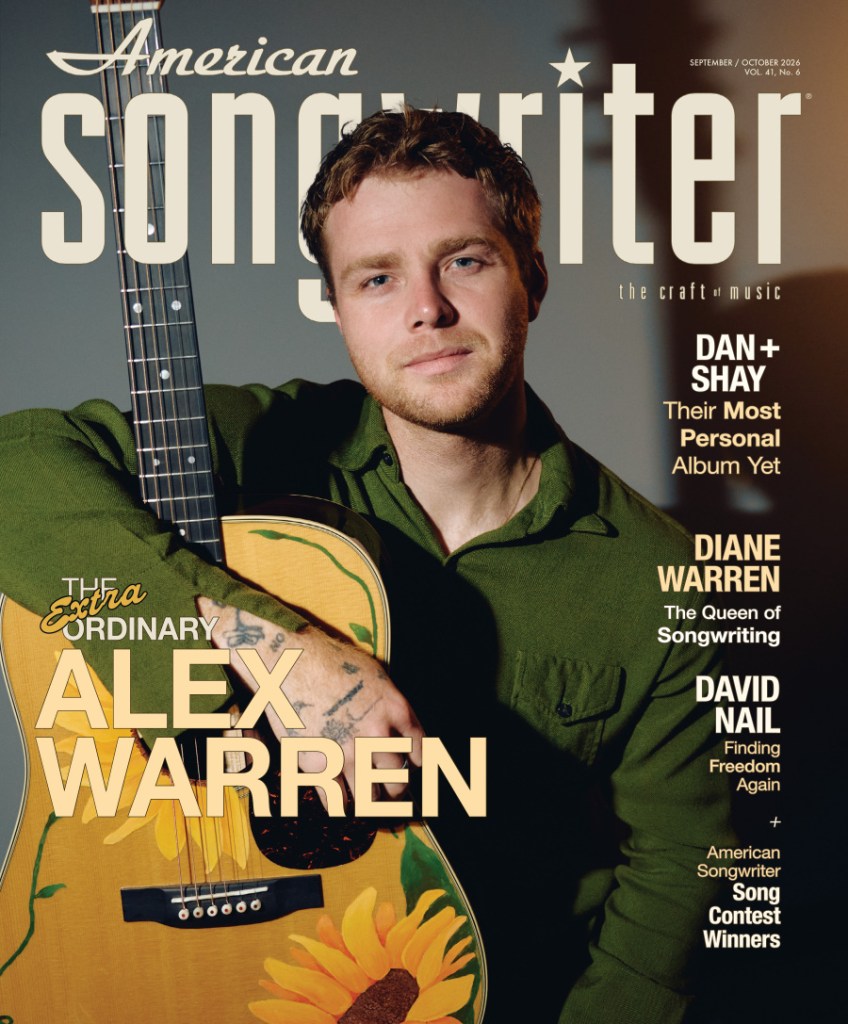
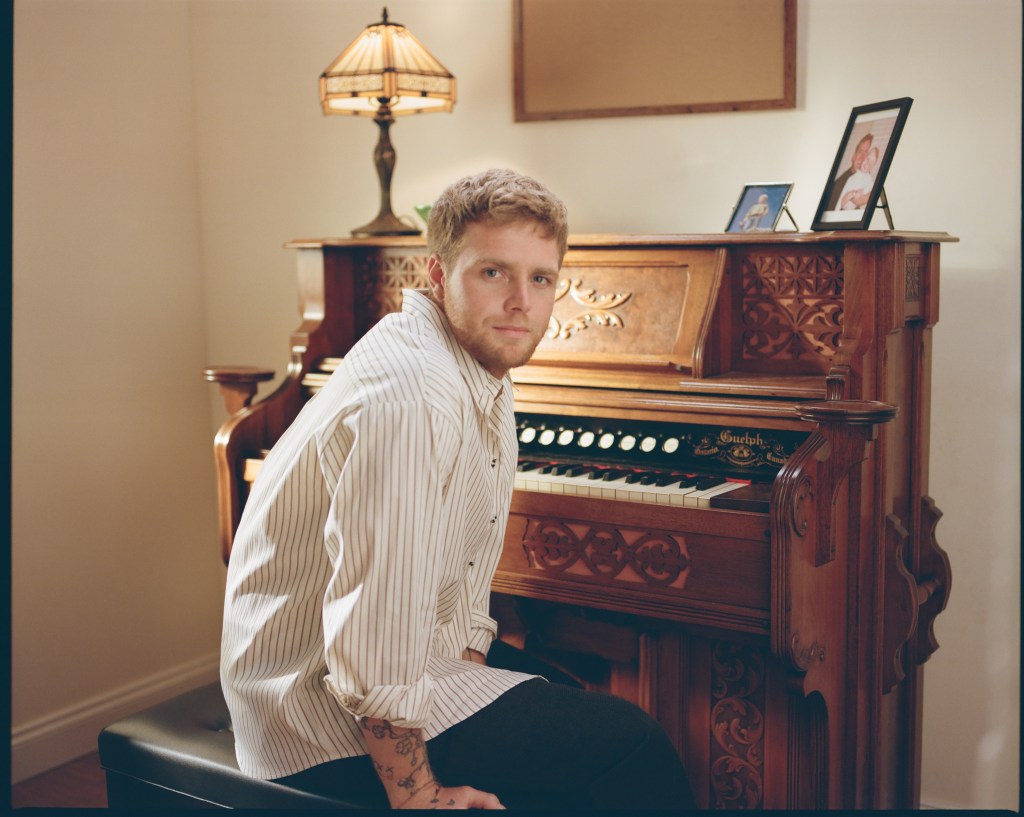
Photos by Jack Dytrych
More Features
-
American singer-songwriter and guitarist Richie Havens, wearing a tan-coloured suede waistcoat over a black turtleneck sweater, plays a Guild D-40 acoustic guitar during a television appearance in London, England, circa 1970. (Photo by Tony Russell/Redferns/Getty Images) -
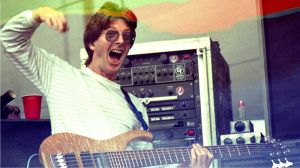
EUGENE, OR – (EDITORS NOTE: Multiple exposure made in camera) Phil Lesh of the Grateful Dead performs at Autzen Stadium on June 23, 1990 in Eugene, Oregon. (Photo by Tim Mosenfelder/Getty Images) -
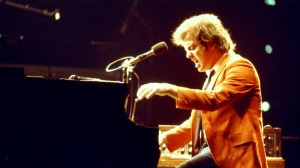
UNITED STATES – JANUARY 01: Billy Joel performs live on stage during his 1980 US tour (Photo by Richard E. Aaron/Redferns) -

ara Evans performs "Suds In The Bucket" during 39th Annual Academy of Country Music Awards – Show at Mandalay Bay Resort and Casino in Las Vegas, Nevada, United States. (Photo by M. Caulfield/WireImage for Bragman Nyman Cafarelli) -
Photo by David Warner Ellis/Redferns -
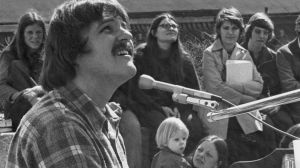
UNSPECIFIED – CIRCA 1970: Photo of Biff Rose Photo by Michael Ochs Archives/Getty Images -
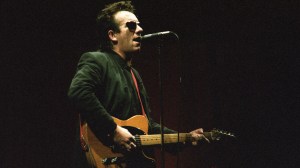
MINNEAPOLIS, MN – AUGUST 29: Elvis Costello performs at the Orpheum Theatre in Minneapolis, Minnesota on August 29, 1984. (Photo by Jim Steinfeldt/Michael Ochs Archives/Getty Images)