We call common time, common time, for good reason: whether classic rock, pop, or country, the vast majority of modern music tends to avoid odd meter in favor of the most prolific of all time signatures: 4/4. Without diving too deep into the realm of music theory, if you can naturally count to four in regular increments and feel like the song is following along with you, it’s likely in 4/4.
Queen’s “Another One Bites the Dust” is a prime example of a rock song in common time. AC/DC’s “Highway to Hell” is another. But what about the songs that don’t follow a four-count pattern? Or an even pattern at all?
Videos by American Songwriter
These songs fall under the “odd meter” category, featuring time signatures like 7/8 or 5/4 that divide counts into groups of four and three or three and two, respectively. Even if the music theory goes over your head, you know it when you hear it, like in these four iconic, odd-meter classic rock songs.
“Money” by Pink Floyd
The B-side opener to Pink Floyd’s magnum opus, Dark Side of the Moon, begins with a collection of samples of cash registers opening and closing, coins jingling, and other auxiliary sounds that foreshadow the 7/8 groove that Roger Waters begins in a punchy, captivating bass tone. The verses of “Money” maintain this odd meter feel until the chorus, when the band makes the ingenious move of switching to a 4/4 feel, creating an accelerating, raucous feel that makes their transition back into 7/8 all the funkier. Their grouping of three beats followed by four (1, 2, 3, 1, 2, 3, 4, etc.) makes the listener lean forward, almost falling into each new measure.
“Tom Sawyer” by Rush
Prog rock bands are more likely to use odd meters and other unconventional musical techniques than straightforward rock ‘n’ rollers, and Canadian prog rock band Rush is certainly no exception. “Tom Sawyer” is perhaps their most popular uncommon meter offering, maintaining an off-kilter, almost hiccuping 7/8 rhythm in the middle instrumental break. In the music video on Rush’s YouTube channel, guitarist Alex Lifeson can be seen waving his hand along to the groups of four and three beats. (So, you’d count 1, 2, 3, 4, 1, 2, 3, and so on.) While the song only made it to No. 44 on the Billboard Hot 100, it’s one of the defining tracks of early 1980s rock.
“Living in the Past” by Jethro Tull
While on tour in the U.S. in 1969, Jethro Tull manager Terry Ellis asked vocalist and flautist Ian Anderson to write a “top 10 hit” to “keep the pot boiling” in the U.K. Annoyed at the request, Anderson told Guitar Player that he went up to his hotel room and wrote “the least commercial thing I could possibly think of, so that it wouldn’t be a hit.” Anderson drew inspiration from Dave Brubeck’s classic 5/4 jazz instrumental, “Take Five,” which was regarded as antiquated by the late 1960s. But the joke was on Anderson, because the track did become a top 10 hit in the U.K.
“Happiness is a Warm Gun”
The Beatles’ eponymous “White Album” saw the band in some of their most experimental and abstract, and “Happiness is a Warm Gun” is a beautiful testament to that particular stage in the Fab Four’s career. Closing out our list of iconic classic rock songs in an odd meter, this track rolls from one musical section to the next, ranging from somber and melancholy to slinky and bluesy to a full-on cacophony of noise as the band descends into the repeated line Mother Superior jumped the gun. The growing tension gives way to the 4/4 bang, bang, shoot, shoot section, offering a sonic version of the satisfying “fix,” almost like the one John Lennon is singing about in the song.
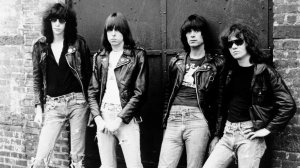
Photo by Michael Ochs Archives/Getty Images
More The List
-
Eric Clapton during Eric Clapton File Photos at The Forum in Los Angeles, California, United States. (Photo by L. Cohen/WireImage) -
Photo by Jeffrey Mayer/Getty Images -
Toto, f.l.t.r: Mike Porcaro, Steve Lukather, David Paich, Jeff Porcaro & Steve Porcaro, Amsterdam, 27-9-1982, Foto Rob Verhorst -

Dave Matthews of Dave Matthews Band during Dave Matthews Band in Concert at CBGB's – 1992 at CBGB's in New York City, New York, United States. (Photo by Steve Eichner/WireImage) -

Tom Higgenson, who wrote "Hey There Delilah" for the Plain White T's -
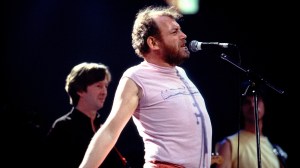
British musician Joe Cocker performs on stage during an ARMS (Action into Research for Multiple Sclerosis) Charity Concert, Dallas, Texas, November 27, 1983. In the background are fellow musicians Eric Clapton (left) and Jeff Beck. (Photo by Paul Natkin/Getty Images) -
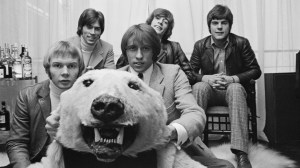
Pop group the Bee Gees posed with a stuffed polar bear in an office in London circa April 1968. Members of the band are, from left, Colin Petersen, Barry Gibb, Maurice Gibb (1949-2003), Robin Gibb (1949-2012) and Vince Melouney. (Photo by Ivan Keeman/Redferns)