
On June 22, Dawes released their sixth album, Passwords. The follow-up to 2016’s We’re All Gonna Die, Passwords finds the Los Angeles-born band weaving social and political issues into their singular brand of songwriting, which has, since the group’s debut nearly a decade ago, always shown a band that wears its heart on its sleeve. Accordingly, this new album looks at today’s social ills through a compassionate lens, advocating, as on songs like “Crack the Case,” for a return to compassionate communication and an acknowledgement of our shared humanity.
In addition to its weightier subject matter (much of Passwords was written after the 2016 election), the album also sees the band broadening its sound, dappling its sun-drenched California folk-rock with electronic flourishes and the occasional saxophone. Dawes tapped Jonathan Wilson, who produced their first two albums, to produce Passwords. The album also features new band member Lee Pardini on keys.
Dawes will hit the road with Jeff Lynne’s Electric Light Orchestra for a string of opening gigs beginning August 2, eventually kicking off a headlining run of two-set shows that will run through mid-November.
American Songwriter spoke with Dawes frontman Taylor Goldsmith via phone, catching him during some downtime at home just days after Passwords‘ release. Read the conversation, lightly edited and condensed for clarity, below.
You guys just released Passwords on Friday. How has that experience been so far?
It’s been very positive. It’s also been different this time, in a way that’s been very exciting. I feel like we’ve always been this young band, in a way, but now it’s, “Holy shit this band’s been around for 10 years and six albums,” not that that’s any sort of record by any means, but I feel like people are taking us a little more seriously. It’s easier to crumple up and toss aside a band on their second or third record, whether it’s in a Twitter comment or a review. When you do it for six albums, I think people, whether or not they like it, they think, “This is what they’re meant to do.” I’m a huge Killers fan, and it’s been wonderful to watch them enter into this role of an all-time legendary band. At one time, they were that band with those hits. And now they’re a stadium band and they’re kind of always going to be. No one questions it any longer. I feel like in our small, small, small way, there’s a similarity to that. People might not like us, but they no longer wish that we’ll just go away.
It seems like there could be some level of comfort or freedom that comes along with that.
You would think [laughs]. It’s funny. I don’t know a single artist, whether it’s bandmates or guys older than me — and I’m sure you find this in your industry, too, as a journalist — but I feel like there’s never not some version of the fear of annihilation, the fear of irrelevance. And not for the sake of being irrelevant. I don’t really care about that; I’ve been irrelevant for a long time. But I’ve still gotten to do what I love. I think that no matter how many beautiful nights at the Ryman we’ll have or beautiful nights at the Beacon or how well this album is doing, there is still this voice in the back of your head like, “Well, nothing is certain. Nothing is secure.” It’s a voice that I’m getting better at recognizing as a dishonest one, one that preys upon vulnerabilities or insecurities. But it’s something I think everyone experiences to varying degrees.
I realize Passwords isn’t a full-on concept album or anything, but there are definitely some unifying themes. There’s a lot of emphasis on empathy and connection. Was there a particular song or line of thought that catalyzed the project for you?
Yeah, there was. “Crack the Case” sort of broke it open for me when I was trying to figure out what the album was going to be. With every record we’ve ever made, there’s always a sort of flagship or first song that dictates how to move forward. On that third record I wrote this song called “From a Window Seat” first, and that led me to writing something in common as a reaction to that, and so on and so forth. That very much happened with this record. I wrote “Crack the Case” first. There were other songs and ideas lying around, but they weren’t finished and I wasn’t sure how to think about them all as a group. When anybody puts out a record you want it to be representative of how you feel and what you’ve been thinking about for the last year or so, but at the same time you don’t want to force it. You want it to present itself. I feel like that can be so much more meaningful than me insisting, ‘This is what I want our next record to be,’ before I’ve even written a single song.
“Crack the Case” felt very representative, to me, of how I want to carry on a conversation. I feel like we live in this moment where it’s very easy to just scream into the void and say who you hate and why you hate them at all times without there being any sort of accountability. That’s a poisoning feeling. If you’re parked at a red light and someone screams at the car in front of them, that can poison your mood. That’s energy that you now have to take and carry with you. There’s not a lot of difference between that and reading some of the hateful stuff that’s on the internet at all times. That hatefulness is something that I struggle with knowing how to stomach and then carry with me through the day. When people are forced to be face to face and people are forced to carry on conversation, no matter how mad they are, there is some iota of decency and diplomacy. I feel like a lot of the record is indicative of me still hoping or choosing to believe that these conversations can be held respectfully.
The album really strikes a nice balance between zooming in and considering interpersonal relationships but also tying into some of the broader social issues that we’re facing now.
That’s cool that you’re hearing that, because that was definitely something that I wanted to be felt. Like you said, it’s not a concept record. There’s no story. There might be overarching themes, but that’s just what was on my mind. I think this sort of cultural attitude is not far from anyone’s thoughts at the moment. But it also was a time in my life where I was falling in love and getting engaged and learning what that means. So it was how those two concepts inform each other. With this record it was really important to me that “Stay Down” and “Living in the Future” were not on the second half of the record, because I wanted, for the five people who sit down and listen to the record front to back, I didn’t want them to leave the experience with those moods and feelings.
“Stay Down,” especially, is about an approach to life that I actually don’t align myself with, this idea of retreating and this idea of, “I’m going to just exist in the shadows. The world will forget about me, and I’ll forget about the world.” It’s something that’s very attractive and is actually a strangely cathartic song to sing, but I don’t actually believe that is something that would be a healthy attitude for me to take on. I needed the record to start with that at the front in so that by the time you get to “Time Flies Either Way,” it can seem more like these attitudes have been worked through.
Yeah, there’s a tension right now that I think a lot of people are feeling between being horrified by a lot of what’s going on in the broader world but then maybe still celebrating personal milestones in their own lives, like when you mentioned falling in love. It’s really strange, to feel both of those things simultaneously. So it was really cool that the album was able to explore the intersection of those topics.
Well thank you. It is a weird time right now. Being alive at this moment in time and the idea of loving someone and giving yourself over to someone else, they do culminate, so it’s cool that you were hearing that.
I’d also love to talk, too, about the sonics of the album. There’s some new stuff in there, like some saxophone, some electronic elements. Where did those sounds come from?
For the healthy life of any creative force, whether it’s a writer or a whole band, you have to constantly stay in the space of willing to be inspired, and to find something new you’ve never considered before. That’s always a particularly funny thing with music. There’s that famous line of Joni Mitchell’s where she says, “No one asks Van Gogh to paint ‘Starry Night’ again.” You don’t find that as much with filmmakers or novelists or fine artists and painters. People aren’t really saying, “Will you do what we did? Because we liked that.” Whereas with music, that’s very much a demand. It’s funny because I would assume it’s very clear by now that for the sake of the life of these artists, they have to continue pushing forward. You might prefer the Simon and Garfunkel records, but in order for Paul Simon to still be creative he had to move on to Graceland, which thank god he did. For the Rolling Stones to get all the way from “December Children” and “Satisfaction” all the way to “Start Me Up,” it feels like a different band in some ways but that’s why they’re still there.
Had any of these bands or songwriters decided, “Well, this is what people like me for, so I’m just going to do that,” they would have just been gone after three years. It would have died. These bands are organisms. They’re living, breathing things. In the same way that nobody wakes up at 20 years old and says, “I want to be the same person forever because I like who I am right now,” you have to be cool with the idea that you’re going to read some things and see some things and hear some things and go through some shit and it’s going to change you and make you someone else in a big way.
You have some big tour plans coming up, with some dates with ELO and a headlining run. Tell me a little about those.
We finished the album and found out we got offered the ELO tour and thought, “This couldn’t be more serendipitous.” There’s no other Dawes record that could be more suited to opening for ELO. So we were really freaked out about that.
How about the headlining tour? You’ll be doing two sets each night. What do you envision for those dates?
We did it on the tour for the last record We’re All Gonna Die. It just became clear that that’s when we are at our best. I feel like when we’re able to really stretch it out, it allowed us to get into a rhythm and a groove and get warmed up in a sense. If you do a 45-minute set and you botch your guitar solo or your harmonies are bad for one song, that’s a big part of the show. It’s going to be hard to recover. Whereas if you’re playing for three hours and you’re not necessarily clicking in the first half or the first set, the fact that you know you have all this time allows you to recalibrate and ease back into things.
Since we’ve been doing these “Evening With” shows, there have been rough moments for sure, and plenty of them. But there have never been any all-around rough nights. I think now because the show is longer and allows us to explore more, we leave each night feeling like, “Wow, there were some real moments tonight,” and it will vary from night to night. It feels like this is the kind of band we are. This is the kind of show we should be putting on.
Most Viewed
-
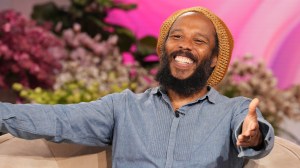
BURBANK, CALIFORNIA – MARCH 25, 2026: Grammy-winning musician Ziggy Marley appears on "The Jennifer Hudson Show" airing April 29, 2026 in Burbank, California. (Photo by Chris Haston/WBTV via Getty Images). Check your local listings for times.