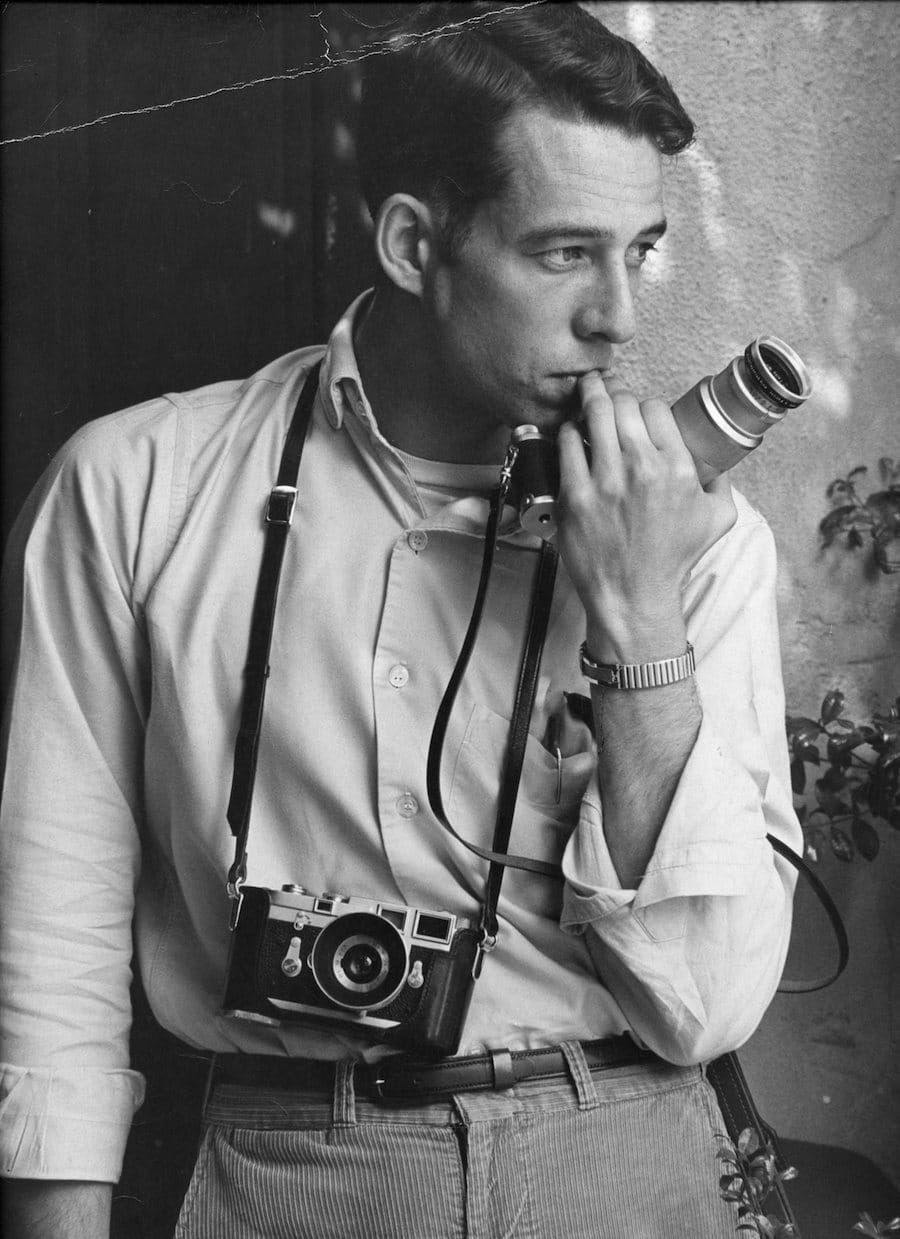
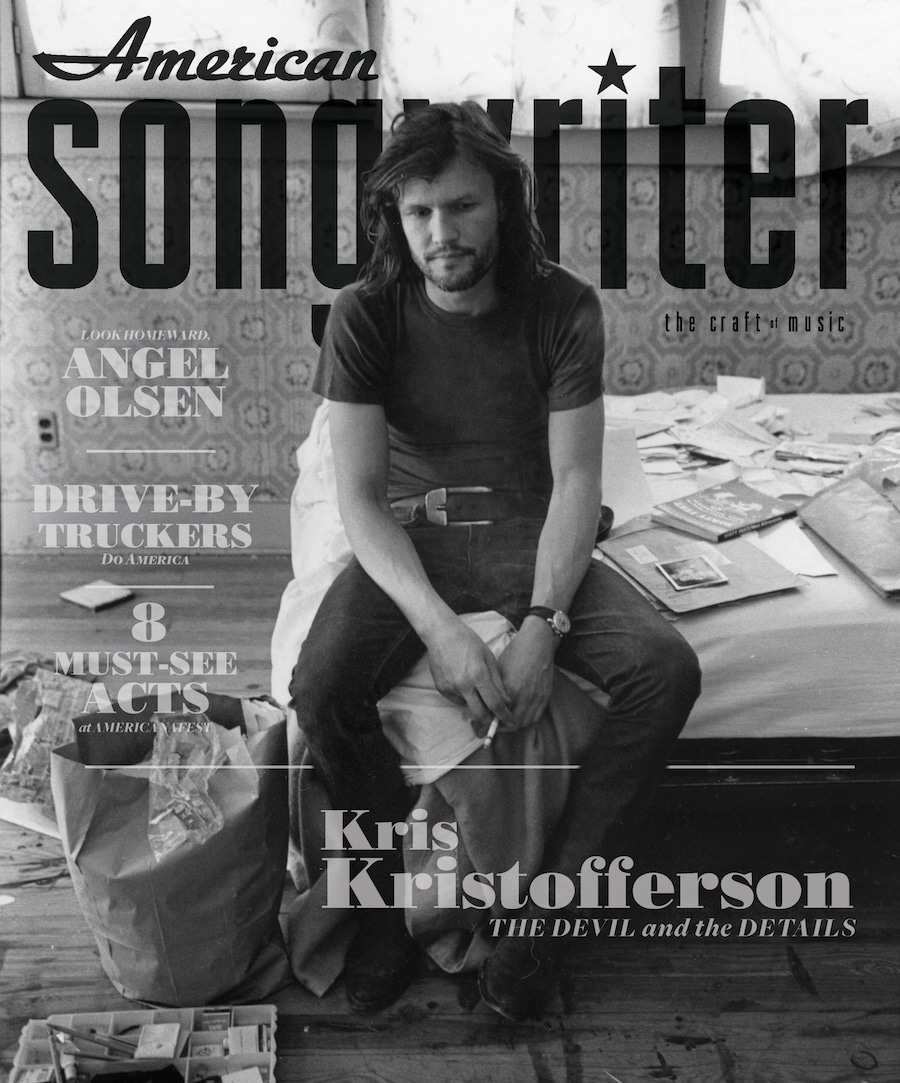
The photo of Kris Kristofferson on the cover of the September/October issue (and pictured below) was taken in 1971. The scene is the songwriter’s Nashville apartment. It’s likely early afternoon and our hero has just awoken.
The image was captured by Al Clayton, an eminent southern photographer who was also a friend of Kristofferson’s. The photo did not come out of an arranged photo shoot, and no managers or handlers were involved in its make-up. The papers and debris scattered on the bed and floor are not props, but tokens of a bohemian life. This is photo-vérité, if you will, a portrait of the artist as a rakish thirtysomething chasing down the muse in Music City.
In the late ’60s and early ’70s, it was Clayton’s custom to take shots of Kristofferson and his songwriting compadres when they were hanging out as friends. His archives are teeming with shots of Nashville musicians in these settings, many of which were never commissioned for publication.
Scrolling through the archives, one finds a warmth and familiarity to the images not seen in a lot of today’s music photography.
“It’s like Kris’s wife Lisa says, part of the attraction to dad was that you could tell how fond he was of the people he was with,” says Al’s daughter, Jennie Clayton. “He wasn’t there to just get the picture and run away.”
Jennie Clayton thinks her father, who passed away in 2014, first met Kris at a party at Johnny Cash’s house. Bob Dylan was in town at the time working on Nashville Skyline, and Clayton had some shots of of the city he wanted to show Dylan for album cover consideration. As a kid, Jennie Clayton recalls attending cookouts with her dad, adding that Kristofferson was sometimes charged with the task of putting her to sleep by reading her a bedtime story, so the adults could keep on partying into the night.
******
Clayton was not really a music photographer by trade. Though he’s well known for the work he did in the realm of food photography, notably for the John Egerton book Southern Food: At Home, On The Road, In History (1987), his foremost passion was socio-political photojournalism.
“I worked with some of the best photographers on planet Earth, and Al Clayton was among the best of the best,” says writer and journalist William Hedgepeth, a Georgia native who, as senior editor of Look magazine in the 1960s, struck up a relationship with Clayton. “There was no one quite like him, in terms of his dedicated sensitivity to putting oneself in the shoes of another.”
In the late ‘60s, Clayton traveled to the Mississippi Delta and Appalachia with a group of doctors and documented the poverty and child hunger he witnessed. His photos found their way to a Congressional subcommittee hearing chaired by Senator Bobby Kennedy, and contributed to the overhaul of the Food Stamp Act, whereby the program was wrested from the hands of local authorities and taken over by the federal government.
Hedgepeth was at the committee hearing that day and ended up publishing the photos in Look, and thus began a working relationship with Clayton. Later, they collaborated on an article about child hunger called The Hungry World of Teresa Pilgrim, working as a sort of 2.0 version of James Agee and Walker Evans, the writer and photographer duo who produced Let Us Now Praise Famous Men, a seminal work on Depression-era Southern poverty.
In the late ‘60s, Clayton and Hedgepeth would travel together to Biafra (now known as Nigeria) to document the Biafran Civil War. Working with the victims of genocide in Africa and poverty in America took its toll on Clayton, his daughter says.
“It was really hard for him to walk into the homes of these people who were starving to death, and you have to leave and go to the next one,” she says. “And when he got back from Biafra, he said he went into the hotel in New York and cried.”
What stands out to Hegepeth about Clayton’s body of work is the sense of compassion that shines through. “I really have thought of him in many ways, in terms of his concern for other people, as being like Atticus Finch.”
“His experience documenting starvation in the South and in Africa put things into perspective,” adds Jennie Clayton. “People were people to my dad. His coverage of the country music world shows his ability to capture the real person behind the stardom.”
Clayton, who was born in Etowah, Tennessee in 1934, learned his trade while working as a medical photographer in the Navy in the 1950s, arriving in Nashville in 1965 after a stint in art school.
When Clayton remarried in the early ‘70s, he went to live in Atlanta, and at that point had five children to look after. Though he still shot album covers from time to time, most of his work during this period involved work for advertising agencies.
“There wasn’t money to be made then doing the things [like photojournalism] his heart wanted to do,” Jennie Clayton says. “I never felt like he resented it, though.”
A production company out of Atlanta is currently working on a documentary about the photographer, titled Here Comes Al Clayton, which is slated to start filming in 2017. “Al’s pictures captured the dark fringes of the American South in a harsh, not-to-be-ignored light,” says Katy Powers, a producer with Pogo Pictures. “And there’s a bigger story behind the hundreds of thousands of photos that have never even been seen.”
“Most importantly,” adds Steve Colby, who is directing the documentary, “like Al’s work, the film will be visually disruptive and is meant to provoke action.”
Most Viewed
-

SAN FRANCISCO – NOVEMBER 25: (L-R) Richard Manuel, Dr. John, Neil Diamond, Joni Mitchell, Neil Young, Rick Danko, Van Morrison, Ronnie Hawkins, Bob Dylan, Robbie Robertson and Eric Clapton perform onstage for the rock and roll group "The Band's" "The Last Waltz" concert at Winterland Ballroom which was later turned into a film by Martin Scorsese on November 25, 1976 in San Francisco, California. (Photo by Michael Montfort/Michael Ochs Archives/Getty Images) -
These 1970s parody songs beat all the "real" music on the charts. They blurred the lines between fake song and true hit. -
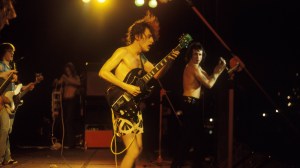
AUSTRALIA – JANUARY 01: Photo of AC DC and Angus YOUNG and AC/DC and Mark EVANS and Bon SCOTT; Mark Evans, Angus Young (playing Gibson SG guitar), Bon Scott – performing live onstage, c.1975/1976 (Photo by Bob King/Redferns) -
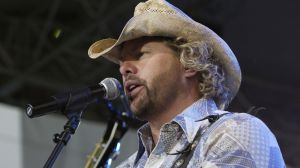
THE TONIGHT SHOW WITH JAY LENO — Episode 2947 — Pictured: Musical guest Toby Keith performs on June 8, 2005 — (Photo by: Paul Drinkwater/NBCU Photo Bank/NBCUniversal via Getty Images via Getty Images) -
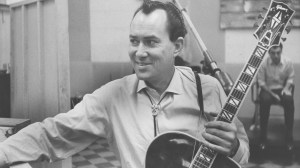
UNSPECIFIED – CIRCA 1970: Photo of Don Gibson Photo by Michael Ochs Archives/Getty Images -
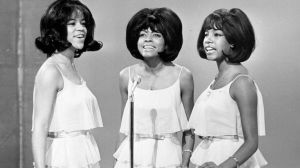
Motown singing group The Supremes perform on a TV show circa 1964. (Photo by Michael Ochs Archives/Getty Images) -

Blake Shelton and Gwen Stefani