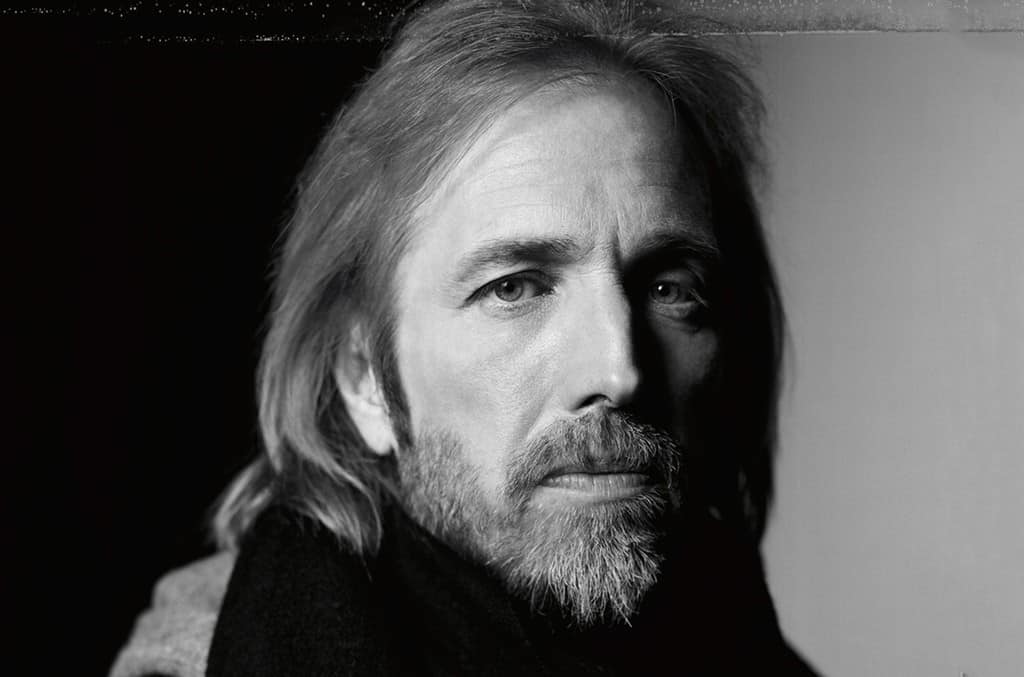
In honor of its 14th anniversary today, a celebration of his final solo album featuring Tom’s memories of writing and recording every song

Highway Companion, the last of Tom Petty’s three solo albums, was released 14 years ago today on July 25, 2006.
“It just came to me that this would be a nice highway companion,” he said about his choice of title, “like a good book that you could take with you on a trip. I liked that. It’s good traveling music. Something you could go on a journey with, and it would be a nice companion.”
It’s the album he was working during the year we worked on Conversations with Tom Petty, so these songs, each of which he’d play really loud for us both to hear, became the soundtrack for our project. Though this was the third of his three solo albums, it was the first album he ever made all at home, there in his Malibu home studio, where we’d meet to work.
Videos by American Songwriter
Though it was a home-made album, it wasn’t done alone. Jeff Lynne and Mike Campbell co-produced with Tom. Mike also plays on the whole album, mostly slide, as discussed here.
All through the year of our work, starting in 2005, he’d play me the new tracks from this album as they were being recorded. “Turn This Car Around” was first, and it was thrilling to hear a new classic with Tom there. And he was beaming. He loved the song itself, and the track. Mike’s languid solo. The drums. All based around one of Tom’s ‘mystery chords’ he’d find on guitar and leave to others to identify, it’s another singularly compelling song from his boundless musical soul.
Jeff Lynne said, he’d never heard one quite like it and wasn’t sure even what to call it. Funky, somewhat swampy, built on a sparse track because Tom wanted a small ensemble sound instead of a big rock band, it is the perfect song to lead all the others, because, as Tom said, it said “opener” to him. Anchored on this cool colloquial demand, not unlike “Don’t Come Around Here No More,” it launched our season of book work as perfectly as it does this album forever,
Throughout our year of Saturdays, Tom’s mood was exultant. It was a mixture of factors
which created it, all of which were emblematic of the changes he was going through. Now with his beloved Dana in their new home, he was starting to understand that many of the aspects of his life he found the hardest – such as recording his songs, or being a family man and global rock star at the same time – did not have to be as tough.
Even recording, which once was so torturous to him that he smashed his band into a wall while recording “Rebels,” he learned didn’t have to be so arduous. In fact, it could be fun!
Dana helped him understand, in a profound way, that life itself – even in the immense perpetual hurricane of his rock star existence – did not have to be a burden. She helped him to pacify those those portions of his own wily spirit that fought within him, and to quiet aspects of the past that darkened his soul. She even got him to listen to old albums he refused to ever hear again, as to him they seemed like albums all of old photos he never wanted to see again.
Even doing his own drumming on this album was symbolic, in that it sidestepped the ceaseless discord among fans about his replacement of drummer Stan Lynch with Steve Ferrone. As if he was saying, “Fine! It’s been twenty years and you’re still upset. I’ll just do it myself.”
The other song that was the most momentous was “Down South,” his lighthearted sequel to “Southern Accents.” Instead of the sorrowful dream of his mother praying for his soul, we get Tom in a white linen suit like Samuel Clemens. It was the song that excited him more than any other when he wrote it, as it came from this new wake-up time, allowing him to see the South with renewed eyes.
After we finished the book, the new album was yet to be finished, and Tom & The Heartbreakers went off on a summer tour. It seemed there wouldn’t be ime to do this final chapter on Highway Companion as hoped. But Tom was a true pro, and always fought through obstacles which could keep a project from its full potential. He knew we needed this last chapter to show exactly where he was at during this time. These were the songs he wrote and recorded then, and they summon up the spirit of that time perfectly.
I’d already appealed to the publisher for an extension so we could get this chapter in, and failed. Our editor there who was a die-hard Tom fan who was absolutely enthralled with any chance to talk to Tom. When he called himself, she agreed completely.It was a
good lesson: If ever possible while in business negotiations, get Tom to make the call.
He said he was “particularly proud” of this album, and hopeful but unsure it would do well, given the change in radio then. But that concern was like a raindrop compared to the ocean of homespun joy from which these songs came and were captured. That spirit of joy is alive in his answers here, as spoken in the immediate wake of finishing the album.
This is Part One of our three-part journey through Highway Companion, starting with the introduction to this chapter from the book.
A note from the author: As this book was about to go to press, I received a phone call from Tom. He was in a happy place just having come off a successful summer tour and having recorded several songs for his forthcoming solo album, “Highway Companion.” He
was thrilled with the music he, Jeff Lynne, and Mike Campbell were creating and he invited me to come have a listen to their work in progress. It was the eleventh hour in the production for this book but I couldn’t resist the opportunity to hear a few new songs. So I headed to Malibu, listened to some songs, and asked Tom a few more questions. —Paul Zollo

highway companion. 2005
You just started work on an album with producer Jeff Lynne. It’s another solo album, tentatively titled Highway Companion. Did you write all the songs and then start recording, or are you writing during the sessions?
TOM PETTY: I think I wrote most of it before the recording. I had a good chunk, maybe eighty or ninety percent of it before we started recording. I think I only wrote one completely while we were in the studio, “Damaged By Love.”
“Turn This Car Around” is a great opener. It’s a powerful song.
Yeah. It says “opener” to me.
It’s got a great chorus, and a different use of the title than usual. Did that come while writing?
That was one of those nice gifts you get where it just really just fell into place. I started singing it, and I think I got a verse and a chorus. Then I spent a little time working on the lyrics. I wrote more verses than I needed, actually, so I had to sit down and pare it back a little bit. It came out beautifully. And it was one of the first couple we did. And I remember Jeff saying, ‘I’ve really never heard anything like this.’ [Laughs] And we were pleased with that. He said, ‘I really wouldn’t know what bag to put this in. I’ve never heard anything like it.’
It’s cool in that it’s in E minor, but starts with a complex chord.
It’s a very odd chord. Jeff said he’d never seen it used before. I don’t really know what chord it is. It’s almost an E minor 7th, but with something else in there. [Picks up guitar and plays an E minor 7th with a suspended 4th.] I just started playing that one day, and I loved that chord.
Did you write these all on acoustic guitar?
Yeah. I think so. It was all on the acoustic.
The theme of time passing reoccurs throughout the album.
It does. I don’t know why. I guess it’s just subliminal. Subconsciously I did it. I didn’t intend to do that. Maybe it’s just getting older. You start realizing that you have a certain amount of time to deal with. And I’m at that age where I realize time is really precious. Maybe that was in the back of my mind. It was not some- thing I set out to do.
The slide solo on “Turn This Car Around” by Mike is so languid and nice.
Incredible, isn’t it? He’s just incredible. He does it so effortlessly. He just makes that sound. He was very clever with how he used the guitar. He went after different textures. He used different amps. Sometimes he used a stereo amp. Sometimes for one track he’d take [the amp] out into the big room and mike it at a distance, to get a bigger sound. He’s just a genius with guitar sounds. Beautiful sounds he got.
He felt that maybe we were doing too much slide guitar. But I urged him to keep doing it, because I thought it gave the album a character. I wanted the album to have a somewhat similar sound throughout. I didn’t want it to be one of these, and now one of those. We’d done that before. I wanted this to have a thread of character sonically. So I urged him to do the slide a little more than I think he naturally would have done. But I liked it. It became another voice to me. The album does have a beautiful sonic character.
Well, that’s Jeff.
Yet it doesn’t have the typical Jeff Lynne sound at all.
I think it’s certainly the most different thing he’s ever done. You’d never even know that it was Jeff necessarily. He doesn’t have to put his classic stamp on it. But I think he’s really stepped forward in a way as a producer. It’s some of his best work, I know that.
It’s much sparser than his typical work.
I wanted it to sound like a combo. I didn’t want this to be a big production. I wanted it to sound like it could be played by a combo. Like five guys could do this. And therefore that helped us maintain a lot of space in the music.
Jeff played the bass?
Yes. And he’s a really good bass player. Sometimes you don’t really even notice how good the bass is, because it’s doing its job, and you’re not paying attention to it. Yet it’s anchoring the whole song.

Yeah, like crazy. With a bass, even knowing how long to let a note ring is so important. It’s not just that you hit the right note. It’s how long you let that note ring, and where did you cut it off. He’s just a genius at that. He’s so good at that. He plays that great bass solo at one point too.
Yeah, on “Night Driver.”
[Laughs] He said, ‘I’m sorry, I didn’t mean to go off on that.’ And I said, ‘No, we’re keeping that.’
He said, ‘Really? I thought maybe I was being over indulgent. I’m sorry, I didn’t mean to take off on that.’
I said, ‘No, it’s great. It’s beautiful.’
And nice to have a bass solo.
Yeah, you never hear one.
And you played all the drums throughout?
I did. I think I could play these songs. I mean, you would never see me onstage playing the drums. But these days, with the luxury of all the equipment you’ve got in the studio and the engineers, they can really forgive a lot of sins. [Laughs] But I managed to get through it. Jeff encouraged me to do it. At first, it was done just out of necessity. We were there, and we didn’t have a drummer.
But I’ve got to admit, I really enjoyed doing it. I don’t think I’d do it a lot. But for this project I really suddenly thought I’m gonna try to do it all. It probably could have been done better by a real drummer, but I did my best with it. And I had fun doing it. But like I say, the engineer forgives a multitude of sins. Because they can fix all my mistakes. So I would never try to do it live.
Though I’m not that bad. I practiced a lot. While we were making the record, I would go in the drum room and practice a lot, just to try to get used to being a drummer.
You did it to a click track?
Yeah.
You put down guitars first?
Yeah, we’d do the guitars, and maybe even the bass sometimes. And then I’d do the drums.
Did Jeff play keyboards?
We all played a little bit of keyboards. We split them up. Jeff played most of the piano and a bit of organ. In the things we did here, I played all the keyboards. And I played that electric piano on “Night Driver.” That’s me. So that was just whoev- er had a good idea, though Jeff did the lion’s share of the piano. We’d all put our heads together and figure out the piano part. And then whoever could pull it off could play it. [Laughs]
And did you do the vocals before finishing the tracks?
I did the vocals very early on. Because I don’t like the idea of building a track and then having to glue it all together with the vocal. So it’s better to base it around the vocal. So I usually did the vocal as soon as we had a rhythm guitar down.
The harmonies are very subtle, and so gently mixed into the track.
That’s just Jeff mixing them in the right spot. He’s very good at that. Better than I am at placing the harmonies in the mix. Sometimes we might turn them up and down depending on the song. He and the engineer would do the mix for most of the day, and then Mike and I would come in for the last few hours of the mix. And then if we heard something that they hadn’t heard, they might make an adjust- ment. But [Jeff] is quite good at putting them in the right spot. And I love singing with him. We have so much fun singing.
End of Part One. Part Two will be published tomorrow, July 26, 2020.
Interview with Tom Petty is from Conversations with Tom Petty, Expanded Edition published by Omnibus/UK.