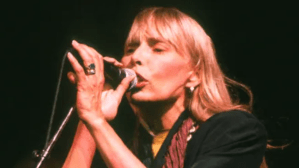
“Amazing Grace” – Written by John Newton
What do Nelson Mandela’s 70th birthday, Woodstock, a Barack Obama speech, Coal Miner’s Daughter, Fannie Lou Hamer’s civil rights marches, The Grand Ole Opry, and American churches have in common? All of them have featured “Amazing Grace.” It’s been performed by Diana Ross, Judy Collins, the Royal Scots Dragoon Guards, Joan Baez, Aretha Franklin, Rod Stewart, Andrea Bocelli, Mahalia Jackson, Elvis Presley, Johnny Cash, Ray Charles, Whitney Houston, Willie Nelson, Destiny’s Child, Mumford & Sons, Alan Jackson, and a host of others. One historian estimates that it is performed ten million times annually across the world.
Clearly there’s something amazing about grace. John Newton, the song’s writer, certainly thought so.
Born in London in 1725, Newton led a fascinating life. He was forced into naval service at age 18 but attempted to desert. After being beaten severely—eight dozen lashes—he contemplated murdering the captain then committing suicide by hurling himself overboard. After recovering, Newton transferred to another ship, a slave trading ship. The captain said Newton was the most foul-mouthed and offensive person he had encountered in the entire slave trade, to the point he even invented new obscenities. His abrasiveness led the captain to give Newton to a slave dealer named Amos Clowe who then gave Newton away as a slave where he remained, abused and in captivity, until his rescue more than two years later.
On his return voyage to England Newton first began to see the amazingness of God’s grace. In the midst of a storm that threatened to sink the ship he cried out for mercy, a prayer of desperation. They arrived home safely, and the experience left Newton reflective. He did not immediately abandon the slave trade or become a committed Christian, but over the next few years became more and more convicted of his sins and of a life that was rebellious to God. After six years, Newton left seafaring and slave trading, committed his life to following Jesus, and became a minister. Near the end of his life, Newton became friends with William Wilberforce and partnered in his efforts to abolish the slave trade altogether in England.
“Amazing Grace” was penned in 1772 as a poem for his church’s prayer service, was published in 1779 as part of a collection of hymns, and then made its way to the American colonies. In 1835, twenty eight years after Newton’s death, William Walker, an American composer and song leader, put “Amazing Grace” to a traditional tune called “New Britain” (the one we are familiar with today) in shape note form so it could easily be learned and sung by common people. Over the following decades, through tent meetings and urban evangelistic crusades, the song gained the nearly ubiquitous popularity it holds today.
Few other songs have appeared in settings ranging from the halls of royalty to Appalachian meeting houses. “Amazing Grace” resonates in its simplicity and depth, its clarity and its hope. It tells a story of redemption born from the life of a man who knew what that meant. It echoes truths we know and truths we want to know. This is why we know it, we love it, and it has such staying power.
Further reading/listening:
https://www.broadwaybox.com/daily-scoop/countdown-25-amazing-versions-of-amazing-grace/
https://churchpop.com/2014/10/01/21-renditions-amazing-grace-good-youll-get-goosebumps/
Are you a songwriter? Enter the American Songwriter Lyric Contest.
More Behind The Song
-
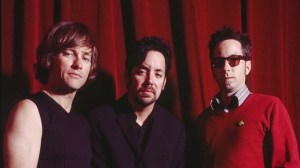
Portrait of Fastball (Joey Shuffiel, Miles Zuniga, Tony Scalzo) in San Francisco, California, USA, 1998. Photo © Anthony PIdgeon -

THE JOHNNY CASH SHOW – "History of Country Music" – Airdate: January 21, 1971. (Photo by ABC Photo Archives/Disney General Entertainment Content via Getty Images) MERLE HAGGARD -
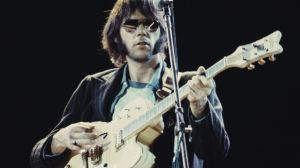
Canadian musician Neil Young of Crosby, Stills, Nash And Young performs on stage at Wembley Stadium, London on September 14th 1974. (Photo by Michael Putland/Getty Images) -
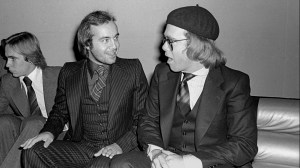
Elton John converses with his songwriter partner Bernie Taupin at his Studio 54 party. -
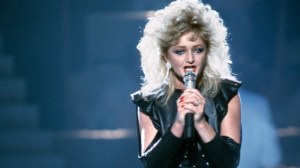
LOS ANGELES – FEBRUARY 28: The 26th Annual Grammy Awards, presented at Shrine Auditorium, Los Angeles. Broadcast on CBS television on February 28, 1984. An event recognizing the achievements and talents of singers, musicians, and music industry persons. Pictured is Bonnie Tyler. (Photo by CBS via Getty Images) -
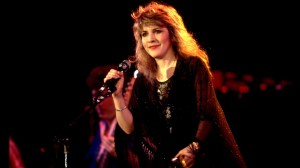
American musician Stevie Nicks performs onstage during the US Festival, Ontario, California, May 30, 1983. (Photo by Paul Natkin/Getty Images) -
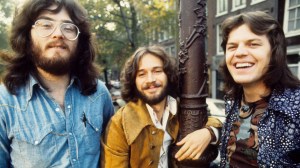
The Stampeders (with Rich Dodson (L)) pose for a group portrait in 1971 in Amsterdam, Netherlands. (Photo by Gijsbert Hanekroot/Redferns)