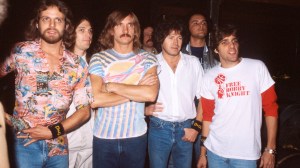
Perhaps no band in history has been able to spin so much gold out of utter chaos than Fleetwood Mac. The obvious example of this phenomenon was Rumours, the 1977 smash song cycle detailing the romantic complications among the five members. Ten years later, Tango In The Night brought the band back from a five-year recording hiatus in a haze of infighting and personal problems. Needless to say, the album contained four top 20 singles and went three times platinum in the United States.
The biggest of those hits, reaching No. 4, was “Little Lies,” credited to Christine McVie and her then-husband Eddy Quintela. If Stevie Nicks’ songs were marvels of sultry mystery and Lindsey Buckingham’s tracks were tortured, cathartic epics, McVie’s compositions hewed towards unfussy but ingratiating songcraft, with direct-hit hooks and melodies that lingered.
Videos by American Songwriter
In 2019, McVie told Harper’s Bazaar how her songwriting evolved from humble early efforts to sure shots like “Little Lies.” “I started writing songs when I was very young, but I wasn’t very good,” she said. “In fact, I was quite paranoid about it. Then I joined Fleetwood Mac and Mick encouraged me to keep trying. I wrote all the time during that time and my pop developed into more of a blues style. It was Mick who told me to persevere and eventually I wrote a few good songs.”
In the case of “Little Lies,” McVie took the perspective of someone who’s caught between wondering what if and finally calling the time of death on a fractured relationship. If I could turn the page/In time then I’d rearrange/Just a day or two, she begins. She’s not trying to rewrite all of their history, but rather asking for a short span of time when things were sweet between them. But she knows even this is futile, so instead, she decides to suspend disbelief, reveling in the untruth when the actual truth hurts so bad.
Later in the song, the narrator decides that no amount of wishful thinking is going to turn things back around. No more broken hearts, McVie sings. We’re better off apart/Let’s give it a try. Since the end is near, she decides that the relationship should go out in the manner it has always existed: Tell me lies, tell me sweet little lies.
It’s at that point in each chorus where Fleetwood Mac’s unrivaled chemistry, even in the midst of intra-band turmoil, shines brightest on this particular track. After McVie’s wistful lead vocal, Nicks repeats the line in an ethereal, seductive deadpan. Buckingham then chimes in with his own cackling, crazed version of the refrain. It’s like hearing the full gamut of post-breakup emotions being run in just a few seconds.
As is the case with so many of their songs, you could easily interpret the lyrics here as being about the explosive dynamics within the band. You could certainly enjoy “Little Lies” even if you didn’t know a thing about Fleetwood Mac. But with this quintet, biography and artistry have always been intimately intertwined.
More Features
-
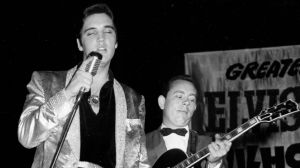
TUPELO, MI – SEPTEMBER 1957: Rock and roll musician Elvis Presley and his guitarist Hank Garland at the Mississippi and Alabama Fair and Dairy Show in Tupelo, Mississippi, where Elvis was born and grew up. Elvis performed without charge so that the entire $25,000 proceeds of the show could go to build an Elvis Presley Youth Recreation Center in Tupelo. (Photo by Michael Ochs Archives/Getty Images) -
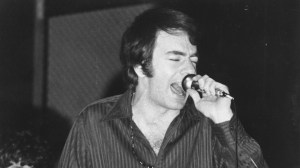
CIRCA 1969: Singer Neil Diamond performs onstage in circa 1969. (Photo by Michael Ochs Archives/Getty Images) -
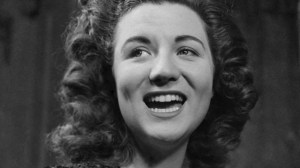
British singer Anne Shelton (1923 – 1994), star of the programme 'With a Smile and a Song', 1946. (Photo by George Konig/Keystone Features/Hulton Archive/Getty Images) -
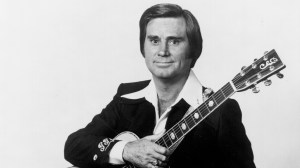
Photo by Michael Ochs Archives/Getty Images -

English pop group Electric Light Orchestra (ELO) rehearsing for their appearance on the BBC TV music show 'Top Of The Pops', London, 11th October 1973. The band are miming to their single 'Showdown'. Left to right: Bev Bevan (drums), Mike Edwards (1948 – 2010), Rick Pannell, Jeff Lynne, Mik Kaminski and Mike de Albuquerque. Pannell is the band's sound engineer and is standing in (miming only) as second cellist after the departure of Colin Walker from the group. (Photo by Michael Putland/Getty Images) -
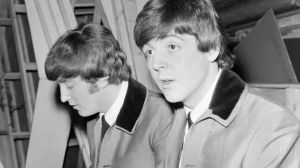
Photo by Robert Kern/Getty Images -
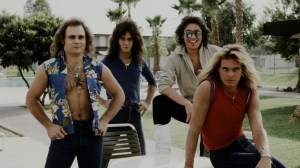
(MANDATORY CREDIT David Tan/Shinko Music/Getty Images) Van Halen posing in Arizona in the United States, 1978 October. (Photo by David Tan/Shinko Music/Getty Images)