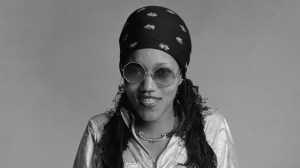
Today, Nashville is the undisputed epicenter of country music. That’s due in no small part to the efforts of William Owen Bradley, born in Westmoreland, Tennessee, on this day (October 21) in 1915. A longtime producer and vice president of Decca Records’ Nashville division, he presided over some of the most significant country music recordings of his time from timeless stars like Loretta Lynn, Kitty Wells, Patsy Cline, Brenda Lee, and Ernest Tubb. Bradley also helped pioneer the “Nashville Sound”. He added sleek piano arrangements and layered string sections to broaden the genre’s appeal beyond the rural South and hollers of Appalachia.
Owen Bradley died on January 7, 1998, at age 82 in Nashville, Tennessee. Today, we’re revisiting his legacy in honor of what would have been his 111th birthday.
Videos by American Songwriter
How Owen Bradley Climbed the Nashville Ladder
Owen Bradley moved to Nashville with his family in the early 1920s. By this time, he had developed a fascination with music that would span his entire lifetime.
Learning harmonica, steel guitar, trombone, piano, vibraphone, and organ, he was a working musician by the age of 15.
Bradley’s career progressed quickly. At age 20, he got a job playing and arranging music at the Nashville radio station WSM. By 1942, he had taken over as the station’s musical director. Bradley did all of this while leading a sought-after dance band popular at parties among Nashville’s elite.
The same year, Bradley co-wrote Roy Acuff’s hit “Night Train to Memphis”.
He Worked With Red Foley and Kitty Wells
In 1947, Decca Records executive Paul Cohen hired Owen Bradley to open the label’s Nashville office and lead recording sessions there.
Among Bradley’s earliest accomplishments with Decca were Red Foley’s chart-topping 1950 hit “Chattanoogie Shoe Shine Boy” and Kitty Wells’ seminal 1952 crossover success “It Wasn’t God Who Made Honky-Tonk Angels”.
The latter paved the way for a generation of female country artists — including Dolly Parton, Loretta Lynn, and Tammy Wynette — taking unfaithful men to task in their lyrics.
In addition to working with artists like Ernest Tubb and Bill Monroe, Bradley also managed to find time for his own recording career. With his band, he released hits like “Blues Stay Away from Me” (1949) and “The Third Man Theme” (1950).
Building Music Row—Literally and Figuratively
When Paul Cohen told Owen Bradley he was considering relocating Decca’s headquarters to Dallas, Bradley offered to build a studio in Nashville.
Along with his brother, Harold, he bought a house at 804 16th Avenue South in Nashville. Together, they remodeled it to create Music City Recording. And just like that, “Music Row” was born. It remains the heart of Nashville’s entertainment industry today.
In 1958, Bradley stepped into Cohen’s shoes as head of Decca Records. He quickly began cultivating what became known as the “Nashville sound”, shaking off country music’s unworldly reputation in favor of a more cosmopolitan (“countrypolitan”) sound.
However, Bradley is perhaps best known for his work with Patsy Cline and Loretta Lynn. He directed the soundtracks for their respective biopics, Sweet Dreams and Coal Miner’s Daughter.
Featured image by Bob Grannis/Getty Images
-
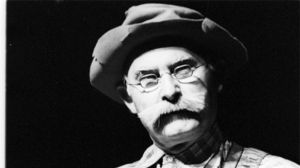
UNSPECIFIED – CIRCA 1950: Photo of Grandpa Jones Photo by Tom Copi/Michael Ochs Archives/Getty Images -

Luke Combs had a huge hit with his cover of Tracy Chapman's "Fast Car" -
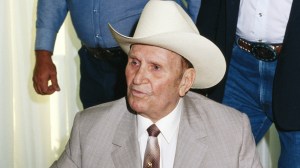
Gene Autry, who rose to fame by following Art Satherley's advice -
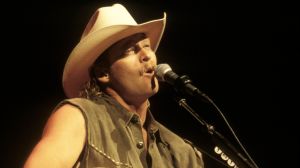
Singer, songwriter and guitarist Alan Jackson is shown performing on stage during a live concert appearance on August 31, 1998 in Wallingford, Connecticut. (Photo by Getty Images/John Atashian) -
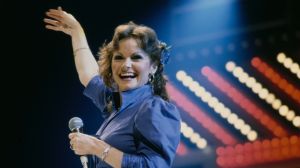
American country singer Jeannie C. Riley performs at the International Festival of Country Music at Wembley Arena, London, UK, 12th April 1982. (Photo by Keystone/Hulton Archive/Getty Images) -
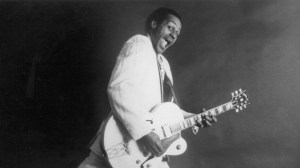
CIRCA 1958: Rock and roll musician Chuck Berry poses for a portrait holding his Gibson hollowbody electric guitar in circa 1958. (Photo by Michael Ochs Archives/Getty Images) -
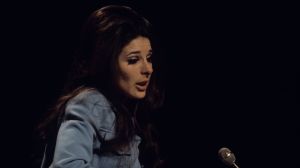
American singer Bobbie Gentry performs on the Bobbie Gentry music series for BBC Television at Television Centre in London circa 1968. (Photo by David Redfern/Redferns)