On this day (October 10) in 1958, Tanya Denise Tucker was born in Seminole, Texas. Less than 14 years later, she stepped into the national spotlight with her 1972 debut single “Delta Dawn”, about a fading former Southern belle from Brownsville, Tennessee, who—at 41 years old—just can’t seem to move on from past heartbreaks and regret. And suddenly, the husky-voiced teenager who sang with an emotional depth beyond her years was a bona fide country star.
While Tanya Tucker certainly wasn’t country music’s first child star, she is somewhat unique in her ability to continue commanding an audience once her youth had faded. Although plagued at various times by waning sales and media scrutiny, Tucker has never lost her legendary status—from crafting some of country’s most beloved hits to starring in her own reality show, Tuckerville.
Videos by American Songwriter
Today, we’re taking a look at her extraordinary life and career in honor of her 68th birthday.
Tanya Tucker Was Singing From the Time She Could Speak
In many ways, Tanya Tucker always seemed bound for stardom. Her family moved frequently as her father, Beau, chased day-labor jobs, spending much of her childhood in Wilcox, Arizona, before later moving to St. George, Utah, and then Henderson, Nevada.
Country music remained a constant for Tucker throughout her many childhood relocations. The only radio station in Wilcox, Arizona, played country music, and at just eight years old, Tanya told her father she wanted to be a country singer when she grew up.
Her father, Beau, took this assertion seriously, once driving the family to Phoenix on the off chance that Tanya could perform with country singer Judy Lynn at the Arizona State Fair. (She did.)
Beau and Tanya’s older brother, Don, frequently approached country artists like Mel Tillis and Ernest Tubb at local shows to talk them into letting the young girl onstage with them.
Her Big Break
In 1969, the family moved to Henderson, Nevada, where Tanya Tucker regularly performed.
Eventually, one of her demo recordings caught the attention of songwriter Dolores Fuller, who sent it to legendary producer Billy Sherrill, then the head A&R executive at CBS Records.
An impressed Sherrill signed Tucker to Columbia Records and brought the 13-year-old to Nashville to record her first album.
Initially, Sherrill wanted the teenager to record “The Happiest Girl in the Whole U.S.A.”, written by country singer-songwriter Donna Fargo. However, when Tucker heard “Delta Dawn”—penned by Larry Collins and Alex Harvey, about Harvey’s mother—she told Sherrill, “That’s my song.”
Released in April 1972, “Delta Dawn” reached number six on the U.S. country songs chart, rocketing Tucker to national fame.
“I thank the lucky stars and the Good Lord for that song,” Tucker told Nine-O-One Network Magazine in 1988.
Wise Beyond Her Years
Tanya Tucker landed another top 10 hit with her follow-up single, “Love’s the Answer”. The following year, she found herself at number one for the first time with “What’s Your Mama’s Name”.
Two more chart-toppers followed with “Blood Red and Goin’ Down” and “Would You Lay with Me (In a Field of Stone)”. On her 16th birthday, Tucker signed a $1.5 million contract with MCA Records.
She continued releasing music, even finding success with the number-one songs “Lizzie and the Rainman” and “San Antonio Stroll”. However, after mounting frustration over her lack of creative input, Tucker made a hard pivot with her 1978 album TNT.
Its provocative cover and heavy rock influences proved controversial in Nashville, but didn’t stop TNT from selling upwards of 500,000 copies.
The Decline and the Comeback
The same year she released TNT, Tanya Tucker also moved to Los Angeles, hoping to capture a wider pop audience. Instead, she became a regular on the local party scene and began a controversial relationship with country star Glen Campbell, with whom she recorded a few singles.
By her 25th birthday, Tucker was without a record deal, and many thought her country-star days were behind her. However, she signed with Capitol Records in 1986 and released the album Girls Like Me, which yielded four top 10 country singles.
Two years later, she would score three number-one hits with “I Won’t Take Less Than Your Love”, “If It Don’t Come Easy”, and “Strong Enough to Bend”. This ushered in a career resurgence, and the Country Music Association named Tucker its 1991 Female Vocalist of the Year.
Amazingly, it wouldn’t be her last comeback, either. In 2019, Brandi Carlile and Shooter Jennings produced Tucker’s album While I’m Livin’, her first album of original material in 17 years.
And after nearly five decades in the music industry, Tanya Tucker won her first two Grammy Awards for Best Country Album and Best Country Song (“Bring My Flowers Now”).
Featured image by Gary Gershoff/Getty Images
-

LOS ANGELES, CA – Singer Scotty McCreery is announced the season's 2011 American Idol winner during Fox's "American Idol 2011" finale results show held at Nokia Theatre LA Live on May 25, 2011 in Los Angeles, California. (Photo by Kevin Winter/American Idol 2011/Getty Images) -

NASHVILLE, TENNESSEE – Megan Moroney poses backstage during the 19th ACM® Honors™ at The Pinnacle on August 19, 2026 in Nashville, Tennessee. (Photo by John Shearer/Getty Images for ACM) -
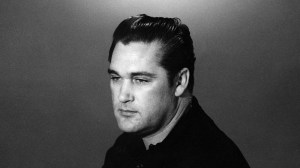
Charlie Rich, who released several hit songs featuring Pete Drake on steel -

NASHVILLE – NOVEMBER 26: Hee Haw cast from left; Lulu Roman, Don Rich, Jeannine Riley, Buck Owens, John and Jim Hagar and Susan Raye. Image dated November 26, 1969. (Photo by CBS via Getty Images) -

Portrait of the cast of KFRC radio's the 'Happy Go Lucky Hour,' San Francisco, California, 1930. Pictured are, standing from left, Al Pearce, Edna O'Keefe, Cal Pearce, Jean Clarnioux, Norman Neilsen, Hazel Warner, Abe Bloom, Monroe Upton (as Lord Bilgewater), and Harry 'Mac' McClintock; and seated from left, Tommy Harris, Charles Carter, Edna Fisher, and Cecil Wright. (Photo by Underwood Archives/Getty Images)