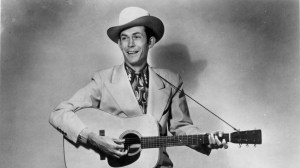
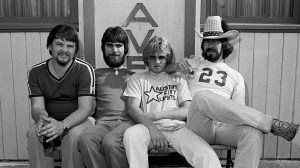
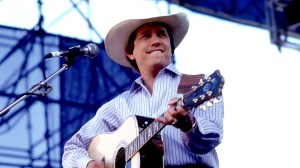
Fleetwood Mac experienced so many lineup changes throughout their tenure that it’s more of a name than a defined unit. Until they landed on their core five members (Mick Fleetwood, John McVie, Christine McVie, Stevie Nicks, and Lindsey Buckingham), Fleetwood was like a revolving door for players. One of those revolving members was Bob Welch. The guitarist joined Fleetwood Mac in 1971. Though his time with this outfit wasn’t long, he left a mammoth legacy upon his departure.
Bob Welch’s Musical Beginnings
Welch’s family was in show business. His father, Robert L. Welch Sr., was a screenwriter and producer for Paramount Pictures. His mother, Templeton Fox, was an actress and a singer. So, Welch’s turn into music was likely not a shocking moment for his folks.
Videos by American Songwriter
He learned several instruments in childhood, eventually landing on the guitar. He had ambitions to study at Georgetown, but eventually made for Paris and pretty much just “smoked hash with bearded guys five years older.” This set his rockstar mentality up for his eventual turn in Fleetwood Mac.
Before getting his big break in Fleetwood Mac, Welch was a member of other fledgling groups, namely The Seven Souls and Head West. These “failings” proved to be a good move for Welch, giving him space to join one of the most legendary rock bands ever; at least for a little while.
Fleetwood Mac and Solo Career
Many surface-level Fleetwood Mac fans might not even know Welch was a part of the famed group. He joined before the Nicks and Buckingham lineup, obscuring his involvement. Nevertheless, Mick Fleetwood would speak about Welch’s involvement after his death, saying, “He was a huge part of our history which sometimes gets forgotten. Mostly his legacy would be his songwriting abilities that he brought to Fleetwood Mac, which will survive all of us.”
“If you look into our musical history, you’ll see a huge period that was completely ensconced in Bob’s work,” Fleetwood continued in the same statement. If you dig into Welch’s time with Fleetwood, it’s easy to see that the founder’s sentiments ring true.
In the early 1970s, Fleetwood lost a key member, Jeremy Spencer, and was looking for a replacement. They found that in Welch, giving him rhythm guitar duties. Welch’s audition tape was so stellar that the band hired him without even having played with him live.
Before he decided to leave the band in 1974 (due to pressures from lineup changes and other stressors), he penned some of Fleetwood’s most famous songs from that era. His credits included “Future Games”, “Sentimental Lady”, “Hypnotized”, “Night Watch”, and more. This lineup may not have boasted the same pop success as the later, core edition, but Welch certainly delivered his fair share of memorable efforts.
Welch would go on to forge a solo career after leaving the band. This solo effort would prove massively successful as well; perhaps even more so than his involvement with Fleetwood Mac.
Welch committed suicide in 2012 near Nashville, Tennessee, leaving behind a massive musical legacy. If you aren’t familiar with Welch’s Fleetwood Mac efforts, revisit one of his most famous songs above. This guitarist deserves more credit for helping to make these rock legends what they were.
(Photo by Michael Putland/Getty Images)
-
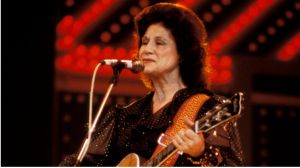
UNSPECIFIED – JANUARY 01: Photo of Kitty WELLS (Photo by David Redfern/Redferns) -
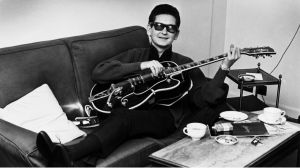
Roy Orbison. (Photo by © Hulton-Deutsch Collection/CORBIS/Corbis via Getty Images) -
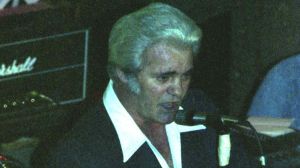
LONDON, UK – MARCH 6: Rockabilly artist Charlie Feathers performs at The Royalty, on March 6, 1980 in Southgate, London, England. (Photo by Charles Paul Harris/Michael Ochs Archives/Getty Images) -

Musician Don Schlitz performs, Chicago, Illinois, December 1, 1994. (Photo by Paul Natkin/Getty Images) -

LAS VEGAS, NEVADA – LeAnn Rimes during Pixelon.com Launches as "The Internet's Largest Full-Screen Full Motion Internet Video Broadcaster" with a Party and Concert at the MGM Grand Hotel in Las Vegas, 1999 at MGM Grand Hotel in Las Vegas, Nevada, United States. (Photo by SGranitz/WireImage)