On this day (November 6) in 1932, Stonewall Jackson was born in Tabor City, North Carolina. Stonewall wasn’t a nickname or stage name. Instead, he was named after the famed Confederate General. However, his name is far from the least interesting thing about him. He was the first artist to join the Grand Ole Opry without a record deal. Jackson also toured with his mentor, Ernest Tubb, until he landed his first chart hit. Decades later, he sued the Opry for discrimination and won.
When Jackson was 16, he lied about his age and joined the Army to escape the fields he had worked most of his life. However, they soon discovered his lie and discharged him. In 1950, when he turned 18, Jackson joined the Navy. After four years of service, he was discharged. Two years later, he moved to Nashville to pursue a country music career.
Videos by American Songwriter
Stonewall Jackson Makes Opry History
“I came into town, stopped at a little motel on the south side of town, and checked in,” he recalled. That hotel was across the street from Acuff-Rose, the biggest publishing company in Music City. “I said, I believe I’ll walk over there and see if anybody in country music will talk to me.” Jackson walked across the street and sang for Wesley Rose. Impressed with what he heard, Rose took Jackson downtown and introduced him to George D. Hay W.D. Kilpatrick at the Grand Ole Opry. They gave him an audition and were as impressed as Rose.
“They took me down the hall and signed me to a regular member’s contract,” he recalled. He was the first person to become an Opry member before landing a record deal.
After becoming an Opry member, Jackson began touring with honky tonk legend Ernest Tubb, who became his mentor. After months on the road with Tubb, he inked a deal with Columbia Records.
Jackson’s Recording Career
Stonewall Jackson released his debut single, the George Jones-penned “Life to Go,” in 1958. It peaked at No. 2 on the country chart. Early the next year, he released “Waterloo,” which became his first No. 1. It was also a crossover hit, peaking at No. 4 on the pop chart.
Jackson notched several hits over the next 24 years, including “I Washed My Hands in Muddy Water,” “Leona,” “Why I’m Walkin’,” “Help Stamp Out Loneliness,” and his second and final No. 1, “B.J. the D.J.” Jackson scored his final top 10 hit in 1971 with “Me and You and a Dog Named Boo,” but continued to release singles into the early 1980s.
Stonewall Jackson vs the Grand Ole Opry
In 2006, Stonewall Jackson sued the Grand Ole Opry’s general manager, Pete Fisher, as well as the show’s parent company, Gaylord Entertainment. He claimed that he began getting fewer appearances on the Opry stage after Fisher became the GM in 1998. When he asked why he wasn’t able to perform as often, Fisher allegedly told him, “I don’t want any gray hairs on that stage or in the audience, and before I’m done, there won’t be any.” He also allegedly told Jackson, “You’re too old and too country.”
Jackson didn’t just bring the lawsuit because he wanted to be on the stage more often. He also lost his health insurance through the Opry because he wasn’t allowed to meet the requirements to receive benefits after his appearances were cut.
A spokesperson for Gaylord Entertainment said Jackson’s claims were “without merit.” However, guitarist Jimmy “Spider Wilson” left the show after more than 50 years in the house band due to what he called “humiliating” treatment by Opry management. Notably, he was regularly excluded from Grand Ole Opry Live broadcasts on GAC.
They settled the suit out of court on October 3, 2008. The terms of the settlement weren’t made public. However, Jackson began regularly appearing on the Opry once again after the settlement was reached.
[RELATED: Every Baby Boomer Alive Remembers These 4 Classic Country Jams From 1959]
Jackson retired from performing around 2012. However, he remained a member of the Grand Ole Opry until he died in 2021. His final public performance was at his longtime friend George Jones’ funeral in 2013.
Featured Image by Erika Goldring/Getty Images
-
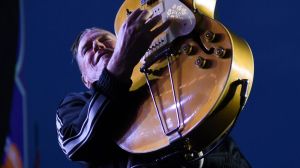
TORONTO, ONTARIO – Bryan Adams performs during the FIFA World Cup 2026 Countdown Concert at Fort York and the Bentway on June 10, 2026 in Toronto, Ontario. (Photo by Sonia Recchia – FIFA/FIFA via Getty Images) -
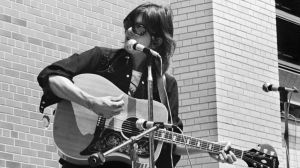
NEW YORK CITY – Gram Parsons performs with The Flying Burrito Brothers during a concert at Queens College in New York. (Photo by Harvey L. Silver/Corbis via Getty Images) -
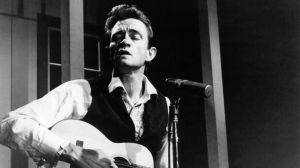
Johnny Cash sings as he plays guitar in scene from The Road To Nashville 1966. (Photo by Screen Archives/Getty Images) -
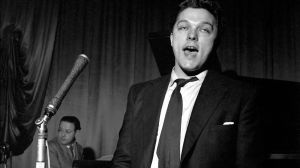
Singer Dickie Valentine seen here performing on stage. 1954 A134a-001 (Photo by WATFORD/Mirrorpix/Mirrorpix via Getty Images)