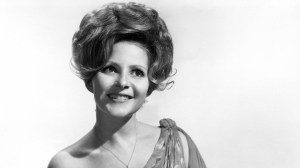
On this day (September 8) in 1932, Virginia Hensley was born in Winchester, Missouri. Before she rose to fame, she changed her name to Patsy Cline. Her life and career were tragically short but endlessly impactful. She inspired generations of women in country music, including Loretta Lynn, Linda Ronstadt, and Tanya Tucker.
Cline was still a teenager when her father abandoned her family. She dropped out of school at 15 and started working to keep her family afloat. Around this time, she also started performing in the Winchester area. At 20, she joined Bill Peer’s Melody Boys and Girls. While performing with Peer, she changed her name from Virginia Hensley to Patsy Cline, using a shortened version of her middle name, Patterson, and he first husband’s last name.
Videos by American Songwriter
In 1953, Cline participated in a talent contest. She won $100 in cash and a regular spot on Town and Country Time. Her time on the TV show drew the attention of critics who praised her emotive and throaty vocal delivery. In 1954, she signed her first record deal with 4 Star Records.
Patsy Cline’s Recording Career
Patsy Cline released her debut single, “A Church, a Courtroom, Then Goodbye,” in 1955. It failed to chart. Her next three releases met the same fate. However, according to the Country Music Hall of Fame, those songs helped her build a regional following.
In 1957, she made her national television debut on Arthur Godfrey’s Talent Scouts. She sang “Walkin’ After Midnight” on the show, and the audience loved it. Her label rushed to release it as a single after the televised performance. It became her first charting single. It reached No. 2 on the country chart and No. 12 on the Hot 100.
The hit led to several more TV slots, including Country Music Jubilee and Arthur Godfrey and Friends. Cline also performed on the Grand Ole Opry. However, her subsequent releases failed to reach the same level of success. As a result, she entered semi-retirement and gave birth to her daughter, Julie, in 1958. She spent the next two years trying to revive her career.
Things began to change in 1960, when Cline became a member of the Grand Ole Opry. Later that year, she signed with Decca Records. Owen Bradley, who had produced the bulk of her 4 Star recordings continued to work with her. Now, though, he began shaping her into a standard-bearer of the Nashville Sound.
Consistent Success at Last
In January 1961, Cline released “I Fall to Pieces.” It was her first charting single since “Walkin’ After Midnight,” topping the country chart and reaching No. 12 on the Hot 100. More than her first No. 1 single, “I Fall to Pieces” helped establish Cline’s reputation as one of country music’s greatest torch singers–an artist who performs melancholy songs about lost or unrequited love.
Patsy Cline followed that hit with the Willie Nelson-penned “Crazy.” It peaked at No. 2 on the country chart and No. 9 on the Hot 100. It was a massive crossover success for Cline. Moreover, the song became a standard and helped launch Nelson’s songwriting career.
Cline followed “Crazy” with “She’s Got You,” which became her second No. 1 on the country chart. She had two more top 10 country hits with “When I Get Thru with You (You’ll Love Me Too)” and “Leavin’ on Your Mind.” The latter was the last single she released before she died in a plane crash on March 5, 1963.
Patsy Cline’s life and career were tragically short. However, her legacy is immortal. Generations of young women in country music looked to her for inspiration. Cline’s close friend Loretta Lynn, Linda Ronstadt, Reba McEntire, LeAnn Rimes, Kacey Musgraves, Sara Evans, and Margo Price are among the stars who carried her legacy forward.
Featured Image by Michael Ochs Archives/Getty Images
-
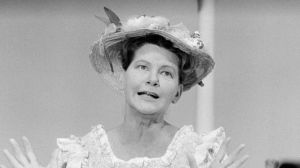
American country comedienne Minnie Pearl (1912 – 1996) performing, circa 1970. (Photo by Silver Screen Collection/Getty Images) -

British musicians Mick Jagger (left) and Bill Wyman of the Rolling Stones performs on stage during the band's 'Steel Wheels' tour, late 1989. (Photo by Paul Natkin/Getty Images) -

UNSPECIFIED – CIRCA 1970: Photo of Jim Reeves Photo by Michael Ochs Archives/Getty Images -

NASHVILLE, TN – Singer/Songwriter Whitey Shafer performs during the All-Star Whitey Shafer Benefit, Hosted By Moe Bandy at The Nashville Palace on March 18, 2015 in Nashville, Tennessee. (Photo by Rick Diamond/Getty Images for Webster PR) -
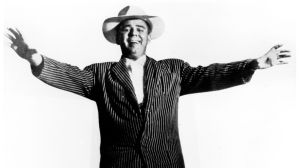
American singer, songwriter and disc jockey The Big Bopper, circa 1955. (Photo by Michael Ochs Archives/Getty Images)