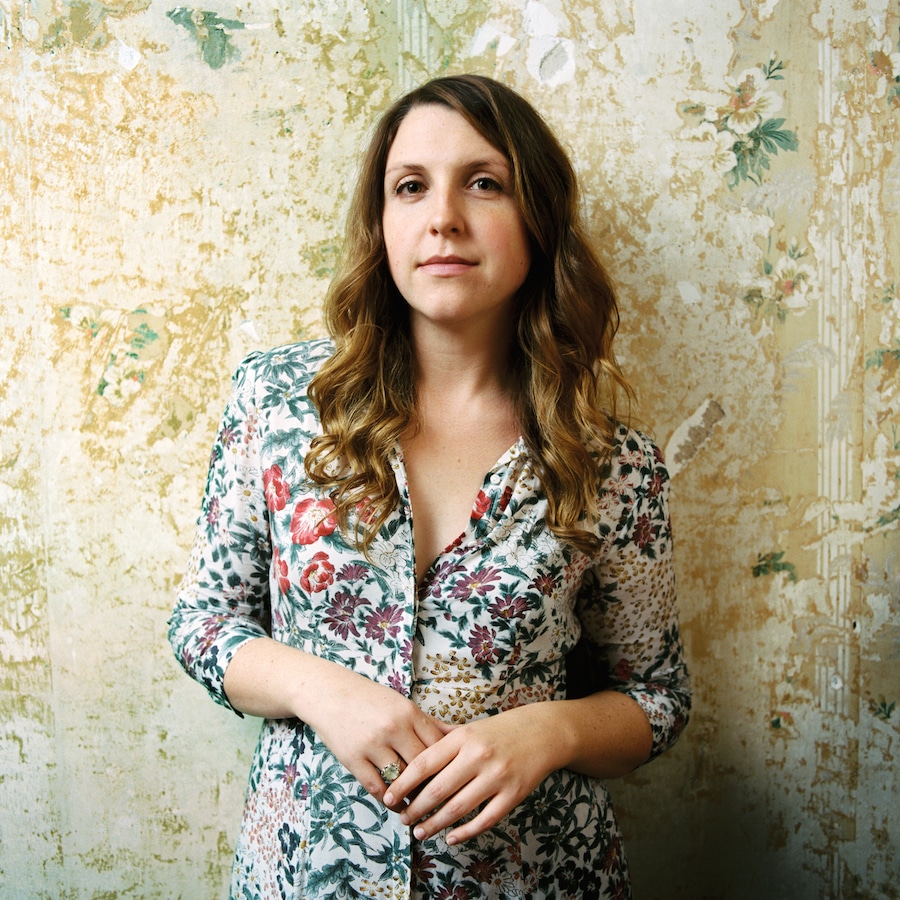
“They say you have your whole life to write your first record,” Caroline Spence muses, calling from her home in Nashville. “I kind of know what they mean by that, because a lot of the songs on my first record came from many different parts of my life.”
Spence’s first record, 2015’s Somehow, indeed felt chock full of life, a deft collection announcing an exciting new songwriter wise well beyond her twenty-odd years. The album earned the artist, who won American Songwriter’s 2013 Lyric Contest, a deluge of critical acclaim, with her nimble voice and thoughtful songwriting drawing comparisons to Americana icons like Patty Griffin and Emmylou Harris.
Spence just released her sophomore album, Spades And Roses, in March. And though that project didn’t have the benefit of that lifetime’s worth of songs, somehow it feels even more alive than its predecessor.
“On this record I really wanted to be the kind of songwriter that I love,” Spence says of her new album. “I gave myself permission to not really write with anyone else in mind, and to be a little bit more uncensored and make sure I was saying what I meant first. Then I could make it melodic; then I could make it something that someone would enjoy listening to.”
Giving herself permission to be uncensored allowed Spence to tackle more difficult subjects — music industry sexism in “Softball,” family history in “Southern Accident” — in her songwriting than she did on Somehow, a move that made for deeply resonant songs that simultaneously comfort and challenge their listeners.
Those songs were just as cathartic for Spence as they are for such listeners, with many tracks, like the aforementioned “Softball,” putting to music feelings the Charlottesville, Virginia-born songwriter has been grappling with for years.
“That was one that took a long time,” she says of “Softball,” a deceptively caustic folk-rocker that likens the gender gap to being tossed a gentle, underhanded pitch. “It existed in a short story form, it existed in five million tweets that I didn’t send. It existed in all sorts of things, this idea, this feeling I kept having over and over and over.”
In many ways, Spence feels Spades And Roses sees her artistic, public-facing self catching up to the self she feels inside, as representing more accurately the woman you’d encounter were you to sidle up next to her at an East Nashville watering hole and strike up a conversation.
“If you met me and we were in a social situation, I would talk about these things freely and say my opinions freely,” she explains. “So why am I not letting myself make that a part of my art? For me, there are a lot of injustices in the world, but in my little place where I am this is one that kept coming up. I had to keep giving myself permission like, ‘Yes, you’re allowed to talk about this. You’re allowed to make this a part of your art.’ I hadn’t really done that before.”
A major force in drawing Spence’s vulnerable side out was producer Neilson Hubbard, a Nashville-based producer known for work with artists like Glen Phillips and Amy Speace. The pair bonded over a shared love of Bruce Springsteen’s Nebraska and, as Spence puts it, “brutal honesty and bare-bones production.”
“I needed someone who wasn’t going to be afraid to just make it be,” she says of Hubbard. “Actually, after that first meeting is when I went home and finished writing ‘Southern Accident,’ which I hadn’t really let myself write. I was like, ‘Well, this is my raw song and this guy isn’t going to be afraid to put it on the record and let me write it this way.’”
In a year that has, so far, been dominated by political headlines and divisive rhetoric, Spence sees the slice of truth she offers on Spades And Roses as contributing to a greater need for vulnerable artists, for creators and thinkers who get real — whether it’s about the personal or the political, the line between which, of course, is often blurry — while a sea of “fake news” threatens to wash away the truth entirely.
“In speaking your truth, you’re often speaking to the truths of other people,” she asserts. “I think that everyone is allowed to voice their opinions. A lot of people that make art are driven by these things, and they’re allowed to make art that reflects the times.
“I think people that fault artists for speaking out politically for various causes don’t understand what it is that drives people to make stuff. I say, just keep telling stories.”