
Johnny Paycheck was trying not to get disheartened by a long line of near-hits when he finally released what would become his first and only No. 1 song in the fall of 1977. Paycheck (born Donald Eugene Lytle) was years past his 1959 Grand Ole Opry debut and late 60s career slump by the time songwriter David Allan Coe suggested he cover one of his songs for his next single. Paycheck obliged, and the song—which just so happened to pair beautifully with his stage name—skyrocketed to the top of the Billboard Hot Country Songs chart.
“Take This Job and Shove It” became a cultural phenomenon in its own right. Besides being a catchy stick-it-to-the-man for the working class, the song’s title integrated its way into the English language. “Take this X and Y” became a snowclone phrase, which is a cliché that people will customize to fit a specific situation. Other recognizable snowclone phrases that have evolved past their original meaning include “X is the new Y,” “to X or not to X,” and “have X, will travel.” In some cases, the format is more ubiquitous than the original phrase.
Videos by American Songwriter
Paycheck certainly didn’t intend to change the English language. But he was happy to take a hit after struggling without one for so long.
Johnny Paycheck Lamented His Near-Hits One Year Before Going No. 1
In a 1976 interview with Country Music, Johnny Paycheck described watching his chart performance get worse over the years. “I had 16 hits in a row, but only 10 or 11 were Top 10. The rest was Top 40, Top 50. All of a sudden I found myself…we was doing the same style of stuff, and I thought it was good stuff. But all of a sudden, the public didn’t seem to be wanting that particular thing. I kept thinking, ‘Well, if this one doesn’t do it, I don’t know what will.’ And then it would come out and not do it. It’d go halfway up the charts and stop.”
“I kept watching the business and the people that were coming up and making it big,” he continued, “like Waylon [Jennings] and Willie [Nelson]. So, I went to Billy [Sherrill, producer]’s office and said, ‘We gotta change, man, or you’re gonna see the day where you have to drop me because I’ve quit selling.”
Part of the change Paycheck and Sherrill were looking for came in the form of a David Allan Coe song, “Take This Job and Shove It”. According to SongFacts, Coe originally intended George Jones to record the song, but he didn’t show up for the recording session. In his absence, Sherrill called Coe to ask for permission for Paycheck to cut the record instead.
David Allan Coe Wrote The Song À La Kris Kristofferson
After Johnny Paycheck went No. 1 with “Take This Job and Shove It”, tension grew between him and David Allan Coe after Paycheck brushed the songwriter off as “some guy in Nashville” during an appearance on The Tonight Show Starring Johnny Carson. Coe once said he heard Paycheck credit the song to his grandfather. Questionable song origins aside, Coe was the song’s true writer. Interestingly, he came up with the song in the same way he inspired Kris Kristofferson to write one of his signature songs, “Why Me”.
Per country music legend, Coe wrote the song in about five minutes after heroically saving several boats from burning after untying them from a burning dock. (Not in the same night, though that would be impressive.) Some time after the incident, Billy Sherrill and Coe were talking about that night when Sherrill suggested Coe ought to get a job with the fire department. Coe replied, “They can take that job and shove it.” Sherrill encouraged him to write a song with that phrase, reminding Coe of the time he inspired Kristofferson by saying, “Why me, Lord,” while hanging out one night. Sherrill thought that this time, Coe could take the one-liner and write a song for himself.
The rest is country music history.
Photo by Michael Putland/Getty Images
More Behind The Song
-

UNITED KINGDOM – JANUARY 01: Photo of Paul ANKA; Posed portrait of Paul Anka, (Photo by CA/Redferns) -
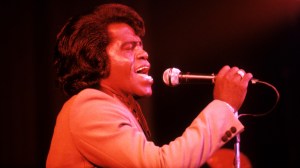
American soul singer and songwriter James Brown (1933-2006) performs live on stage at The Venue in London in September 1979. James Brown would go on to play 5 nights at the venue from 5th to 9th September 1979. (Photo by David Redfern/Redferns) -
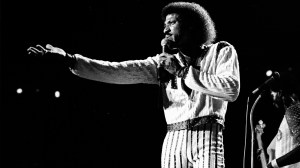
ATLANTA – August 8: Commodores with Lionel Richie perform at The Omni Coliseum in Atlanta Georgia. August 8, 1980 (Photo By Rick Diamond/Getty Images) -
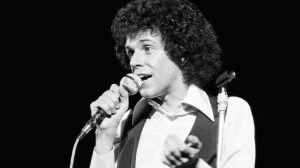
Singer Leo Sayer performing at the Greek Theatre, Los Angeles, California. 26th July 1977. (Photo by Kent Gavin/Mirrorpix via Getty Images) -

NASHVILLE, TN – APRIL 24: Singer-songwriter Eric Church and Katherine Blasingame Church attend Best Cellars Wine Dinner hosted by T.J. Martell Foundation on April 24, 2017 in Nashville, Tennessee. (Photo by Jason Davis/Getty Images for T.J. Martell) -

Keith Whitley Portrait Session Country singer and songwriter Keith Whitley poses for and RCA Records publicity still in 1984. (Photo by Michael Ochs Archives/Getty Images) -

Musician Toby Keith performs on stage during the 2009 CMT Music Awards at the Sommet Center on June 16, 2009 in Nashville, Tennessee. (Photo by Jeff Kravitz/FilmMagic) -
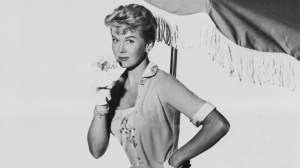
(Original Caption) 2/17/56-Hollywood, California: Singing actress Doris Day models one of the American-girl-look outifts she's designing for Little Miss English Ltd. The full skirt and matching sleeveless camisole blouse are of silk-finish cotton satin in a leaf print on soft blue. The companion sweater, a feature of all Miss Day's designs, picks up one of the leaf colors and is trimmed with French cuffs and Peter Pan collar of the print material. The three pieces may be bought separately.