Darius Rucker has manifested two separate impactful music careers. While most people can’t muster one rise to stardom, Rucker boasts two. In the 1990s, his South Carolina-born rock group Hootie & the Blowfish released one of the most successful albums of all time, Cracked Rear View, which sold more than 21 million copies.
Later, in 2008, Rucker switched genres and began playing country music, taking advantage of his smooth voice and magnetism. While it’s no easy matter for a Black artist to break into the genre, Rucker did so with flying colors, earning No. 1 songs aplenty. Now, he’s acting as a mentor to many of the artists who followed his footsteps into the country genre.
Videos by American Songwriter
[RELATED: k.flay Talks Hearing Loss, Humor and Her New LP ‘MONO’]
Today (October 6), Rucker has released his latest solo album, the storytelling-rich country LP, Carolyn’s Boy, the title of which is inspired by the memory of his mother, who passed away some three decades ago. Below, Rucker travels down memory lane, offering his favorite memories with Hootie, what it was like becoming a country artist, and what went into the new LP.
American Songwriter: It’s a pleasure to speak with you. I’ve had a one-sided relationship with you for about 30 years now.
Darius Rucker: [Laughs] Good talking with you too, that’s funny!
AS: Let’s begin here. When did you realize you could sing and how did you develop your voice from there?
DR: When I was 4, I knew I could sing. Al Green. I used to sing those Al Green records. When my mom’s friends would come over, I’d get my little salt and pepper shakers and my microphone and I’d perform with them, all the Al Green songs. I heard singing all the time. In church. My mom had an amazing voice. My sisters sang. So, I heard singing all the time. So, when I was at a very young age, I knew I was a lot better than these guys [Laughs]. And it’s all I’ve ever wanted to do.
AS: I’ve been listening to your music for years now, which of course started with Hootie & the Blowfish in the 1990s. I’m sure you have many, many great memories from the band, but what’s one that jumps out to you now?
DR: Oh, I got a lot of great memories from the Hootie & the Blowfish era. But the one that just jumped into my head when you said that was—I guess it was ’95 or ’96. And they wanted us to play the Billboard Music Awards. We had played every award show, we’d played them all and we said, “We’re not going to play this one.” We get a phone call and they tell us, “If you play it, we’ll get Al Green to play with you!” We were like, “Yeah, right!”
But sure enough, we showed up for rehearsal and Al Green’s there. We open the show, we play “Hold My Hand” and we stop after the first chorus and Dean [Felber] starts playing the bass line to “Take Me to the River” and Al walks out. They hadn’t announced it or anything. Al walks out and starts singing it and there’s a moment doing this where they wanted to go to commercial. But we were still playing, and it was so great, and Al was killing it and we were killing it and me and Al were singing our asses off and instead of going to commercial, they went back to the song.
For 30-45 seconds just because it was going so good. That’s the moment—for me to get to sing with Al because Al’s the reason I’m here. He is my idol. He is the guy who made me want to sing. The guy who made me want to be a performer. To get to sing with him and have it be that great is just a memory I’ll never forget.
AS: Have you ever been to his church?
DR: No! I haven’t been to his church. I say every year that I’m going.
AS: Me too!
DR: I hear it’s an experience. I got to go when he’s preaching, I have to!
AS: What do you love most about country music?
DR: I love the storytelling. That’s probably my favorite thing about it. I always say that most country songs are a three-minute movie. They just tell a story. And I love that. I love the way I get to sing it. Not even my stuff—singing a Radney Foster song. It just tells a story, and you get the whole story and then at the end, you get this great payoff. I love being a part of that, I love getting to do that. And it’s just great music.
AS: You’re the first Black artist since Charley Pride to get No. 1 songs in the genre. So, does that make you feel a sense of responsibility? Also, it’s worth noting that the song “In This Together” is the second track on your new LP.
DR: Absolutely I do. For me, at this point in my career, I think that’s one of the most important things that I want to do. That I get to do is—you know, when I came to Nashville, before I met Charley, I had nobody to talk to about stuff because I couldn’t explain it to anyone else because they just wouldn’t get it. Now you got Chapel Hart and Kane [Brown] and Blanco Brown and BRELAND and all these guys that I’m meeting and kids that I’m meeting, I feel an obligation to be there for them.
And I’ve told them all—call me anytime. And they do! “Call me anytime and ask me anything.” Because, you know, now you have somebody who’s been through it, who can say, “This is what I think. But do what your heart thinks.” I think it’s very important for me to be that mentor for those guys.
AS: Okay, the new album! You have this incredible ability to resonate and sound so welcoming and inviting. What do you want to say about the new record and its origin?
DR: The genesis for me is great songs. Being a songwriter and a singer, I don’t want to put anything out until I listen to it and go, “Okay, I think every song on this record’s great.” Not everybody is going to feel that way, but for me, I have the feel that way. I want my fans to hear that. I want people who really like me to hear it and go, “Okay, another great record.” And find a song on the record they go, “Man, that’s me. I can totally relate to that.” That stuff is important to me as a songwriter. With this record, that’s what I’m trying to do. I’m trying to write songs that people like and that they relate to and go, “Wow, man!”
AS: The album is named in honor of your mother, who passed away a number of years ago. What do you love about the memory of her, what do you love thinking about her? How did she influence who you are at this very moment?
DR: Oh, that’s so funny that you asked it like that. The reason I named it Carolyn’s Boy was because I was in the studio recording a record and I was having a bad mental health day. I just wasn’t having a good day. At one point late in the day, I just said to myself, “At the end of the day, I’m just my mama’s boy.” And that thought just brought this great calmness over me. Also, when I talk about it like this, I realize how much she still influences me. Because she died and I really am—I hope I am the son she wanted to raise.
I hope somewhere that she’s proud of me and that she’s going, “You know what, boy? You turned out okay.” Because still to this day, I still think about her almost every day—if not every day—and she died in ’92. To get to where I am now and have that happen in the studio and make me say to myself that I’m going to name the record Carolyn’s Boy was just a testament to how she raised me.
Photo Credit: Keith Griner/Courtesy of EB Media PR
More Features
-
Art Garfunkel performs on TV show, USA, 1975. (Photo by Michael Putland/Getty Images) -
Photo by Luciano Viti/Getty Images -
ANN ARBOR, MI – NOVEMBER 22: American singer, songwriter, and guitarist Boz Scaggs performs on November 22, 1980, at the Hill Auditorium in Ann Arbor, Michigan. (Photo by Ross Marino/Getty Images) -
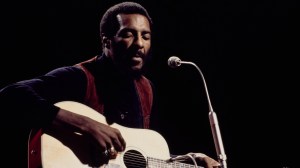
American singer-songwriter and guitarist Richie Havens, wearing a tan-coloured suede waistcoat over a black turtleneck sweater, plays a Guild D-40 acoustic guitar during a television appearance in London, England, circa 1970. (Photo by Tony Russell/Redferns/Getty Images) -
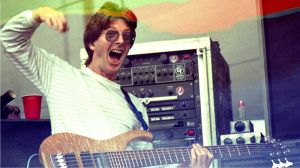
EUGENE, OR – (EDITORS NOTE: Multiple exposure made in camera) Phil Lesh of the Grateful Dead performs at Autzen Stadium on June 23, 1990 in Eugene, Oregon. (Photo by Tim Mosenfelder/Getty Images) -
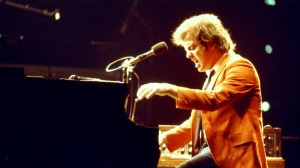
UNITED STATES – JANUARY 01: Billy Joel performs live on stage during his 1980 US tour (Photo by Richard E. Aaron/Redferns)