
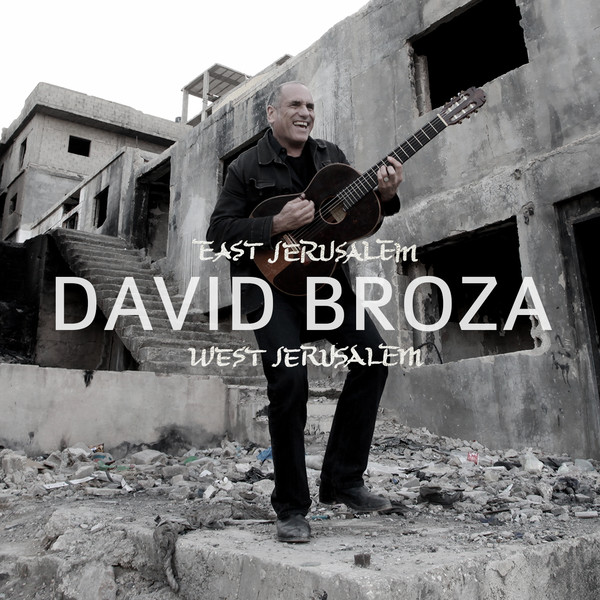
David Broza
East Jerusalem/West Jerusalem
(S-Curve)
3 out of 5 stars
Folk-rapping in Hebrew and English, covers of Elvis Costello, Pink Floyd, Cat Stevens and Timmy Thomas, played by Israeli and Palestinian musicians all in service of a political album co-produced by Steve Earle aiming to unite East and West Jerusalem?
Welcome to the new release from Israel’s multi-platinum selling folk singer David Broza. He’s been at it for nearly 40 years but since most of his music hasn’t been easily available in the states, generally because it’s sung in Hebrew, he has only made tentative stabs into the US market. Some may remember him opening for Sting in 1995 and more recently 2010’s lovely Night Dawn, an album fusing the unpublished poetry of Townes Van Zandt with Broza’s original music.
This concept project of sorts covers a variety of musical bases and was recorded predominantly live in an East Jerusalem studio during an eight day marathon. The sessions were also filmed for an upcoming documentary. Musically it’s a mixed bag combining smooth folk/pop and world tinged sounds with direct, politically charged lyrics, all sitting somewhat uncomfortably next to easy going rap, soul and pop. Some of it works, especially Thomas’ lone early 70s hit “Why Can’t We Live Together” (better known through Steve Winwood’s version), an innovative, percussive take on Roger Waters’ “Mother” and a straight ahead cover of Earle’s “Jerusalem.” Elsewhere pleasant interpretations of Cat Stevens’ “Where Do the Children Play?,” Nick Lowe’s “(What’s So Funny ‘Bout) Peace Love and Understanding” and a slowed down, soulful, rearranged but awkward attempt at Costello’s “Everyday I Write the Book” (not entirely necessary in this context), don’t fare as well. The bi-lingual hip-hop pop confluence on “Peace (Ain’t Nothing but a Word)” is hobbled by the clichéd English lyrics mirrored in its title.
Broza’s mellifluous voice goes down easy and when the music takes an edge as on “The Lion’s Den,” adapted from a poem written by slain Wall Street Journal writer David Pearl’s father, the emotional singing is pure and moving. But Broza’s noble attempts at using music to join sparring communities, along with the international flavor of this experiment, are commendable and surely worth hearing even if the results are often more interesting than effective.
More Album Reviews
-

Photo via cover of ‘Butter Miracle, The Complete Sweets!’ by Counting Crows -
Photo by Will Von Bolton -

Will Heath/NBC via Getty Images