
Becoming a musical legend with iconic hit singles is a double-edged sword. On the one hand, people are more likely to recognize you instantly from one song. Case in point: think of a song by Willie Nelson, Dolly Parton, and Patsy Cline, and we’d bet most of you would say “On the Road,” “Jolene,” and “Crazy.”
The downside to this level of celebrity, of course, is that equally incredible tracks can sometimes disappear in the shadow of the more commercially successful hits. These lesser-known songs are no less well-written, beautifully arranged, or memorable. They just never gained the same momentum as their hit counterparts.
Videos by American Songwriter
Today, we shout out the musical underdogs. Here are five deep cuts by country icons that deserve just as much attention as the artists’ greatest hits.
“Seasons Come, Seasons Go” by Bobbie Gentry
When people think of the husky-voiced country icon Bobbie Gentry, they often think of the late 1960s smash hit “Ode to Billie Joe.” Gentry struggled to get out from the shadow of her 1967 debut with Touch ‘Em with Love, which showed Gentry’s departure from classic country to a heavier soul influence.
We argue that “Seasons Come, Seasons Go” is a deep cut that rivals, if not surpasses, Gentry’s 1967 storytelling ballad and her subsequent 1970 hit “Fancy.” “Seasons Come, Seasons Go” is one of the only songs on Touch ‘Em with Love that Gentry wrote herself, and it’s a masterclass in both descriptive lyricism and interesting harmonic structure.
“Three Cigarettes in an Ashtray” by Patsy Cline
Even people who wouldn’t consider themselves fans of country music will likely recognize the swinging beat of Patsy Cline’s 1957 single “Walkin’ After Midnight.” But ask them if they’ve heard “Three Cigarettes in an Ashtray,” released the same year as “Walkin’,” and the answer will likely be less enthusiastic.
Nevertheless, “Three Cigarettes in an Ashtray” is an iconic country song that showcases Cline’s mesmerizing vocal abilities. From her crystal clear timbre at either end of her range to her uncanny ability to present turns of phrase in emotive, goosebump-inducing ways, “Three Cigarettes” is a beautiful heartbreak tune in Cline’s deep cuts catalog that deserves as much acclaim as “Walkin’” or “Crazy.”
“Come Back to Us Barbara Lewis Hare Krishna Beauregard” by John Prine
John Prine’s eponymous 1971 debut cast a gargantuan shadow over his career with instant hits like “Sam Stone,” “Hello in There,” and “Paradise.” He continued to release an album a year throughout the 1970s via Atlanta Records, until overwhelmingly negative reception of his 1975 release, Common Sense, resulted in Prine severing ties to his years-long label.
Although some critics hail this record as Prine’s worst Atlantic release, we’d argue the album is full of hidden-gem deep cuts. That includes “Come Back to Us Barbara Lewis Hare Krishna Beauregard,” a quintessential Prine tune that shows off his talent for weaving humor, wit, and poignancy into a single phrase.
“The Bridge” by Dolly Parton
Country icon Dolly Parton is no stranger to a career-defining hit. From “Jolene” to “I Will Always Love You,” the singer has amassed quite a collection of hit singles over her decades-long career. However, fewer fans can identify the B-side opener to Parton’s 1968 release Just Because I’m a Woman, “The Bridge.”
The track is a somber departure from Parton’s lighter fare, describing a love affair that begins on a bridge, leads to a pregnancy, and ends with suicide off that same bridge. This deep cut features all the same vocal prowess one would expect from the country icon, this time delivering an uncharacteristically dark love story-turned-tragedy.
“Devil In A Sleepin’ Bag” by Willie Nelson
Another B-side opener, Willie Nelson’s “Devil in a Sleepin’ Bag” kicks off the second side to Nelson’s 1973 release, Shotgun Willie. Unlike his feel-good, rambling “On the Road Again,” this 1973 B-side talks about the exact opposite: The devil shivered in his sleeping bag. He said traveling on the road is such a drag.
Although the title sounds like a religious trope typical of country music, the song was actually a coy reference to Nelson’s drummer and tour colleague, Paul English, whose nickname was “The Devil.” Featuring a funky arrangement and Nelson’s straightforward, no-nonsense vocals, this country icon’s deep cut is just as enjoyable to listen to as his better-known hits.
Photo by ITV/Shutterstock
More The List
-
Original Caption) : 1980-Pop singer Linda Ronstadt is shown singing on stage, holding the microphone stand. She wears a gingham shirt with a tie front and askirt with flowers on it in this waist-up portrait. (Photo by Lynn Goldsmith/Corbis/VCG via Getty Images) -
Tears for Fears – Koninklijk Circus – Brussel – Belgium – 21/04/1985 Roland Orzabal, Curt Smith Photo gie Knaeps -

The Rolling Stones at Desert Trip -
Pauk Simon 1965.© Chris Walter. -
NEW YORK – JANUARY 13-15: Bob Dylan plays a Fender Jazz bass with the harmonica around his neck while recording his album 'Bringing It All Back Home' on January 13-15, 1965 in Columbia's Studio A in New York City, New York. (Photo by Michael Ochs Archives/Getty Images) -
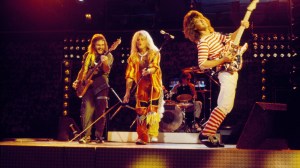
Photo by Luciano Viti/Getty Images -
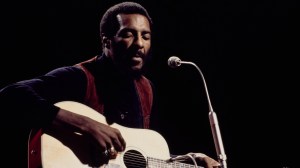
American singer-songwriter and guitarist Richie Havens, wearing a tan-coloured suede waistcoat over a black turtleneck sweater, plays a Guild D-40 acoustic guitar during a television appearance in London, England, circa 1970. (Photo by Tony Russell/Redferns/Getty Images) -
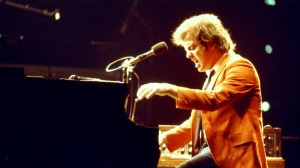
UNITED STATES – JANUARY 01: Billy Joel performs live on stage during his 1980 US tour (Photo by Richard E. Aaron/Redferns)