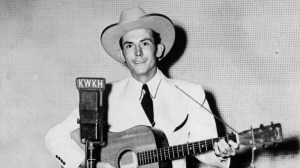
There are country artists who dress up as outlaws, and then there’s Waylon Jennings, who walked the walk just as much as he talked the talk. One of those “walk and talk” moments happened in the recording studio when he decided the best way to get his band up to snuff was to use a gun.
Needless to say, the band tightened up.
Videos by American Songwriter
Why Waylon Jennings Brought a Gun to a Recording Session
As mean and dangerous as Waylon Jennings’ reputation often painted him to be, he was also an incredibly passionate musician with a sardonic sense of humor. His passion for music might have been the instigator of his infamous incident, but it was that sardonic humor that brought the gun into the picture (or, perhaps more appropriately, the live-tracking room).
The story begins in a studio where Jennings was cutting an album for RCA. Jennings felt like the label was micromanaging his creative process, and the country star’s incompatibility with RCA’s staff producer, Danny Davis, only made things worse. Much to Jennings’ chagrin, RCA had provided a studio band for the session instead of the country star’s usual touring outfit. Unhappy with the state of the recording session, Jennings busted out his Buntline pistol and walked into the tracking room.
“I said I would shoot the fingers off of anyone that played a pickup note,” Jennings told the Houston Press. “And if anyone was still looking at the sheet music by the third time through, I’d kill them. That got their attention. After that, they let me use my own band.”
What Really Got The Country Outlaw Hot Under the Collar
The problem that day in the studio wasn’t the studio band, per se. Waylon Jennings later said the RCA musicians he worked with were some of the most talented musicians in the business. However, Jennings struggled under RCA’s rigid control. On that fateful day, there just so happened to be a British music journalist in the studio taking notes. So, he decided to have a bit of fun.
But the pickup notes? Well, he really did hate those. Speaking to Terry Gross on Fresh Air in 1996, Jennings said he hated pickup notes because it “gives it away.” Pickup notes come before the downbeat of a measure, serving almost as a musical warning that something—be it a key change, new section, or otherwise—is about to happen. If you asked Jennings, they were pointless.
“Why not just keep it rolling and rolling and having a good time, and then come in where you’re supposed to?” Jennings said. “You haven’t given everything away. You know, that’s what pickup notes do. It’s the easy way, too, because it keeps—you know, you don’t have to pay that much attention. When you hear a pickup note coming, you know you’ve got to change keys.”
For Jennings, that sort of formulaic arrangement just wasn’t going to cut it for his music. And that was a battle he was clearly ready to fight for, Buntline pistol in hand.
Photo by Andre Csillag/Shutterstock
More Features
-
Elvis Costello Top of the Pops London 1982 -
NEW YORK – JANUARY 27: Singer/songwriter Van Morrison performs at a Warner Brothers party at Steve Paul's The Scene nightclub on January 27, 1969 in New York, New York. (Photo by PoPsie Randolph/Michael Ochs Archives/Getty Images) -
UNITED STATES – SEPTEMBER 10: BRENDAN BYRNE ARENA Photo of Willie NELSON, Willie Nelson performing on stage in East Rutherford (Photo by Ebet Roberts/Redferns) -
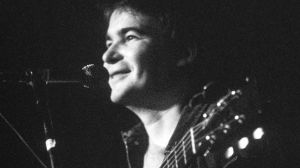
BOULDER, CO – OCTOBER 1972: John Prine performs at The Telagi music club in October 1972 in Boulder, Colorado (Ron Pownall/Getty Images) -
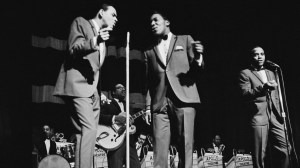
American doo-wop vocal group The Drifters perform at the Apollo Theater in New York City, 1964. (Photo by Don Paulsen/Michael Ochs Archives/Getty Images) -
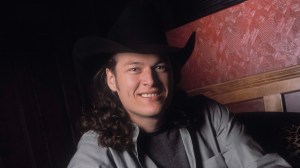
Blake Shelton, who was convinced to move to Nashville by Mae Boren Azton -
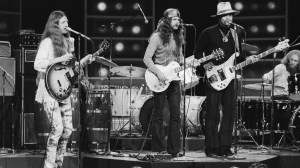
Photo by Frank Carroll/NBC via Getty Images