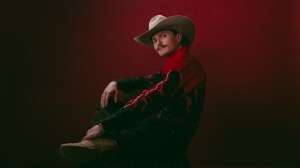
Sometimes, the only thing that one can expect in this life is the unexpected. That was certainly the case as far as the Mavericks were concerned. As a band that thrives on diversity and maintaining their own mantra, they claim an unusual distinction, that of a Cuban band birthed in Miami with an affinity for country music. Given that the two elements appear decidedly mismatched, the odds were seemingly stacked against them. Yet now, more than 30 years later, the award-winning, best-selling, worldwide sensation is considered one of the prime movers in the new wave of country music.
The band’s line-up has steadily shifted over the years, with singer, songwriter and guitarist Raul Malo and drummer Paul Deakin remaining the sole constants. The group even disbanded for a time, with Malo pursuing a prolific solo career that he’s continued to maintain even after they reunited. Guitarist Eddie Perez and keyboard player Jerry Dale McFadden remain long-serving members of the reconstituted combo, and now, joined by bassist Ed Friedland and a horn section dubbed The Fantastic Five, The Mavericks are an astute ensemble capable of shifting between several diverse genres and defying categorization all at the same time.
Videos by American Songwriter
That said, the band’s latest effort, the descriptively dubbed En Espanol adds a further stylistic distinction, one that’s both logical and expansive. Yet, while the group’s Hispanic origins might have made a Spanish-language album inevitable, it also has the potential of enticing a new audience, even though it might offer a challenge for other listeners as well.
Malo says he isn’t concerned about alienating any audience, and given the fact that the accompanying liner notes provide English translations of the Spanish lyrics, he’s confident that the band’s followers will easily navigate any cultural divide.
“Everyone that follows the band knew this record was coming,” Malo maintains. “We’ve played a few of the songs here and there and talked a lot about it. I feel like it’s a natural evolution. The first time we worked with [accordion player] Flaco Jimenez in 1994 or 1995, we recorded the song ‘All You Ever Do Is Bring Me Down,’ and that started me on this quest to seek out that little thread, that little connector that binds all this music together. Flaco was really the start of it. And when I did the Los Super Seven record with Steve Berlin and Los Lobos and all those guys in L.A., that was another thread to connect all that music. To me, it was just a natural progression.”
The timing of the album seems somewhat unfortunate, considering that it comes in the midst of a pandemic, but Malo isn’t deterred.
“That’s when the record was done,” he insists. “The thing we said from the get-go was that we’re not going to put a time limit on this thing. We’re going to record, but we had no idea just what we were going to record. Every time we had an idea for a couple of songs, we would just go in and do it, and that’s how this record was curated over the last couple of years, between other albums. So a lot of care went into the album, and a lot of hours thinking about the material and the arrangements and what not.”
The way Malo describes it, En Espanol was a longterm project that was carefully conceived and developed as inspiration took hold.
“It wasn’t a fly by night idea at all,” he continues. “It had been formulating and percolating for quite a while. It was finished in February, and the very last day we were in the studio, we recorded the opening song ‘La Sitiera.’ We needed every last minute in the studio, because it wasn’t done until it was done. It was a really cool process, and I loved every minute of it. So on the positive side, even though it was released in the pandemic, the fact that we’re not on the road, and we’re not worried about the tour and the next show and what not, it’s afforded us time to really promote it. I’ve spent the last two months talking to journalists from all over the world. And that would never have happened if we were on tour.”
Apparently, the effort paid off. The album debuted at number one in the Latin charts, and it wouldn’t be surprising if it also garnered a Grammy whenever the time comes to court contention. “The coverage on this has been quite extensive,” Malo mentions. “We’re just trying to find the silver lining in this pandemic mess. We may have a whole new audience to play to when this is all over.”
And an ongoing audience as well. The band’s loyal legions have, by and large, echoed their enthusiasm for En Espanol. “So far as we can tell, everybody’s been loving the record,” Malo suggests. “Our fans expected it, and the reaction has been super positive. I know there’s always a couple of people who will say, ‘this isn’t for me,’ but we expect that and that’s fine. The overall majority are with us on this. We tried to make it easier for people (with the translations), but we realize that’s not always going to be the case. However for the most part our fans have embraced it wholeheartedly.”
The dozen songs included on the album are mostly covers, but there are also five songs that Malo had a hand in composing. He describes some of the songs as standards and others that he’s had a connection with his entire life.
“There’s a song on there made famous by Julio Iglesias, and he was actually one of its writers,” Malo explains. “My grandfather loved it, and I remember hearing it as a child. I always felt like that song would make a great rerecording. I wanted to treat it like a country rock song, maybe like a Harry Nilsson song, with ‘A Gentle On My Mind’ type treatment. That song always sounded to me like it could use that kind of treatment. When you redo these famous songs, there’s a trick that I like to play — it’s more of a game — but we pretend that these songs aren’t famous, and they were sent to us as demos that we could rerecord. Imagine that Julio Iglesias is starting out as a songwriter and he’s not famous at all, and he sent us a song to record. That’s how we went after these songs, and so while we came up with our own arrangements. We also wanted to honor the vibe and the meaning of each song. It’s a fun exercise for sure, but that’s also how you get past the fact that these songs are so famous, and they’ve been done a million times. ‘Me Voy a Pinar del Rio’ is an old Celia Cruz song. Her recording is a standard and she did it with one of the best Cuban orchestras of the time. We don’t have that, so we treated it as a folk song and put our own arrangements to it.”
Malo notes acknowledges that in a certain sense, many of these songs represent a return to his roots. “I grew up in Miami, and so I became aware of all these cultures around me,” he reflects. “I had Columbian friends and Mexican friends and Argentinian friends. We listened to all this music in my house, and so to me, this record is a kind of celebration of all these cultures and that diversity that I think is a beautiful part of this country. The Cuban influence is me and a couple of the guys in the band. There are two Cuban songs here, but the rest are Columbian, Mexican… it’s a little mix of it all. That’s by design. I didn’t want it to be a Mexican record or a Salsa record. I wanted it to be a hybrid. It’s a Mavericks record, hence the title, The Mavericks En Espanol. It’s just a Mavericks record in Spanish. If I was singing in English, nobody would think anything about it. The arrangements would be the same.”
Even so, what’s most remarkable about this effort is how well Malo’s original songs segue so effectively into established tunes. For that, he credits his cowriters.
“I knew if I was going to write songs, they needed to assimilate with the rest of the material, and I had to make sure it held up to scrutiny,” Malo reflects. “Bringing the band The Sweet Lizzy Project here from Cuba immediately gave us access to so many talented people. Lissette Diaz is one of them. She sings all over this record, and we wrote a few of the songs together. Alejandro Menendez Vega, a videographer and movie-maker, is a songwriter as well. All these kids are so freaking talented. When I needed help finishing off a song lyrically, and I wanted to make sure the words held up. They made it easy to achieve that and that made my life a lot easier. I had the music, and I did write one song myself — ‘Mujer’ — that I got lucky with. It held up because the band did a groovy arrangement on it. I love the way it came out. The others are wonderful collaborations that I think are strong and that hold up in the context of all the songs.”
Nevertheless, it’s clear that Malo and the Mavericks are able to take credit for providing the material with such heartfelt performances. It’s also apparent that everyone involved — Malo in particular — dug deep into the richness and vitality of these offerings in order to facilitate the best performances possible.
“Spanish inspires something, and it evokes a passion that I think has to do with the language itself,” Malo muses. “When you’re singing in that language, it lends itself to a little more flair. I think that’s within the culture and the people I grew up with. Have you ever heard of a Cuban who didn’t have that passion? My grandmother could describe a palm tree and make it sound like the most beautiful thing you’ve ever seen in the world. I love that about the language and the Latin culture in general. That’s one of the things that I celebrate about it, and I believe it’s important to celebrate it.
That said, does Malo now see the band as unofficial ambassadors of any sort, bestowing on them the extra obligation of conveying Hispanic culture to a broader group of people that might not have taken notice before?
“Maybe,” he responds. “I haven’t thought of it that way, but I’m starting to see it more and more. With the interviews and questions I’ve been getting, it’s made me see things a little differently, that yeah, maybe this is that type of album that can turn people on to something that maybe normally they wouldn’t be turned on to. And that is a heavy responsibility, but it’s a beautiful thing too. And in this day and age, with the pushback against the ethnic community and what’s been said about the Latino community, it’s important to speak up.”
To this point, one recent incident literally hit close to home. The Fantastic Five’s trumpet player Lorenzo Molina Ruiz was recently accosted in a Nashville bar simply because he happened to be speaking Spanish. Malo cites that confrontation as one example of the divide that currently plagues the country, particularly as far as the cultural chasm is concerned.
“I don’t blame the president directly for what happened to Lorenzo as a lot of people have,” Malo says. “They’ve put the blame directly on the president, and surely he can be blamed for a lot of things. But the reason I don’t with that incident is because in a way that takes away from the assailant’s own blame and culpability. Those are grown men that decided to take that kind of action. So I’m not going to say anything to excuse it. If we go with the rhetoric to blame the president, it takes away from their own accountability. I don’t want to do that. We’re all accountable for what we do. Having said that, this president and this administration have done plenty of things against the Latino community, and they still do. It’s hard to sit idly by and not take that all this immigrant bashing personally. I’m the son of immigrants so it’s difficult not to lash out. Still, I try to keep my comments as tempered as possible.”
Given that stance, the political undercurrent that lies below the surface is difficult to avoid.
“Emotions are high right now, and we’re heading into an election,” Malo acknowledges. “We’re hopeful there will be a change. I’m seeing a lot of inspired people all over the place coming out to vote and encouraging other people to vote. So we’re hoping to at least get the adults back in the room. What’s been said about immigrants and what’s been done against immigrants is heartbreaking and it’s wrong. I guess some people haven’t gotten the memo that this nation was built on immigrants and everyone came from somewhere. So it’s unbelievable that in 2020 that we have to have this discussion. It’s really sad. Hopefully we’ll have a change after November 3rd.”
Those are the hopes shared by many Americans, and Malo and the Mavericks can certainly look back on their own trajectory over the past three decades and take pride in the progress that they themselves have made, both personally and professionally. Malo appreciates the success, but he insists he’s not done yet. “I’m not one to sit back and go, ‘Oh, I’ve made it!,’” he emphasizes. “Yes, I have won a Grammy and yes, I have nominations, but I don’t look at it as if I’ve done all that stuff. I still want to keep creating and making music. So I don’t really think about what I’ve done, and I don’t think about where I’ve gotten. I’m not one to rest on my laurels, and I’m not one to congratulate myself, and maybe I should (laughs). Occasionally you run into somebody that reminds you of where you’re at and what you’re doing, and I appreciate that. I really do. Because sometimes I do need to be reminded that we have done this and we have achieved that, and it’s a good thing to celebrate and acknowledge. I’ve learned that as I’ve gotten older, to at least acknowledge the work. But I have my own way of staying grounded and not letting the success taint the creativity.”
More Interviews
-

Photo by Stephen Dillon