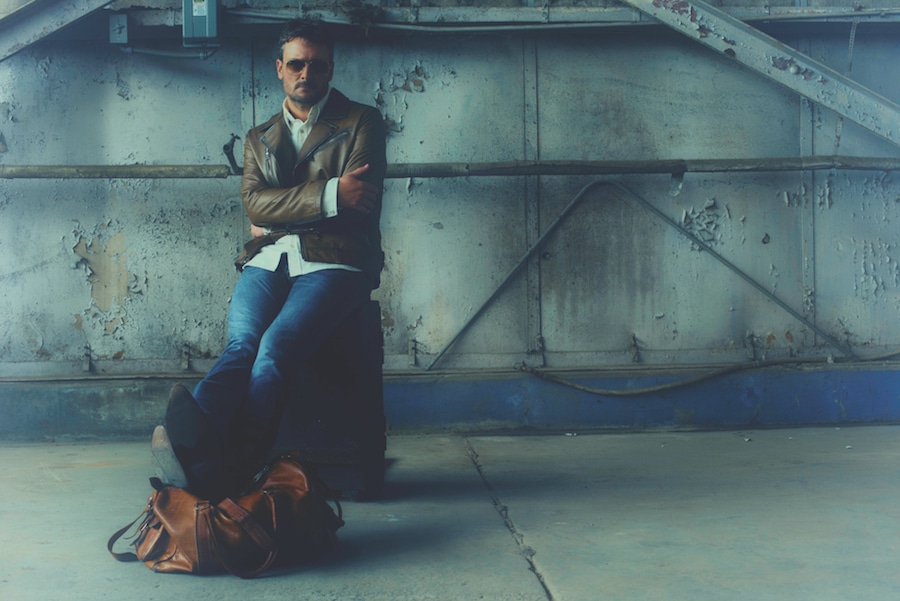
Patsy Cline’s plane never made it here to the Cornelia Fort Airpark, where Eric Church is currently standing in a pair of aviators and jeans, trying to figure out where on earth “Some Of It,” the last song added to his sixth studio album Desperate Man, could possibly be. No longer operational, the park, where Cline was headed in 1963 when her Piper Comanche tragically crashed, still boasts sweeping runways that cut through the verdant riverside foliage and some old industrial hangars, one of which is the setting for Church’s “Desperate Man” video, being filmed today. A few minutes ago, the track was blasting and cameras rolling while Church paced around, reluctantly singing along. He doesn’t really like all this pageantry, just like he doesn’t really enjoy following standard record label protocol: hence, the missing track. Barely anyone has heard it, and adding it to the LP was a game time decision at 2 a.m. one night.
“It’s in my Jeep,” says Church, standing in a huddle with his manager, John Peets, as his wife Katherine Church shuffles back and forth amongst the crew, checking out the shots. Together with producer Jay Joyce and publisher/co-producer Arturo Buenahora, the quintet comprises the heartbeat to Church’s creative world. “The label doesn’t even have the album, which is pretty typical for us. John keeps asking me, ‘Do you have this or that?’ And I just keep saying, ‘Uh, it’s in my Jeep.’”
The Jeep, however, is parked at Church’s property on the other side of town — the place where he wrote most of Desperate Man from a little fishing cabin. “We can tell you that it’s really good,” Peets says before walking to the back of the hangar where he has several laptops open, tinkering with various photos: he shoots almost every promotional image that Church uses, and is his key visual interpreter. Katherine thinks there might be a work tape of “Some Of It” hanging around — maybe in the tour bus bathroom? — but no one can actually find it. At this point, just a few weeks before “Desperate Man” is released to the fans and country radio, no one even has a proper track list with songwriter credits. “I got that in my head,” Church says, straightening his leather jacket before he does another take. “It’s not on paper anywhere.”
This is how Church — one of the biggest touring musicians on earth and one of country’s biggest superstars — works. It takes multiple trucks to transport his road show, and his albums sell millions, but when it comes to making the music itself, there’s no flash, no label hoops to adhere to: anything that can get in the way of the creative process, or the fan’s access to music, has been filtered out through a fine sieve.
And here in the hangar, things pulse with energy: Peets snapping photos furiously, Katherine hustling about and wardrobe teams laughing as they flip through the ’70s-inspired costumes. No one steers clear of Church or seems afraid to cross into his space — when he’s not shooting, he stands on the sidelines like everyone else, chatting about his love of Led Zeppelin album covers.
A few takes later, this scene is done, and Church heads back to his tour bus to throw a microwave pizza in the oven and pour himself a glass of whiskey. It’s a fairly simple but sleek bus, mostly black, with a few posters hanging over a small booth and a picture of that fishing cabin serving as a backsplash for the tiny kitchen — the counter of which contains four pairs of his signature aviators, lined up in a row. He needs the drink — again, this acting stuff ain’t his thing — though he’s been finding some fun in this particular video, which features “Desperate Man” co-writer Ray Wylie Hubbard and was inspired by Narcos, one of his favorite shows. Along with the movie Blow and American Made, Church and crew were heavily inspired by the idea of drug smugglers: the risk-taking involved, the fluid morality. Peets became enamored with this particular airfield because of an abandoned plane on the property that once belonged to a trafficker (he couldn’t get inside, though, due to the current owner being incarcerated).
“I noticed last night that one of the main characters [in Narcos] is constantly smacking gum,” Church says. “He’s got a brown leather jacket, and just reads interesting. I talked to John right before and said, ‘Let’s try this with the gum.’ Who knew? Something as simple as gum.” Lo and behold, the video opens with Church in a wagon, chewing gum. In Church’s world, not a single detail passes by without intention. Not even a wad of Double Bubble.
The “Desperate Man” video, down to the costume choices (including FBI-inspired jackets that say “EMI” instead), is meant to reflect the clever way in which Church “smuggles” his albums to his fans: before Desperate Man, Church renegotiated his record deal to make sure that, going forward, he could give members of his fanclub — the Church Choir — every LP for free. He did this on the last record, 2015’s Mr. Misunderstood, which landed unannounced on Church Choir doorsteps, gratis — the label didn’t even know it was coming, and Church had to purchase a pressing plant to pull the whole thing off. There were some sour grapes.
“It was a sticky thing last time, and I ended up just paying for it, which is no big deal,” says Church. “But if people are in the Church Choir, we want them to get the record.” He thinks his fans are a better word-of-mouth vehicle than any marketing plan, anyway. “Why buy a billboard when you can give the album away?” he says, laughing at the absurdity of this truth.
But while Mr. Misunderstood came out with ease in the studio, almost on accident, Church hit one of the bigger creative stalemates in his career while trying to write what would become Desperate Man. He had plenty of songs, but nothing was working: it all got him a little “disturbed.” It was too obvious, too commercial, he thought — hits, but nothing revolutionary. “I was about to hit pause,” he says.
Since Mr. Misunderstood, Church had only debuted one new song: “Why Not Me,” a heartbreaking ode to the victims of the Route 91 Harvest Festival massacre. Church opened and headlined the event, where 58 lives were taken and over 800 injured. He played the song at the Opry a few days after the shooting to a tearful crowd and two empty seats, for his fan Sonny Melton who was killed while shielding his wife, Heather. Church spoke candidly about his experience before playing, but he doesn’t recall any of it. “I came off stage and my wife grabbed me, I was crying really good,” he says, his voice quieting. “She said, ‘I loved your speech.’ I looked at her and said, ‘What speech?’ I don’t remember. I watched it back one time and found myself going, ‘I don’t remember any of this.’”
“He had an emotional year that was really life-changing,” says Katherine. “And I think he had a hard time getting back up and running, and he didn’t really want to get back on stage. When he finally got to the Opry, that helped him break the ice. It was him, finding his voice again after going through all that. He internalizes a lot, which is great for songwriting, but he was trying to find the excitement in performing again.”
Church is reluctant to say he had PTSD but, ultimately, he’ll admit that’s the best way to describe it. Route 91 was an especially important show for Church, who had just concluded his huge Holdin’ My Own tour. On “Springsteen,” he jumped into the crowd and shook hands. “I don’t ever really do that,” he says. “I grabbed everyone that I could.” A few days later, so many of those lives were taken, or changed forever. He hasn’t stopped thinking about it since.
“I hope I don’t ever go a day I don’t think of it,” he says. A certain kind of guilt keeps him up at night. “You feel almost like bait. That you were part of the draw that brought these people there.” Church eventually filtered some of the experience into “Monsters,” a track from Desperate Man that mirrors Mr. Misunderstood’s “Three Year Old,” but instead covers what happens once innocent story time is tarnished by real-world fears. “Greed stalks, sickness steals and pride lays a wicked trap,” he sings.
By Vegas, Church had already come through his own personal monster: a blood clot, discovered over the summer, that nearly killed him. But he needed to write, so he holed up at the cabin on his property with a Roland cube amp — he’d later use that same small amp in the studio (“it looks like a purse, it’s so tiny,” he says) in combination with a Gibson cherry top “with real bright pickups,” he says. “Once it got in that amp and rattled it, it changed the sound.”
Church heard a story once of a band who tied an amp on top of their car on the way to record with Sam Phillips, when it shook loose and fell to the ground. “When it plugged in it had a real rattled sound,” he says. “And first thing Sam said was, ‘That’s perfect. Let’s use it!’ A distorted, fuzzy rock and roll sound that came from nothing more than an amp falling off a car.” Desperate Man carries heaps of that organic, improvisational analog feel — and the sense of magic coming from unchecked creativity, not conveyor belt construction — while still living in the present, driven by a whole lot of soul and the “nervous groove” of Church’s right hand on the guitar, as Joyce puts it.
“I believe the biggest threat to our musical environment is the way we are using music that is already in the can, that you just take and assemble,” he says. “I’m sure there is an art to it somewhere but, for me, people need to be playing instruments. I get real agitated at the way a lot of people play music these days. Because it’s not really an instrument.”
At his cabin, however, Church connected deeply with his instruments, tinkering more with his electric guitars than he’d done previously. He’d grab one off the wall in the wood-paneled room, sit round the table and just strum, “searching.”
It speaks volumes that the first song that clicked for Church was “Higher Wire,” a sultry, slow-creeping bit of boogie with spikes of Little Feat, delicious dissonant notes and gospel tones, with Church dipping back into his falsetto — it’s not like anything else on a mainstream country record by a mile, full of room and far-out, voodoo lyricism. And what came next, “The Snake,” is even further left of center. Opening the record, it’s a mischievous, spoken-word allegory for the two political parties that finds Church yelping like a Pentecostal preacher, dodging those venomous jaws.
“The best thing anyone can think after track one is ‘what the fuck?’” he says. Church, who generally defines himself as “apolitical,” got frustrated with the vitriol on either side. “Career politicians get together and make a lot of noise and then go to the bar and slap each other on the back,” he says. “They are all fucked up and crooked. I know some of these guys. I’ve seen it, I’ve watched it. It’s a racket.” It’s worth remembering that Church has a song on The Outsiders called “Devil, Devil,” about the evils of the Music Industry: a devil that, historically, is often represented by a snake.
It also mirrors the polarized, two sided yet no-one-wins world of social media, where the truth rarely exists on either half of the sphere. A few weeks after this conversation, a Rolling Stone cover story ran which discussed Church’s nuanced beliefs on gun control in the wake of Route 91: he’s critical of the NRA, but supportive of the Second Amendment. Multiple news outlets took his comments out of context, warping his words to support whatever viewpoint they preferred. Fox News made him an enemy; liberal lobbyists, a saint. It’s “The Snake,” brought to life: “lie by lie, cheat by cheat, venom in smiling teeth.” Both snakes are hissing, and both bite to kill.
Church describes the album itself as “quirky.” A little “fucked up,” even. Sonically, it’s deep into a ’70s groove, and there’s a lot of Joanna Cotton — Church’s longtime vocalist — showing her soulful chops. And there’s also a huge amount of space. “That’s my biggest beef with Nashville,” Church says. “That they have studio guys who try to find a hook or a part. Sometimes the silence or space is the part. The coolest part is non-part. Or non-solo. Don’t put a fucking solo there. Let it be.”
“Desperate Man,” co-written with Hubbard, stretches into a subtle, psychedelic groove not even two minutes in. They wrote and cut the song in 30 hours, and Church had that “Sympathy For The Devil” “boop boop” in his head. “First and foremost he’s a songwriter,” says Hubbard. “He really has that integrity. In his heart, he’s this funky cool songwriter: he really gets down to the nitty gritty and he’s very aware of the craft and the inspiration of songwriting.”
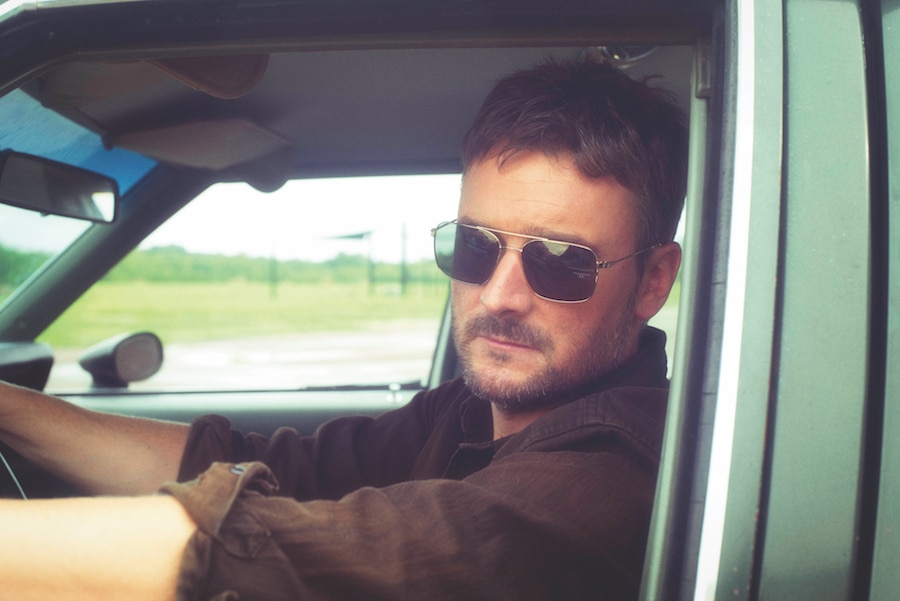
It’s a coup for Hubbard to have a song on country radio, and it’s a coup for Church, who gets turned on to all the weird shit Hubbard is into, like a movie called Operation Odessa, about a Russian mobster who tried to sell a submarine to a drug cartel. Church called out Hubbard on “Mr. Misunderstood,” a tradition he continues on Desperate Man with “Hippie Radio,” inspired by the early days growing up in North Carolina, cruising around in his dad’s beige Pontiac and soaking in the radio (on it, he mentions Billy Idol and The Jackson 5’s “ABC.”) He loves turning fans on to new music — right now, he’s listening to Greta Van Fleet a lot. “I just like what they do as a rock band,” he says. “Nowadays most kids stare at their feet when they play guitar.”
“Desperate Man” was where the vision for the album itself started to coalesce: the “DNA,” as Peets puts it, or the “intention,” as Joyce does. For Chief, it was a character: the glasses, the mystery. For The Outsiders, a story of pluralism, and for Mr. Misunderstood, a third person view. “It was saying, ‘I was you, and you were me,’” explains Peets. “Desperate Man” and the closing track “Drowning Man” filled in this particular DNA — along with the image of a bird on the album’s cover, flying gracefully over one of Cornelia Fort’s old aircraft hangars. “You’re desperate,” says Hubbard. “But it’s not hopeless.”
Whether Church sees himself as that bird isn’t essential, but he’s a student of its lesson either way: hovering above the noise and the turmoil, rising high, soaring free. Creatively, it all reminds Hubbard of Springsteen’s The Rising, an inspirational — yet brutally honest — musical salvation in the wake of 9/11.
“A lot of people feel like a ‘Drowning Man,’” Church says. “They just want to shut it all off. They feel betrayed. They feel like they put in their share and their pound of flesh and it’s all crooked. And then ‘Desperate Man,’ the desperation of the track — it’s the same guy. The storyline is different, but it’s the same emotion.”
It’s common for any artist to feel betrayed by the record business, too, and Church figured out early on that he was going to have to take things into his own hands if he was going to preserve and make the music that he wanted. He, along with Peets, Katherine, Buenahora and Joyce, has always kept his focus on the long game. “Labels have nine or ten artists going at one time,” he says. “Their job is absolutely not to make you who you will be ten years from now, they only care about the next ten minutes.” Together, they’re always thinking about the future. “When you look at it that way, it changes the respect you have for the music,” he says. “Because every decision you make is a critical decision.”
“The artist community is kinda like housing communities to me,” says Kip Moore, another independent-minded artist who has toured with Church. “You got those cul-de-sac houses that all look the same and feel the same. They’re appealing to the regular masses. Then you got those little shell houses that get thrown up super fast. They’re the hot hip thing in an upcoming part of town, but usually have a shitty foundation and go out of style fast. Last you got that house separated from the others, out on a piece of land. It’s built the right way, outta love, passion, and detail. That house has a solid foundation and always holds its value. That’s his house.”
And it’s true, every decision in Church’s world is a critical one, and one made with meticulous weight and care. From that bird on the album cover, to the airpark, to a choice to not play any late-night shows in the promotional cycle, to stay above the politicized fold. When it comes time to decide on the songs, it’s up to that same insular group to vote — Church has two points, and Peets, Katherine, Joyce and Buenahora each have one, “but they can all outvote me,” Church says. “The biggest thing is, I trust them.” “I would say he has one vote,” Katherine says, laughing. “But he gets the final say.”
“I’ve never seen anyone write songs the way he writes them,” she adds. It was Katherine who brought “Some Of It” back into the fold, a gorgeous, mid-tempo track full of wisdom — and a surefire hit. Working in publishing before she met and married Church, she has an uncanny ear for songs. “During the night or running around, we can be somewhere and his head will go off and he’ll say, ‘I have to write this down.’ These ideas come to him like a lightning bolt. He gets his most creative in the chaos. He’s running Mach ten, and I’ll be sitting at my desk and he’ll say, ‘Listen to this, what do you think?’ And I’m always brutally honest.”
In a Music Row universe where it’s always about the next big thing — the hottest new pop star to collaborate with, the shiniest producer, the most current songwriters — Church is explicitly focused on his core group, and never caving to trends or the fleeting fad of the moment.
“We are very sensitive to the fact we can never get complacent,” say Katherine. “Everyone — Peets, Arthur, Jay, Eric, Myself, we are all very driven. And we’re very sensitive to every record being better than the last.”
But now, it’s time to film again. Someone from Church’s team comes to fetch him: it’s the third attempt they’ve made to grab him, and the shoot must go on. So he slips on a brown leather jacket, and heads out of the bus. The pizza still sits on the counter, untouched.
A few weeks later, Church is back home sitting in a parking lot in his car — it’s the only place he can find service around here. Since that day at the airpark, Church released “Desperate Man,” played it live once (“got it over with”) and endured a heartbreaking tragedy: the loss of his younger brother. He’s come up here for a little peace and quiet with his family. Church likes being away from it all, and he doesn’t mind driving around solo — he likes being alone, and he’s been known to wander into record stores or even restaurants by himself, where he’ll spend his meal just observing.
There’s a lot of observing on “Jukebox And A Bar,” a gorgeously lyrical, soulful country tune that’s one of three songs Church wrote solo. It’s full of couplets that could only come from his mind: he rhymes “fancy potions” with “incandescent notions” and delivers a line about Viagra (“they’ve even got a pill to make a soft package hard”) with such sensitivity it washes over you with sadness rather than wonder or shock. “Desperate Man” and “Drowning Man” may be the bookends of the story, but “Jukebox And A Bar” is like that bird, flying over the tattered, abandoned airfield, finding solace above the fray, the political fury and the social media noise with nothing more but some eye contact, a song that lasts and a bartender that never lets a glass go empty.
“For how far we have evolved, we still have the same basic problems,” Church says before driving back up those hills. “We are all broken, and we are all going to break. It doesn’t matter how far we’ve come or how many pills we come up with or how much technology distracts us; we still want the same things. And you can get through anything in your life with a jukebox, and a bar.”
More Features
-

Singer-songwriter Paul McCartney and his wife, Linda (1941 – 1998), of British rock group Wings, in a recording studio, 21st November 1973. (Photo by Michael Putland/Getty Images) -
British rock singer and actor David Bowie performs with American pop singer Bing Crosby for the TV special, 'Bing Crosby's Merrie Olde Christmas,' London, England. (Photo by CBS Photo Archive/Courtesy of Getty Images) -
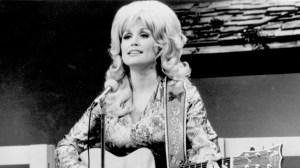
1974: Country singer Dolly Parton performs onstage with an acoustic guitar in circa 1974. (Photo by Michael Ochs Archives/Getty Images) -
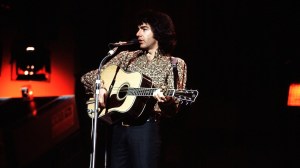
Neil Diamond performs on BBC TV show, London, 21st June 1971. (Photo by Michael Putland/Getty Images) -

(Photo by Jim Dyson/Getty Images) -
AUSTIN, TX – FEBRUARY 28: <> at ACL Live on February 28, 2018 in Austin, Texas. (Photo by Gary Miller/Getty Images)