In 1960, country icon Marty Robbins was recording at Quonset Hut Studio in Nashville, TN. During the tracking for “Don’t Worry”, legendary session guitarist Grady Martin plugged his six-string bass into the mixing console to record a solo. Expecting a clean bass tone, they were met with a heavily distorted, fuzzy sound. The result of a failing power transformer, Marty Robbins liked the unique sound and decided to keep it rather than re-record. Spending 10 weeks at number one on the country chart and reaching number 3 on the Billboard Hot 100, this simple accident led to one of the most iconic effects of all time.
When it comes to Fuzz, there are an overwhelming number of options available. This can make finding the right one quite an intimidating task. Luckily, they can all be broken down into four categories. Let’s dive in together and figure out how to find the right fuzz for you!
Videos by American Songwriter
Transistors: Germanium vs. Silicon
Before we dive any further, we need to start with the heart and soul of fuzz: transistors. Transistors shape the distortion of the fuzz and come in two main types: germanium and silicon.
Germanium transistors are known for producing a smooth and warm distortion. They are known for their organic sound and ability to clean up with the guitar’s volume knob. The downside to germanium is their temperature sensitivity. Get them too warm, and they sound terrible!
Silicon transistors were introduced to replace germanium in the late 60s. They are stable in all temperatures and are much more consistent overall. They are known for having a brighter and more aggressive tone, more gain, and less clean-up.
Two-Transistor
Two-transistor fuzz pedals are the circuit in its simplest form. Hence the name, they use a pair of transistors to create their iconic sound. The first transistor amplifies the instrument signal; the second one amplifies it even more and squares off the peaks in the signal. This category of fuzz is my favorite and the type I use the most live and in the studio. The biggest advantage of these pedals is their ability to clean up. With the turn of your guitar’s volume knob, you can go from roaring fuzz to crystal clean, making these a very inspiring and fun addition to any pedalboard.
In this category, the most popular is the Fuzz Face. Favored by players like Jimi Hendrix, David Gilmour, and Stevie Ray Vaughan, this round, smiling pedal is the king of the two-transistor fuzzes. There are many options on the market, but I firmly believe Dunlop offers the best selection. They offer full-size classics like the JDF2 Fuzz Face Distortion and the JHF1 Jimi Hendrix Fuzz Face, or a full line of Fuzz Face Mini variants that take up less space.
Three-Transistor Fuzzes
Three-transistor fuzz pedals are another popular variant and were also the first on the market. Featuring an extra transistor, these variants typically feature an extra gain stage. This gives them a heavier and more aggressive sound.
In 1962, the Maestro FZ-1 Fuzz-Tone landed. This was the first commercially available fuzz and made its breakthrough on the 1965 Rolling Stones hit “(I Can’t Get No) Satisfaction”. Rather primitive-sounding, the FZ-1 Fuzz-Tone was not every player’s favorite back in the 60s.
In London in 1965, one of these FZ-1 pedals received a modification to improve the sound; this modification led to the Tone Bender. A staple in the sound of 60s British rock, the Tone Bender was the fuzz of choice for guitar greats like Jeff Beck and Jimmy Page.
If you’re looking for a three-transistor fuzz, there are a couple of great options. For the earliest sounds, the Maestro FZ-M from Gibson nails the sound of the old FZ-1 Fuzz-Tones. As for the Tonebender, options like the Keeley Fuzz Bender or Fulltone Soul-Bender nail that iconic sound with added flexibility.
Four-Transistor Fuzz
You guessed it, we’re adding another transistor! Four-transistor fuzz pedals are known for producing tremendous amounts of distortion and sustain. This fuzz variant made its debut in 1969 with the Electro-Harmonix Big Muff Pi, an effect they still make to this day. This fuzz gained popularity with players like David Gilmour, Billy Corgan, Jack White, and J Mascis
Constantly evolving, there were many variants of the Big Muff Pi. Luckily, Electro-Harmonix still makes many of them, and they are all quite affordable. My favorites are the classic Big Muff Pi and the Ram’s Head Big Muff Pi.
Octave Fuzz
Invented in 1967 by sound engineer Roger Mayer, octave fuzz is a unique variant. Utilizing diode wave folding, which flips negative audio waves into positive ones, these circuits double the sound and create an incredibly cool upper octave effect. This type of fuzz was made famous by Jimi Hendrix. He used it on iconic tracks like “Purple Haze” and Fire”.
Great options for this type of fuzz are the Behringer Octavia, the Electro-Harmonix Octavix, and the Fulltone Octafuzz 2. Of all the options on the market, these capture the classic octave fuzz sound the best.
Closing Thoughts
As a guitarist, I believe every player should own at least one fuzz pedal. This iconic effect has made its mark on nearly every genre and continues to do so today. It’s exciting, it’s inspiring, and plainly put, it’s super cool.
The next time you’re going shopping and want a fuzz, don’t get overwhelmed. Break that sea of options down into these four categories. I guarantee you will find the one.
(Photo by Adam Gasson/Total Guitar Magazine/Future via Getty Images)
More Gear
-

Roland FP-40 (photo by American Songwriter) -
Gibson Memphis Factory in 2016 -

Jimmy Page with his iconic Gibson EDS-1275 guitar. -
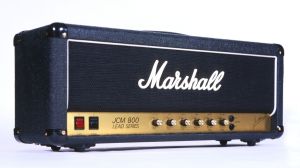
Marshall JCM 800 Lead Series guitar amplifier head, studio shot. (Photo by Richard Ecclestone/Redferns) -
ANAHEIM, CALIFORNIA – JANUARY 21: Molly Tuttle performs on stage during the 2026 NAMM Show Global Media Day at Anaheim Convention Center on January 21, 2026 in Anaheim, California. (Photo by Daniel Knighton/Getty Images) -
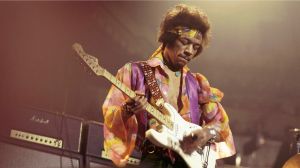
American rock guitarist and singer Jimi Hendrix (1942-1970) performs live on stage playing a white Fender Stratocaster guitar with The Jimi Hendrix Experience at the Royal Albert Hall in London on 24th February 1969. (Photo by David Redfern/Redferns) -
Photo via Getty Images