Sometimes a life in music can be traced back to one important moment, a choice someone made or a word of advice someone passed along that they easily might not have. Such is the case for Philadelphia-born musician, G. Love (born Garrett Dutton), who began to play music and take guitar lessons at 8-years-old. But while countless kids have taken music lessons at that age, one of Love’s teachers could see something special in the young student and she encouraged him to start writing his own songs. While other teachers had him learning the basics of the Beatles, this one teacher said Love should write his own stuff. And without that moment, it’s unclear whether or not Love would have gone on to flourish in his successful career that continues to span the decades today.
“Her name was Heidi Wolfson and she had a band in Philly called Heidi and the Wolf,” Love says. “They’d play around the local circuit. But one of the things she immediately encouraged me to do when I was 8- or 9-years old was to start writing songs. So I started writing songs about my, like, figures and toys.”
Videos by American Songwriter
Love, who has always had a wild imagination and seemingly endless energy, was hooked. His mother had seen him tap along to songs in the backseat of the family car and, as a result, had asked if he wanted music lessons. Her accurate intuition paid off for her son. And after writing some songs and learning about music and the guitar, Love could soon see a roadmap for himself. He began to take that direction, putting one foot in front of the other until the future began to unfold. He wrote more and more songs in his bedroom, diving into folk, hip-hop and rock music. Not long after, he wanted to record and to perform.
“I felt this thing right away,” Love says. “When I wrote a song, for some reason I wanted to record it onto a cassette with my boom box. That was a really important part of the process. I wanted to write a song, memorize it, record it and then I wanted to play it in front of people.”
At the time, Love was still only 15- or 16-years old. He’d quit his lessons but he was as involved in music as ever. He would look in the back pages of the local newspapers for the rare open mic, talent show or other opportunity to play. But, thankfully for Love, there was a place where he could go to grow and learn without worry. For Love, that meant busking on the street corner. In Philadelphia, there is one street in particular that sees a lot of foot traffic: South Street. There is a vibrant performance culture there, including magicians and puppeteers, drummers, someone playing Mozart on half-full drinking glasses. Love fit right in.
“I was like, ‘Holy shit, I just made $20 at 16-years-old!’” Love says. “In 1987, that was a lot of money.”
Love’s appreciation for busking took him to Boston. Bean Town had a rule where, for $25, buskers could purchase a permit and play whenever they wanted. Busking in Boston, says Love, wasn’t looked down upon as it was in other cities, including parts of Philly. So, Love followed his passion for music and moved north to hone his craft. He began to bridge the folk music he’d learned in his music lessons with his love of hip-hop and beats that he’d learned about on the streets of Philadelphia in break-dancing circles and basketball games. Love began to find his voice, blending frenetic lyricism with blues music, rapping over his acoustic playing. It was then, he was called back to the City of Brotherly Love to partake in the biggest break of his young career.
Love had sent a demo to the Philadelphia Music Conference. He’d seen a flyer for it in some coffee shop and he thought why not try out? To his surprise, though, the conference called him back – eagerly and enthusiastically. At the time, if you were an independent musician, there were few chances to get your music heard by the industry. The Philadelphia Music Conference was one of those rare chances. Love got to attend the event with his band, perform (opening for The Roots, as luck would have it) and take advantage of free studio time that would later lead to his 1994 debut record, G. Love and Special Sauce.
“It was like winning the lottery,” Love says. “I was jumping up and down in my apartment. After that, we got signed. Nine months after the band had our first rehearsal, we signed to a major label with a seven record deal and got a $250,000 check.”
Love became a favorite amongst college students and listeners of rock, rap, folk and reggae music. The artist later joined forces with the songwriter, Jack Johnson, who Loved helped first to discover. The two collaborated on the song, “Rodeo Clowns,” which became a hit for both artists and helped Love, who was dropped by Sony post-September 11th and who later signed to Johnson’s Brushfire Fairytales label. It was one of many serendipitous moments for a career musician who has been connected to so much in the industry over decades. Love’s latest, The Juice, which was produced by the famed artist, Keb’ Mo, was released in January of this year.
“My job is to make people happy and inspire them,” Love says. “To connect and communicate with them. That’s what I think the purpose of all my songs are and the purpose of my live performances. While it’s a crazy time to be out here doing this now, we’re still finding ways to do it right.”
More Interviews
-
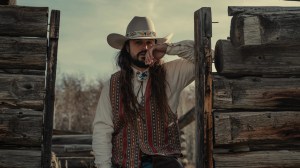
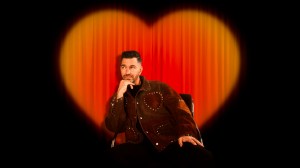
Photo by Ben Christensen -

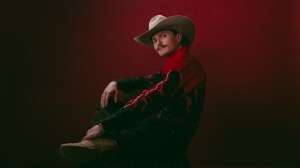
Photo by Stephen Dillon