Part of the reason why George Harrison pursued a more obscure creative career post-Beatles had to do with his general temperament (he was the “Quiet Beatle,” after all), but another likely explanation was that the former Beatle struggled to write again after his 1970 song “My Sweet Lord” landed the musician in serious legal trouble. The landmark ruling against Harrison had long-lasting implications for the music industry as a whole.
But on a personal level, the expensive, years-long drama left Harrison feeling paranoid, unsure how to return to his craft without repeating his same “mistake.” After the court charged Harrison for committing a crime “subconsciously,” we can’t say we blame him for his attitude following the trial.
Videos by American Songwriter
The Lengthy Story Behind George Harrison’s Serious Legal Trouble
George Harrison released “My Sweet Lord” on his triple album, All Things Must Pass, in November 1970. Just a few months later, Harrison was likely repeating that album title to himself as a motivational mantra to get through what would become a years-long, incredibly expensive lawsuit against the former Beatle. It all started in February 1971 when Bright Music Corporation sued Harrison for copyright infringement. “My Sweet Lord,” the corporation argued, sounded eerily similar to the Chiffons’ “He’s So Fine.”
Songwriter Ronnie Mack’s estate was the original driving force behind the lawsuit, something financial representative Allen Klein fought against on Harrison’s behalf. Eventually, Bright Music Corporation, Mack’s publisher, filed for bankruptcy. That might have been the end of the entire snafu had Harrison and Klein not had an acrimonious split years later. Suddenly, Klein switched sides, serving as a consultant for Bright Music Corporation and reviving the copyright infringement lawsuit against Harrison.
The case went to court in February 1976, five years after the initial filing. Presiding Judge Richard Owen, who was a classical musician himself, ruled that Harrison had copied the Chiffons’ “He’s So Fine,” albeit subconsciously. “Did Harrison deliberately use the music of “He’s So Fine”? I do not believe so,” Owens later wrote. “Nevertheless, it is clear that “My Sweet Lord” is the very same song as “He’s So Fine” with different words, and Harrison had access to “He’s So Fine.” This is, under the law, infringement of copyright, and is no less so even though subconsciously accomplished.”
The Musician Said The Experience Made It Difficult To Write
The ruling on Bright Tunes Music v. Harrisongs Music had long-lasting implications for the music industry. But on a personal level, it also deeply perturbed George Harrison’s connection to the songwriting craft that had propelled him to this level of celebrity in the first place. After all, if he committed a crime subconsciously, who was to say he wouldn’t commit another without realizing it?
“It’s difficult to start writing again after you’ve been through that,” Harrison admitted in a 1979 interview with Rolling Stone. “Even now, when I put the radio on, every tune I hear sounds like something else. But most of the lawsuits are gone. Now we’re gearing up for the next batch.” This “next batch,” he explained, had to do with the Beatles (or, more specifically, the entity representing the Beatles) suing other artists for copyright infringement. “There’s not much more we [the Beatles] can be sued for, but we can sue a lot of other people,” Harrison told the magazine.
Although most of the dust had settled by the time Harrison spoke with Rolling Stone in 1979, the lawsuit was still fresh in everyone’s minds in the years after—including the mind of Harrison’s former bandmate, John Lennon. In one of his final interviews before his death, Lennon told Playboy that Harrison had “walked right into” his legal trouble. “He knew what he was doing.”
“He must have known, you know,” Lennon continued. “He’s smarter than that. It’s irrelevant, actually…only on a monetary level does it matter. He could have changed a couple of bars in that song, and nobody could ever have touched him, but he just let it go and paid the price. Maybe he thought God would just sort of let him off.”
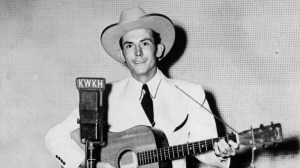
Photo by Michael Ochs Archives/Getty Images
More Features
-
Los Angeles, CA – 1982: Olivia Newton-John appearing in the ABC tv special 'Olivia Newton-John: Let's Get Physical'. (Photo by Erik Hein /American Broadcasting Companies via Getty Images) -
Elvis Costello Top of the Pops London 1982 -
NEW YORK – JANUARY 27: Singer/songwriter Van Morrison performs at a Warner Brothers party at Steve Paul's The Scene nightclub on January 27, 1969 in New York, New York. (Photo by PoPsie Randolph/Michael Ochs Archives/Getty Images) -
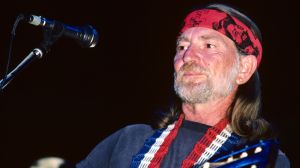
UNITED STATES – SEPTEMBER 10: BRENDAN BYRNE ARENA Photo of Willie NELSON, Willie Nelson performing on stage in East Rutherford (Photo by Ebet Roberts/Redferns) -
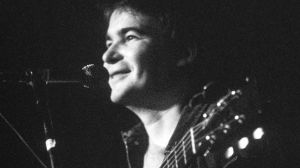
BOULDER, CO – OCTOBER 1972: John Prine performs at The Telagi music club in October 1972 in Boulder, Colorado (Ron Pownall/Getty Images) -
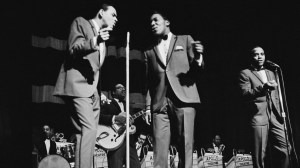
American doo-wop vocal group The Drifters perform at the Apollo Theater in New York City, 1964. (Photo by Don Paulsen/Michael Ochs Archives/Getty Images) -
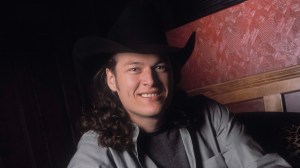
Blake Shelton, who was convinced to move to Nashville by Mae Boren Azton