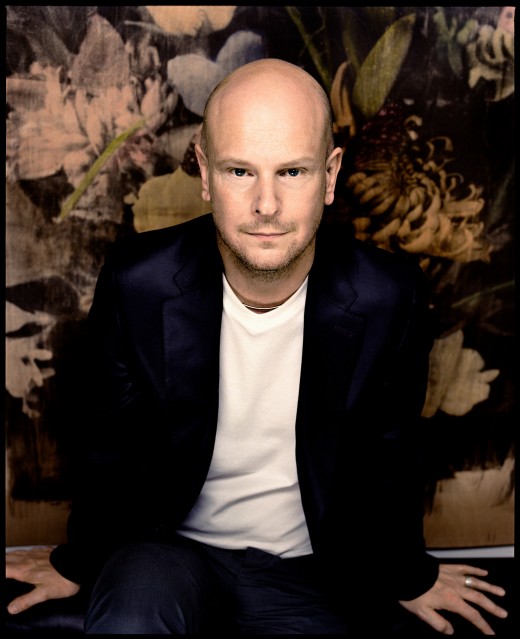
Philip Selway drums for a little band called Radiohead (you might have heard of them). But his debut solo album, Familial, isn’t OK Computer part 2. Instead, it’s a folky, layered, acoustic offering that splits the difference between Nick Drake and and Will Oldham. On it, Selway trades his drum kit for a guitar, and turns over the sticks to Wilco drummer Glenn Kotche.
Why did you call the record Familial?
That was the very last thing that came in the record, actually. I finished the record, it was all mastered, and I lived with it for a couple of months or so. I just tried to listen to it without thinking about how I was going to change it, just listen to it as a piece of music.
At the same time the art work is coming together and artists I was working with on that, John Harris and Lisa Busby, we talked initially about the kind of things I wanted to get across from the music into the art work, but also giving them free reign to pick up on what they responded to. They were picking up on these family aspects. At the same time I realized what was going on in the music, it was thinking about those significant relationships really, reflecting on that, be they immediate family, or very close friends, or colleagues. Those complex, rich relationships which come through the formative experiences in your life, and have that history to them, how they shape you, and your impact on them. The songs were bound up in that, so it seemed like a very nice way of tying it all together for me.
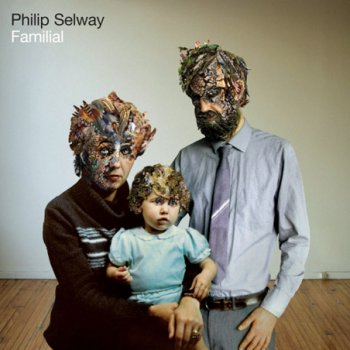
What’s going on on the album cover?
When you’re listening to the music there’s this underlying world to it, that’s the thing that you first respond to — then you scratch away at the surface and you find this sort of off-kilter element. To have that image, the family on the front, there’s something about that which draws you in in that warm way, but then you have these very bizarre masks on their faces. Its kind of an unsettling image, and that really complimented the music very well.
Talk a little bit about the song “All Eyes on Me” and what inspired that.
That one goes back to a period around 1993 when Radiohead was out touring. “Creep” had taken us to a certain place, you. “Creep” was popular at the time, and a lot of things had changed for us in a very short space of time, which initially was very exciting, but I think inevitably aspects of it caught up with me. I remember that tour being just a really long bout of stage fright, and not really being able to play very well on that tour. That song’s about the solitude of that. Just thinking about how you bring yourself back down from that place, where you’re feeling quite fraudulent anyway, and just talking yourself back down from there.
Do the songs on the record date back very far, or are they fairly recent?
They go back probably about seven or eight years. The music for “Don’t Look Down,” came from about that time and fragments of the music have up and comings and such in terms of actually having have the big…in terms of having a cohesive collection of songs its not going to be about the past three years ago. Lyrically, I didn’t approach the lyrics until about two and a half years ago. So they’ve taken shape over these past few years.
How do you find the experience of writing lyrics? Is it something that comes easily to you?
In terms of what I’ve had to learn to do to make this record, that’s probably one of the hardest elements for me. I hadn’t written any complete lyrics since I was a teenager, and so coming back to it, having turned 40, in a midlife phase of life, finding something that’s appropriate to that, it’s been a very taxing process for me.
Are you pretty happy with how they turned out?
Yes, because I feel there is something very recognizably “me” in the album. They seem to have some kind of emotional impact in there, so yes, I’m pleased with where they are. But also when you’ve been working on them for a while, you’re constantly revising what you’re doing, and you’re not really letting up until there’s something you feel happy with.
The album’s largely acoustic. Are you attracted to the acoustic guitar more than the electric guitar?
I have been on this one, yeah. The way that I wrote the songs kind of reflects that. It’s something that very much went under the radar. It’s something that I had been doing at home, in those private moments. I think the acoustic guitar is a very good accompaniment, and that’s why the songs, they grew up in a very natural place with a very natural instrument to record the album on. Also, coming back to the idea of having that underlying warmth, that’s there in spades with the acoustic guitar anyway. It felt in keeping with the type of songs that were emerging.
As a drummer, does the acoustic guitar appeal to you as a rhythm instrument?
Yeah, that’s interesting. Well yes, immediately, without amplification there’s a very percussive sound that comes back off it. I remember with Radiohead we were recording The Bends, and we were working with John Leckie. I seem to remember him saying I played drums like I was playing guitar. Also, the acoustic side of it was kind of a good way to not be disturbing people. When you try to work under the radar, it’s a very good instrument to play.
Did you learn to play guitar when you were a teenager? How’d you learn?
I’m self-taught. I started playing guitar about the same time I started drumming. Of course, a lot more time has gone into the drumming. But, it’s very much a part of me, the acoustic guitar. I wanted a wider musical sense of myself, so yes, it’s always been there.The singing voice took a long time to get to, though!
Would you say that the Radiohead aesthetic is represented in these songs?
Musically, I think it’s something that is …quite deliberately on my part…it’s outside that Radiohead area really. I think the kinds of things I took from Radiohead were, uh, the whole process of actually not giving up on something until you’re 100 percent happy with it. There’s a certain level of self-critique, and I tried to apply that to this record. But as a collection of songs, just coming together, I felt it had a much more distinctive character of me in there. It didn’t feel appropriate to take that into Radiohead.
I read somewhere that you said that “it’s a cardinal sin for drummers to come into rehearsal with the comment ‘I’ve got this song.’”
Absolutely. I was joking of course, drummers can slip things into the mix. But I think when you’re working as a band, you slip into that classic perception that drummers are the people who play with musicians. Also, I think you establish roles in a band and you bring a song in and you can’t … you must be able to do the complete thing, to sing and play guitar. Those are the things I’ve had to learn in making this record. I’m at the point where I can do that now. I can take material and I can play live, but at the time I couldn’t do that. I didn’t have the skills for it. That comment was a bit flip when I made it though.
So you’ve evolved as a musician over the years to this point where you can put out a solo record.
Yes. And it took me a while. I didn’t really need any longer. Much past 43 and I think it might have looked a bit distasteful.
Can you see any other members of the band besides Thom Yorke writing songs for a solo album?
I don’t know actually. When we went to the 7 Worlds Collide project together, Ed was writing down there. And Jonny does his soundtrack stuff. We’ve all, because we’ve had the very good fortune to carry on doing this, you pick up some skills along the way. I’m sure everybody in the band is really multi-skilled in that way. It wouldn’t surprise me if other talents emerged there.
Have you gotten any feedback from the band members on this record?
Yeah, they’ve said very positive things to me about it. They’re not likely to say anything else at this stage, so I’m very grateful to them [laughs].
You worked with Wilco’s Glenn Kotche and Pat Sansone on the album. What was that experience like?
Fantastic. As musicians, they’ve got oodles of experience and character, just very distinctive voices. We just really clicked as musicians, so it was great. Take somebody like Pat, who’s this amazing multi-instrumentalist who can work very quickly. He’s got music coming out of his fingertips. It’s very inspiring to work with. And Glenn, who, it’s hard not to say he’s the best drummer around really. He’s a brilliant kit drummer, which you can hear in his solo work on Mobile and things like that. He used this unique percussion approach and that was fantastic. I didn’t hear drum parts in my song, and he heard things where I didn’t hear it, and it really brought this extra level to what was going on in the songs, to me.
So you must be a Wilco fan.
Yes, I really like Wilco. It’s been great to have the chance to work in this format with Wilco. Great band. Unbelievable players with a huge amount of talent. And Jeff [Tweedy]’s songwriting… he’s a great songwriter. An inspiring man to watch.
What about the other players on the album?
Sebastian [Steinberg] is just such a deeply soulful player. He has this very sophisticated, highly cultivated musical awareness and taste. He manages to find that point between what’s musical and what’s intellectual. It’s a very powerful thing to be able to combine. I’m in awe of Lisa [Germano], she’s an amazing songwriter. She has a body of work that’s incredible. You listen to these songs that are very beautiful songs, but what she does is she scuffs them up a bit, slightly sets things off-kilter. It’s unsettling in its way, and that’s what I thought would be appropriate for my material, and Lisa’s very much brought that side out for me.
What’s going on with the new Radiohead album?
We’re slap-bang in the middle of it. Nothing’s finished yet, but it’s moving along nicely. I don’t know when it’ll be finished yet. But the way we work in Radiohead, we’ll work in intense periods and then take some time away from it. Right now we’re in one of our times away from it. We’ll get back to it later on in the summer.
More Interviews
-

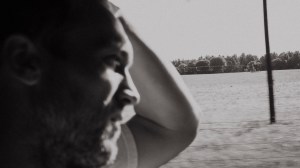
Photo by Stephen Dillon