On this day (November 19) in 1954, Faron Young joined country music’s finest when the Grand Ole Opry welcomed him into its hallowed ranks. Signing with Capitol Records just two years earlier, Young was seemingly on the fast track to country music immortality with honky-tonk hits like “Goin’ Steady” and “I Can’t Wait (For the Sun to Go Down)”. He would go on to accumulate a staggering 89 charting singles, including five No. 1 hits, 19 Top Fives, 17 Top 10s and 16 top 20s. Several of those hits also made a splash on the pop charts.
However, Young’s remarkable success on the country music charts was frequently overshadowed by his often troubling off-stage antics. Making headlines for spanking a young girl at a West Virginia concert and firing a pistol into the ceiling of his home, Young battled alcoholism and depression throughout his career. Tragically, he died by suicide in Nashville on December 10, 1996. Just 64 years old, Young believed country music had long forsaken him.
Videos by American Songwriter
The Tragic Tale of Faron Young
Born February 25, 1932, in Shreveport, Louisiana, Faron Young grew up on his family’s dairy farm outside the city. Singing from an early age, he initially harbored aspirations of making it as a pop star. However, he changed course after seeing Hank Williams’ nine-encore performance on the popular Louisiana Hayride program.
Young began performing at the local Optimist club and nursing homes, eventually crossing paths with country singer Webb Pierce. Pierce brought the younger musician aboard on the Louisiana Hayride program.
Young first recorded in Shreveport for Philadelphia’s Gotham Records before signing with Capitol in 1952. He moved to Nashville and cut his first charting single, “Goin’ Steady”, in October of that year. However, just as his star was on the rise, Young was drafted into the U.S. Army in November 1952.
“Goin’ Steady” reached No. 2 during Young’s tenure, and he toured with the U.S. Army Band before his discharge in November 1954.
From 1954 to 1962, Young recorded a host of honky-tonk classics for Capitol, including the first hit version of Don Gibson’s “Sweet Dreams.” His most successful single was the Willie Nelson-penned “Hello Walls”, which also climbed to No. 12 on the U.S. pop chart.
Later Career
Faron Young left Capitol in 1962 for Mercury Records, where he quickly found his stride again with hits including “Wine Me Up” and “It’s Four in the Morning”. He left the Grand Ole Opry in 1965, deciding that touring as a solo act was more lucrative.
By the mid-1970s, however, Young was more often making headlines for his personal life. In 1972, he was arrested for assault and fined $24 after allegedly spanking a six-year-old girl at a concert in Clarksburg, West Virginia. (Young claimed the girl had spat on him.)
On the night of December 4, 1984, Young fired a pistol into the kitchen ceiling of his Hickory, Tennessee home. His excessive drinking had also led to the degradation of his marriage, and he and wife Hilda divorced after 34 years in 1987.
Retiring from performing in 1993, Young often complained that country music undervalued its older artists. He shunned requests to guest star on the Opry from friends like country singer Jeannie Seely.
Just before noon on December 9, 1996, a member of Young’s band found him unconscious at his home with a self-inflicted gunshot wound to the head. Young, who had also been battling emphysema and prostate problems, died the following day at age 64.
Featured image by Michael Ochs Archives/Getty Images
More Features
-
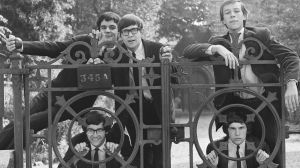
Group portrait of The Zombies in West London, 1965. L-R (back) Colin Blunstone, Paul Atkinson, Hugh Grundy (front) Chris White, Rod Argent. (Photo by Stanley Bielecki/ASP/Getty Images) -
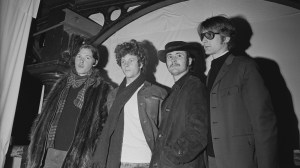
American rock group The Byrds attend a press call in London in February 1967. Members of the band are, from left, Michael Clarke (1946-1993), Chris Hillman, David Crosby (1941-2023) and Roger McGuinn. (Photo by Ivan Keeman/Redferns) -
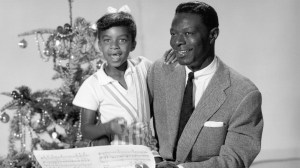
UNSPECIFIED – CIRCA 1957: Photo of Natalie Cole singing with her father Nat King Cole, circa 1957. There is a Christmas tree beside them. (Photo by Michael Ochs Archives/Getty Images) -

Photo by Arturo Holmes/Getty Images -
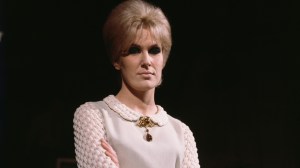
nglish singer Dusty Springfield rehearsing for an appearance on the 'Ready, Steady, Go!' TV music show, at the Rediffusion Studios on Kingsway, London, 6th November 1964. (Photo by Keystone/Hulton Archive/Getty Images) -

Photo by Barham/Tony Eyles/Mirrorpix/Getty Images